
Reviewed · PORTO WALKING TOURS
Porto Highlights Small-Group Walking Tour
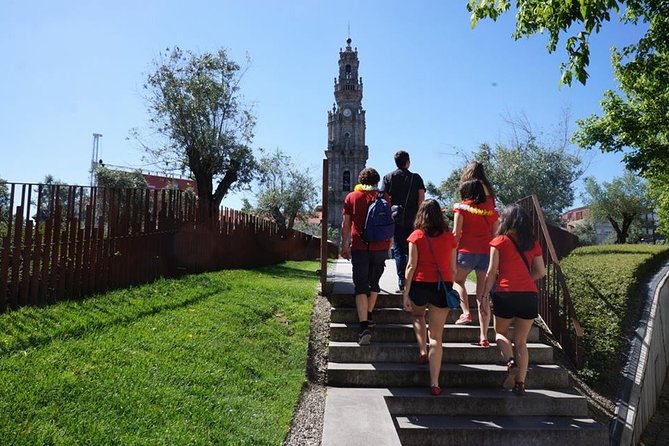
Porto’s story unfolds best on foot, and this three-hour walk connects the city’s prettiest public spaces with the ideas behind them. You’ll see Sao Bento Railway Station, a famous Porto bookstore, Fonte dos Leoes, and Ribeira Square while an art historian explains the buildings, tiles, churches, and changing city.
I like the small private group, limited to six people, because you can ask questions without shouting over a crowd. I also like the flexible approach: guides such as Nuno and Ana have shaped walks around what visitors had already seen and what they wanted to understand better.
The main drawback is that the route can be affected by construction, crowds, heat, or a guide who does not always read the group’s interests perfectly. You’ll also need to pay separately for food and drinks, and the tour does not include hotel pickup.
Key points to know before booking
- Sao Bento’s tiled interior gives the tour an immediate visual highlight and a useful introduction to Portuguese art.
- A maximum of six people keeps the walk personal and leaves room for questions.
- The route ends at Ribeira Square, making it easy to continue exploring central Porto afterward.
- Art and architecture are central themes, not side notes, so this suits curious first-time visitors.
- The itinerary can be adjusted, with different interests and options discussed along the way.
- The pace is manageable for many people, though you should still expect a city walk with changes in level.
Why this Porto walk works as a first introduction
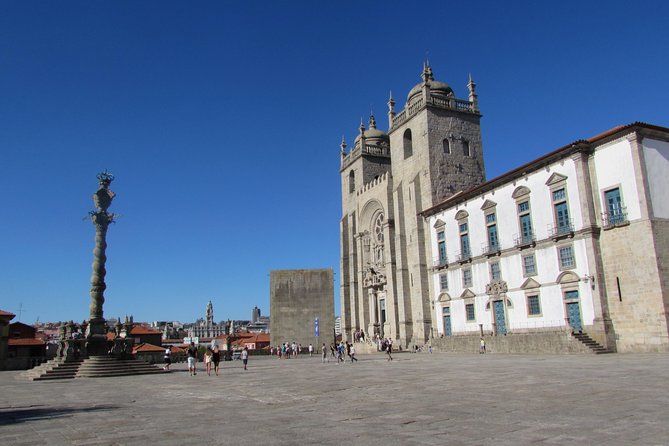
Porto can feel confusing at first. Streets rise and fall, grand churches appear beside narrow lanes, and the city’s history is written into blue-and-white tile panels, old facades, railway halls, and riverfront squares. A good guide helps you connect those pieces instead of treating each sight as a separate photo stop.
This experience is designed around that connection. You are not simply taken to a station, a square, and the river. The guide explains how architecture reflects Porto’s development and points out details you might otherwise pass without noticing.
The guide is described as both a local guide and a professional art historian. That combination matters. Local knowledge can bring out small street facts and personal observations, while an art history background can explain why a building looks the way it does, how tiles were used, and what different periods contributed to the city.
The group size is one of the strongest features. With only your own party, up to six people, the guide can stop for questions and adjust the discussion. A solo booking may even become a one-on-one walk if availability allows, as happened with Ana on one morning tour.
You should still set realistic expectations. This is not a ticketed attraction tour with extended indoor visits. The listed stops are mainly outdoor places, with Sao Bento’s station as the major interior highlight. The value comes from explanation, context, and the way the guide links the sights.
More walking tours in Porto:
- Porto Walking Tour, Lello Bookshop, River Cruise and Cable Car
★ 5.0 · 3,354 reviews - Experience Porto’s Charm: 3-Hour Guided Walking Tour
★ 5.0 · 2,432 reviews - Porto: 3-Hour Guided City Highlights Walking Tour
★ 4.8 · 2,050 reviews
Meeting the guide at Praça de Gomes Teixeira
The walk begins at Praça de Gomes Teixeira, a central Porto address near several important sights. There is no hotel pickup, so you need to make your own way to the meeting point. The tour ends at Ribeira Square, not back at the starting point.
That one-way design is useful. You do not spend the final part of the morning retracing your steps, and you finish in one of Porto’s most atmospheric areas. From Ribeira, you can continue your day along the riverfront or make your own plans nearby.
The exact route may change because this is a personalized activity. You can discuss different interests and options with the guide along the way. If you care most about tiles, architecture, food, religious buildings, photography, or city history, say so early.
That flexibility can make a major difference. Ana, for example, asked what had already been seen and then avoided repeating the usual sights. Her route included an old hospital, an art gallery and restaurant with city views, the former jail that now houses the photography museum, a church, courthouse, palace, old stock exchange, markets, the cathedral, Sao Bento, and an old cafe now occupied by McDonald’s.
Not every walk will include that exact sequence. Still, it shows what the private format can offer when you communicate clearly with the guide.
Sao Bento Railway Station and its wall of tiles
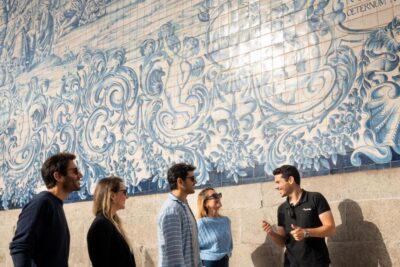
Sao Bento Railway Station is the tour’s clearest visual centerpiece. The station is famous for its large tile panels, and the visit gives the guide a natural way to discuss Portuguese decorative art, history, and public buildings.
You have about 15 minutes here, with no admission charge listed. That is enough time to take in the main hall and hear an explanation, though it is not a long architectural study. If tiles are a priority for you, tell the guide. One of the strongest tours described Sao Bento in detail, with extended discussion of the tile work.
This stop also helps you understand why Porto rewards close attention. At first glance, you see a grand railway station. With a guide, you can focus on the scenes, patterns, materials, and period details that give the building its character.
The station can be busy, and construction in Porto has affected parts of the walking route at times. A guide cannot control that. What the guide can do is maintain the pace and help you focus on what remains accessible.
If you are carrying a heavy bag, keep it manageable. The tour is on foot, and you will have more freedom to look up and listen if you are not dealing with awkward luggage.
Porto’s famous bookstore and the architecture around it
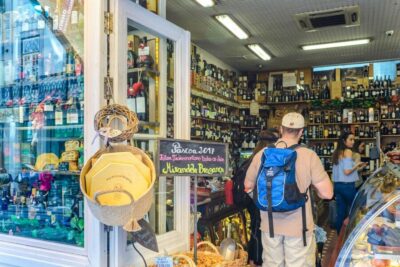
The itinerary includes a famous bookstore described as one of Portugal’s most magical places. The name is not specified in the tour details, so confirm the exact stop with the provider if entering the bookstore is important to you.
This part of the route gives the guide another chance to discuss how design affects the experience of a place. Porto’s architecture is not only about churches and municipal buildings. Shops, cafes, stations, and cultural spaces also help define the city.
The bookstore stop may be especially appealing if you like interiors, literary settings, or unusual design. Keep in mind that the tour details do not state whether admission is included or whether the group enters for a full visit. The listed free admission applies to the named outdoor stops and Sao Bento, so ask before booking if you want a longer bookstore visit.
This is a good example of why the personalized format helps. If you care deeply about architecture, the guide can spend more time on structure and decoration. If you have limited time or prefer public history, you can keep moving toward the larger sights.
Same city, a completely different kind of day out:
- The Unvanquished Tour in Porto City Center
★ 5.0 · 26,497 reviews - From Porto: Douro Valley w/ Boat Tour, Wine Tasting & Lunch
★ 4.7 · 19,061 reviews - Complete Douro Valley Wine Tour with Lunch, Wine Tastings and River Cruise
★ 5.0 · 12,920 reviews - Porto: Six Bridges Cruise
★ 4.2 · 11,680 reviews
Fonte dos Leoes and Porto’s monument-filled center
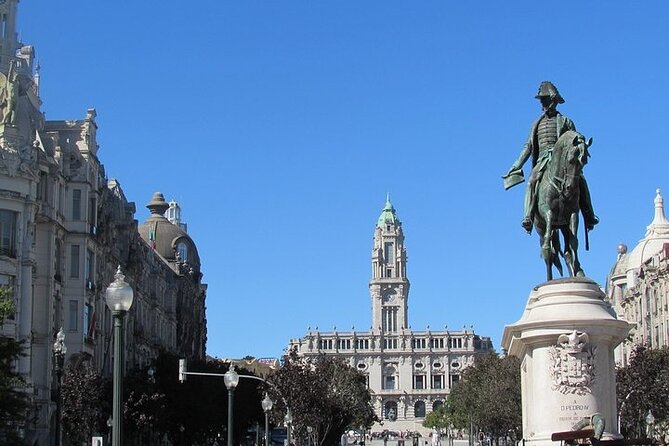
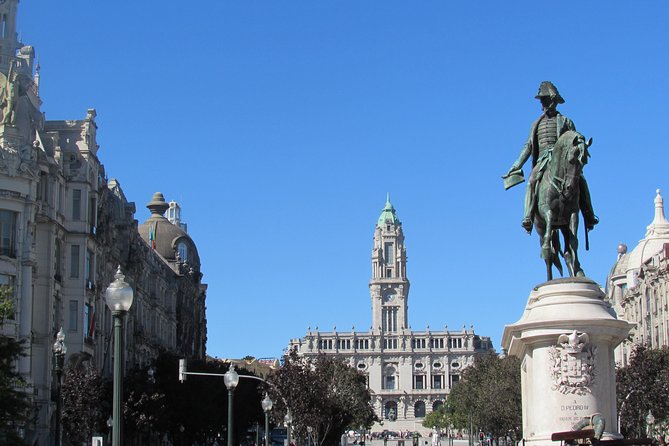
Fonte dos Leoes sits in a pleasant square surrounded by monuments. The stop lasts about 15 minutes and has no admission charge listed.
A fountain may not sound like a major attraction on its own, but the surrounding setting gives the guide room to explain how Porto’s central spaces fit together. You can pause, look across the square, and see how monuments, public buildings, and daily city life share the same setting.
This is also where the walking format earns its keep. On a bus tour, a square can pass in seconds. On foot, you can stop long enough to orient yourself and ask why the square developed as it did.
The guide’s architectural focus is useful here. You are encouraged to look at buildings as evidence of the city’s growth, rather than as background for a quick photograph. The tour is particularly well suited to people who want to understand why Porto looks the way it does.
The route may not feel perfectly smooth every day. One guide was late, and another walk passed through a large amount of construction. Those issues were not described as typical, but they are worth keeping in mind when you book a timed activity.
Ribeira Square and the older city by the river
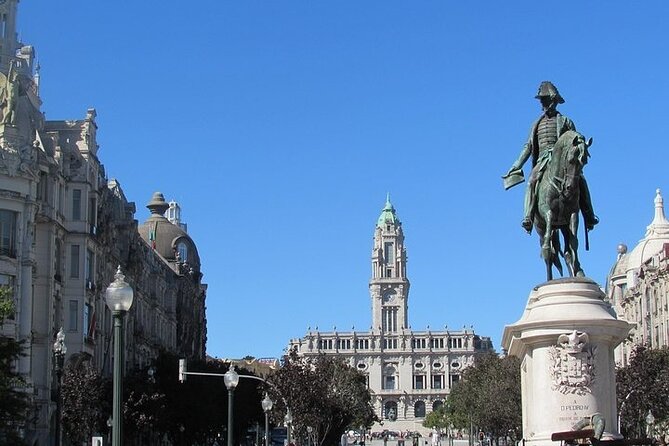
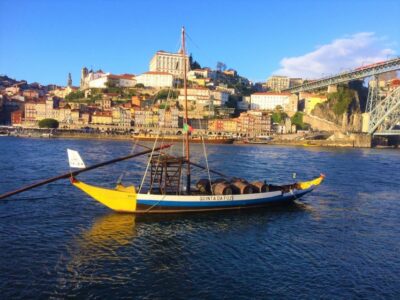
The tour ends at Ribeira Square, where Porto’s connection to the river becomes central. The square has served as a main gathering place since the Roman period, according to the tour description. That long history gives the final stop a sense of arrival.
You will have about 15 minutes here. The guide can explain the square’s place in Porto’s development and help you understand why the riverfront became so important to trade, movement, and city life.
Ending in Ribeira is practical as well as scenic. You can stay in the area after the tour, arrange lunch, or continue exploring. Since food and drinks are not included, this is a natural place to make your own meal plans.
The route does not include hotel drop-off, so plan your next step before you arrive. If you have a food and wine tasting booked afterward, leave enough time to get there. Ana once escorted a participant to the next appointment after the walking tour, but you should not depend on that as a standard service.
What the guides add to the experience
The strongest part of this walk is the guide’s ability to explain Porto in detail. Nuno is praised for his explanations of art, architecture, tiles, and Portuguese history, as well as for keeping the tour lively with stories. Ana is described as tailoring the route to what had already been seen and adding personal views of the city.
Those examples point to the kind of guiding you can expect, but guides are individuals. One guide was described as extremely strong on buildings, art, time periods, and little-known street facts. Another was seen as helpful with Portuguese facts but occasionally lost the group’s attention and did not always notice which sights mattered most to them.
That difference is important. A private tour gives you a chance to shape the experience, but you need to speak up. Tell the guide what you want more of. Ask to pause at a building. If you are not interested in a particular topic, say so politely and redirect the conversation.
Food may appear as part of the guide’s local recommendations, but it is not included in the price. One guide bought Portuguese custard tarts during the walk, which added a personal touch. You should treat that as an individual choice, not a promised part of the tour.
Pace, comfort, and practical details
The walk lasts about three hours. It is long enough to provide a useful introduction, but short enough to fit into a full day of sightseeing.
The route is in central Porto and is near public transportation. Most people can participate, and service animals are allowed. The information does not provide a precise accessibility rating or a detailed description of stairs and slopes, so ask the provider if mobility is a concern.
Porto’s streets can include changes in level, and a city walking tour naturally involves standing and moving between stops. Wear comfortable shoes and bring water, particularly on a hot day. One group in its late 50s found the pace comfortable even in heat, but conditions and personal fitness vary.
The tour is offered in English. Confirmation is sent within 48 hours of booking, subject to availability. At least two people are required per booking, and the maximum is six.
The cancellation policy is straightforward: you can receive a full refund if you cancel at least 24 hours before the start time. Cancellations or changes inside that period are not accepted for a refund.
Is $84.02 a fair price?
At $84.02 per person, this is not the cheapest way to see Porto. The price makes more sense if you value a private or very small group, an art historian guide, and the chance to shape the walk around your interests.
You are paying for interpretation rather than admissions. The tour does not include food, drinks, hotel pickup, or listed entry tickets. If you prefer to move quickly between sights and read information on your own, you may find the price high.
I think the value is strongest for a first visit, especially if you want to understand Porto’s architecture and tile work rather than simply collect photographs. It is also a good fit for a couple, family, or small group that wants to ask questions and avoid a large public tour.
The value is less clear if you already know central Porto well or mainly want inside access to paid attractions. In that case, check exactly which interior visits are planned and decide if the guide’s historical and architectural context is enough to justify the cost.
Who should book this walking tour?
I would choose this walk if you want a thoughtful orientation on your first day in Porto. It can help you identify places to revisit and give meaning to sights you might otherwise pass quickly.
It suits people interested in:
- Portuguese tiles and decorative art
- Architecture and urban development
- Local stories and small street details
- A private group of two to six people
- A flexible route rather than a fixed script
- A one-way walk ending near the river
It may not suit you if you dislike walking, need a fully step-free route, want hotel transportation, or expect a food tour. It is also not the right choice if your main goal is extended entry into several paid attractions.
Book it early if your dates are fixed. The experience is booked around 27 days in advance on average, and confirmation is subject to availability.
Should you book Porto Highlights Small-Group Walking Tour?
Book this tour if you want Porto explained by an art and architecture specialist, with enough room for questions and route changes. The strongest guide experiences center on Sao Bento’s tiles, local history, and personal attention from guides such as Nuno or Ana.
Before booking, decide what matters most to you and tell the guide at the start. Ask about the bookstore visit, indoor access, walking conditions, and the exact route. If you are happy with a three-hour walk and want context more than a checklist of attractions, this is a solid way to get your bearings in Porto.
FAQ
How long does the Porto Highlights Small-Group Walking Tour last?
The tour lasts approximately three hours.
Where does the tour begin?
The meeting point is Praça de Gomes Teixeira, 4050-161 Porto, Portugal.
Where does the tour end?
The walk ends at Ribeira Square, Praça Ribeira, Porto.
How many people can join the tour?
A minimum of two people is required per booking, and the maximum is six people.
Is the tour offered in English?
Yes. The tour is offered in English.
Are food and drinks included?
No. Food and drinks are not included in the price.
Can I cancel for a full refund?
Yes. You can cancel at least 24 hours before the experience start time for a full refund. Changes or cancellations made less than 24 hours before the start time are not accepted for a refund.
Newest Porto reviews on the site
- Porto – Old Town Tour with an official guide★ 5.0 · 6 reviews
- Yacht Douro Tour★ 4.8 · 11 reviews
- Vila Nova de Gaia: Porto Discovery Tasting★ 4.8 · 17 reviews
- Visit to a Port Wine Cellar★ 4.8 · 5 reviews
- Vila Nova de Gaia: Winery Tour with 2 DOC Douro & 1 Port★ 4.8 · 101 reviews
- Vila Nova de Gaia: Douro Discovery★ 5.0 · 4 reviews
- WOW Porto: The Wine School Workshops and Tastings★ 4.7 · 20 reviews
- Private Portuguese Cooking and Wine Experience in Porto★ 5.0 · 30 reviews
Porto Walking Tours, compared.
Porto Walking Tour, Lello Bookshop, River Cruise and Cable Car
Read our review →
Experience Porto’s Charm: 3-Hour Guided Walking Tour
Read our review →

Walking Tour, Lello Bookshop, Boat and Cable Car
Read our review →Browse the lists this tour appears in