Reviewed · PRIVATE
Porto private afternoon tour, discover the most iconic attractions
Porto’s best sights are spread across steep streets, river viewpoints, grand squares, and the Atlantic shore. This private afternoon tour connects them in one comfortable vehicle, giving you a fast, useful introduction to the city without making you wrestle with taxis, hills, or public transport.
I like the private format, since your group can focus on the places that matter most. I also like the route’s range: Bolhão Market, the tiled São Bento Station, Porto’s churches, the Douro bridges, Vila Nova de Gaia, and the coast all appear in one outing. The main drawback is time. Four hours is enough for orientation and short visits, but not for a leisurely look at every stop.
Key points at a glance
- A broad Porto route: Travel from Avenida dos Aliados through the old center, across the Douro, and out to Matosinhos and Foz.
- Private luxury transport: Hotel pickup, Wi-Fi, bottled water, refreshments, and a vehicle reserved for your group are included.
- Short cultural visits: Several stops allow about 10 to 15 minutes, so the tour works best as a first look rather than a museum day.
- Major admission fees are extra: Livraria Lello, Clérigos Tower, São Francisco Church, Palácio da Bolsa, and other visits cost more.
- Optional evening additions: You can add a Douro sunset cruise, Port tasting, fado, or a traditional dinner.
- Strong guide-led focus: The tour is designed around local explanation and efficient sightseeing, with English service available.
Why this private Porto tour works as an introduction
The clever idea here is coverage. Porto can feel scattered at first. The historic center climbs from the river, Gaia sits across the water, and the oceanfront sights lie several miles west. A private vehicle lets you see how these pieces fit together in a single afternoon.
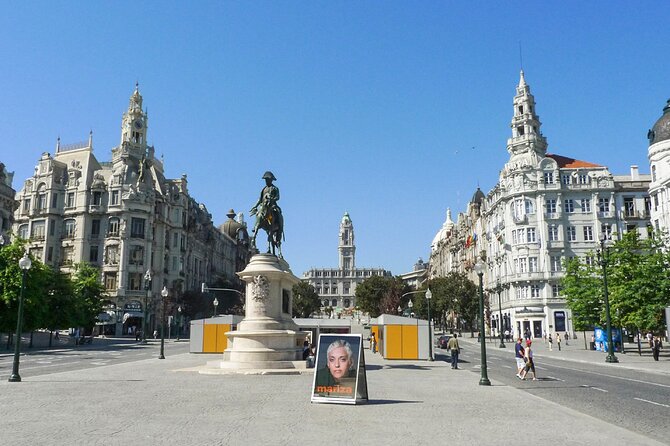
You begin at Avenida dos Aliados, the grand central avenue framed by early twentieth-century buildings. At its southern end, the Cardosas building marks the old edge of the square, while Porto’s City Hall closes the northern end. In the center, the statue of King Pedro IV gives the space its formal heart.
This is a good place to get your bearings. Porto’s center is compact enough to walk, but the slopes can be demanding, especially if you are trying to combine the upper city, the river, Gaia, and the coast in one day. The vehicle saves your legs for the places where walking matters most.
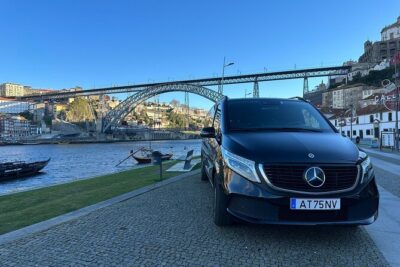
The tour is offered in English and is private, so only your group participates. Hotel pickup is available, and the vehicle includes Wi-Fi, water, refreshments, and a comfortable interior. That makes the experience particularly useful after arriving in Porto, when you want a city overview before choosing where to return on foot.
More private Porto tours:
- Discover Porto’s Highlights on a 2-Hour Private Electric Tuk Tuk
★ 4.5 · 1,860 reviews - Porto PRIVATE TOUR With Locals: Highlights & Hidden Gems
★ 5.0 · 984 reviews - Porto: Private tour in the Douro (1 to 4 people) on a boat just for you
★ 5.0 · 744 reviews
Bolhão Market and the city’s central squares
Mercado do Bolhão gives the route a welcome everyday character. This is Porto’s emblematic market, with a neoclassical two-story structure and stalls focused on fish, meat, produce, and flowers. The market occupies a city block bordered by four streets, so even a 15-minute stop gives you a feel for its scale and purpose.
I would pay attention to the sellers and the arrangement of the goods rather than treating the market as a quick photograph. The point is not only the building. It is the connection between Porto’s food culture and its working center.
Next comes Praça da Batalha, a historic square tied to a medieval defeat of Porto by the forces of Almançor. The square later became a formal public space in the nineteenth century. Its Teatro São João is one of the city’s important performance venues, though its original building was destroyed by fire in 1908.
The route also points out surviving sections of Porto’s Fernandine Wall. Construction began in the fourteenth century under King Afonso IV, and the wall was completed during the reign of King Fernando. Much of it disappeared when the fortifications no longer served a military purpose, but the remaining sections help explain why Porto’s older streets feel so enclosed and vertical.
Porto Cathedral and São Bento’s painted tiles
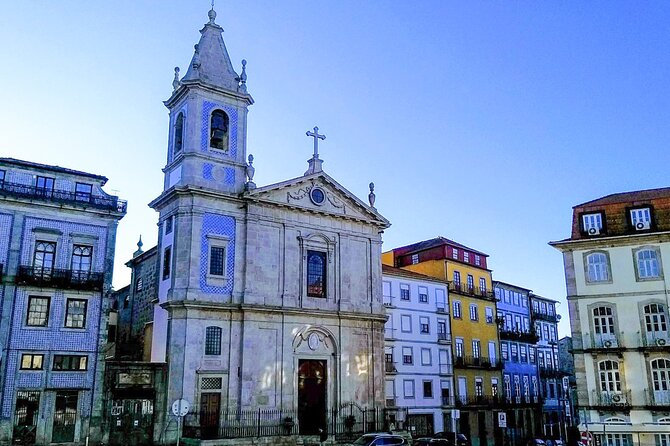
Porto Cathedral, or Sé do Porto, brings you into the city’s medieval core. The building began in the twelfth or thirteenth century and changed over the centuries while retaining its medieval plan. The Gothic chapel of São João Evangelista, the cloister, the expanded chancel, and the silver altar in the Blessed Sacrament chapel are the details worth seeking.
The planned stop is about 10 minutes, and entry is not included. That is enough for a quick look, but not a full examination of the cathedral and cloister. If you care about religious art or medieval architecture, ask your guide how much time can be given to the interior, or return later on your own.
São Bento Railway Station is one of Porto’s essential short stops. Its vestibule is lined with roughly 20,000 painted tiles by Jorge Colaço. The panels show transport, regional life, and scenes from Portuguese history. The station was built on the site of a former convent, and its iron and glass structure gives the interior a bright, open feel.
No admission fee is listed for São Bento, and the planned stop is about 10 minutes. That makes it one of the best value stops on the route. You can see a major work of art without spending extra or committing to a long visit.
Cafés, churches, and Porto’s famous bookshop
Café Majestic, on Rua Santa Catarina, opened in 1921 and reflects Porto’s Belle Époque taste. Marble, gilded mirrors, and carved wood create an ornate setting. You can stop for a coffee or pastry, but the café visit itself is not included, so plan to pay for anything you order.
Nearby, the Palladium clock adds a small piece of local theater. Every three hours, four figures linked with Porto appear on the building’s facade to the sound of bells. The figures represent Saint John, Prince Henry the Navigator, Almeida Garrett, and Camilo Castelo Branco. Timing matters here, so ask if the schedule fits your visit.
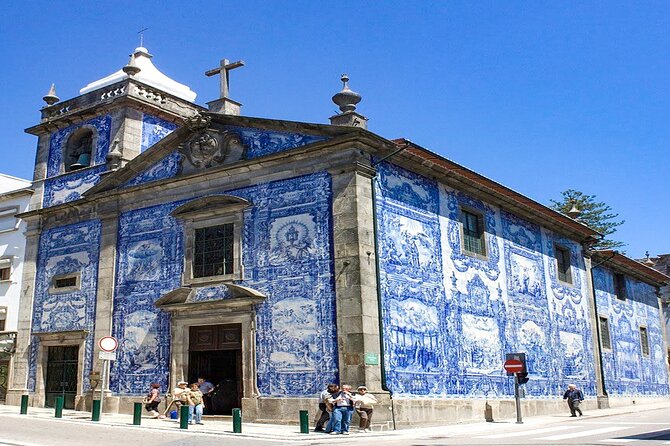
The Church of Carmo and the Church of the Carmelites are among Porto’s most recognizable religious buildings. Carmo is known for its exterior tilework, while the neighboring church has an elaborate facade. Between them sits the narrow Hidden House, an ingenious little building squeezed into the gap.
Clérigos Tower is another signature sight. Designed by Nicolau Nasoni in the Baroque style, it rises above the center and offers views toward Porto and the Douro. Reaching the top means climbing 240 steps. The tour allows about 10 minutes and does not include admission, with a listed skip-the-line ticket price of €10.
That short timing creates a clear choice. If you want the view, buy the ticket and confirm that the schedule allows you to climb. If you prefer a relaxed vehicle tour, enjoy the tower from street level and save the climb for another visit.
Livraria Lello is equally popular and equally time-sensitive. The 1906 building combines an Art Nouveau facade with neo-Gothic details. Inside, the painted plasterwork, reinforced-concrete staircase, and large stained-glass skylight are the main attractions.
The listed Gold Ticket costs €16 and includes priority access plus a book. Ten minutes is enough to see the famous staircase, but not to browse calmly. I would treat this as a targeted architectural visit, not a quiet reading-room stop.
Same city, a completely different kind of day out:
- The Unvanquished Tour in Porto City Center
★ 5.0 · 26,497 reviews - From Porto: Douro Valley w/ Boat Tour, Wine Tasting & Lunch
★ 4.7 · 19,061 reviews - Complete Douro Valley Wine Tour with Lunch, Wine Tastings and River Cruise
★ 5.0 · 12,920 reviews - Porto: Six Bridges Cruise
★ 4.2 · 11,680 reviews
From the old center to the Douro bridges
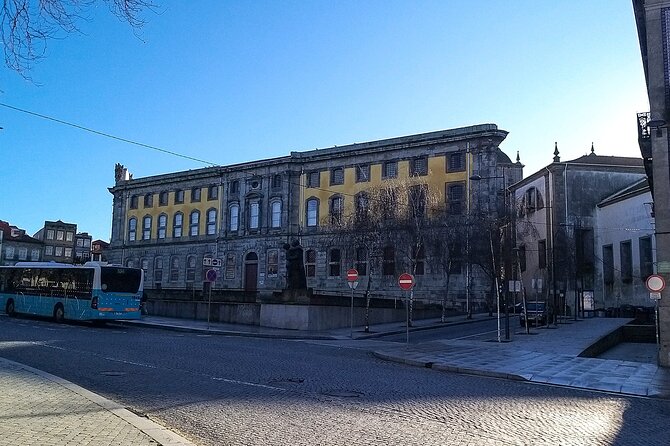
The route continues past the former Faculty of Sciences building, now used by the University of Porto’s rectory and Natural History Museum. It also passes the Soares dos Reis National Museum, Portugal’s oldest public museum, housed in the Palácio dos Carrancas since 1942.
The gardens of Palácio de Cristal offer a different mood, with paths, trees, and viewpoints over the Douro. The gardens cover eight hectares and follow the nineteenth-century design by Émille David. Because the tour is only four hours, you will likely see the gardens as a scenic pause rather than explore every path.
Porto’s churches then return the focus to carved wood and religious art. São Francisco is the dramatic highlight, known for its heavily gilded interior, the Tree of Jesse, and catacombs. It has been a National Monument since 1910 and forms part of the UNESCO-listed historic center.
Admission to São Francisco is not included, with a listed price of €10. The church deserves more than a rushed glance, so this is another place where you must choose between entering and keeping the full route.
The tour also points out the Church of Saint Nicholas and Palácio da Bolsa. The church reflects late seventeenth-century religious design, while Palácio da Bolsa occupies the site of the former São Francisco Convent. Its Arab Room is the famous interior, and a guided entry costs €14.
The bridge section is one of the route’s strongest features. You see the remains of the old D. Maria II suspension bridge, the lower and upper decks of the D. Luís I Bridge, the Infante Bridge, and the modern crossings farther west. D. Luís I, completed in stages between 1886 and 1888, has the world’s largest wrought-iron arch and is part of the UNESCO site.
The D. Maria Pia Bridge was Gustave Eiffel’s first major Porto project, completed in 1877. It carried trains for 114 years before being replaced by the São João Bridge. The structure designed by Edgar Cardoso now carries the railway south from Campanhã.
This portion is especially useful because a guide can connect engineering, transport, and city growth in a way that a quick photograph cannot. You see Porto not just as an old city, but as a place shaped by the Douro and the problem of crossing it.
Gaia views and the Atlantic edge
On the Gaia side, Jardim do Morro provides a broad view back toward Porto. The park sits below the Serra do Pilar Monastery and is a natural place to pause for photographs. The monastery’s circular church and cloister make it one of the most unusual buildings in the area.
Serra do Pilar began in 1538 and was built in stages. It is now linked with religious, cultural, and military use, and it has been part of the UNESCO World Heritage designation since 1996. Entry is not included, and the planned stop is about 10 minutes.
The vehicle then heads toward the coast, passing Arrábida Bridge and the Fortress of São João Baptista. The fortress protected the Douro entrance and coast, with later additions from the seventeenth and eighteenth centuries.
Castelo do Queijo, officially Fort São Francisco Xavier, occupies a rocky hill shaped like a piece of cheese. It was built in the seventeenth century to defend the coast from North African pirates. The fort is a free stop, while the earlier fortress has an additional admission fee listed.
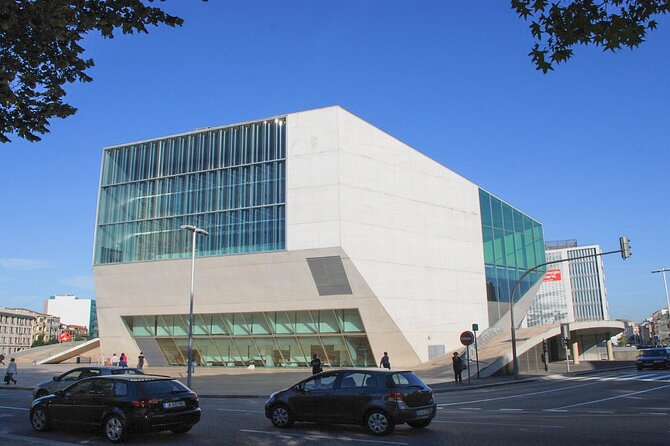
The coastal section includes the D. João VI monument, Janet Echelman’s Anemone sculpture, Leixões Cruise Terminal, Serralves, Casa da Música, and Praça de Mouzinho de Albuquerque. These stops broaden the picture beyond medieval Porto.
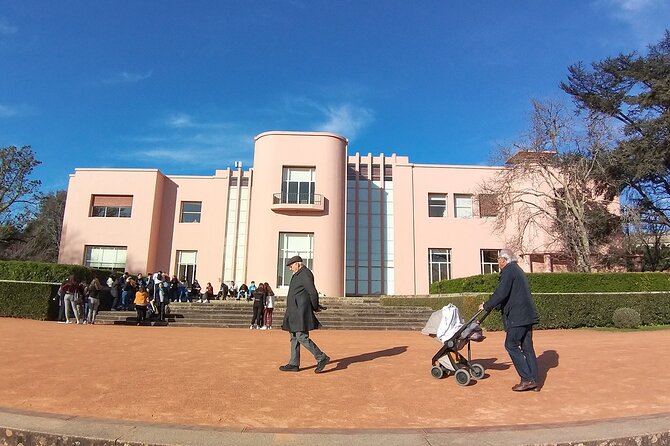
Serralves combines an Art Deco house, contemporary art museum, and 18 hectares of gardens, while Casa da Música is the angular concert hall designed by Rem Koolhaas and opened in 2005. At Mouzinho de Albuquerque, a 45-meter monument honors the Portuguese and British forces in the Peninsular War.
This is a lot for one afternoon. You should expect a panoramic route with selected pauses, not full visits to Serralves, the museum, the gardens, and the concert hall. If modern architecture and art are your priority, consider asking for fewer historic-center stops and more time in the west.
What the price includes, and what it does not
The listed price is $185.43 per person. For a private four-hour outing, that is a serious expense, but the value depends on group size and your priorities. A couple pays more per person than a larger family or group, while the private vehicle becomes more reasonable when shared among several people.
Included are hotel pickup, transport in a luxury vehicle, Wi-Fi, bottled water, refreshments, and personal accident and civil liability insurance. The vehicle and driver-guide format also saves planning time, which matters if Porto is one stop on a larger Portugal trip.
The admission costs can add up quickly:
- Livraria Lello: €16
- Clérigos Tower: €10
- Palácio da Bolsa guided visit: €14
- São Francisco Church: €10
- Dona Antónia Port wine visit and tasting: €32 to €41
- Private Douro sunset cruise: €60 per person in the listed pricing
- Fado concert: €20
- Dinner with fado and transfers: €65
You do not need to buy every extra. I would choose one or two paid entries at most during the afternoon. A later Port cellar visit or fado show may work better than trying to squeeze everything into the four-hour route.
Optional Port, fado, and sunset additions
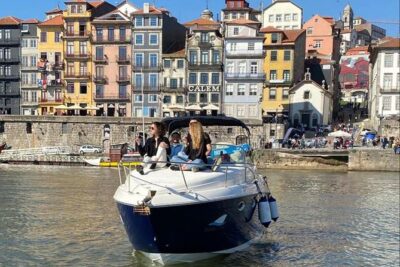
The private Douro cruise lasts about two hours and is designed for sunset. It includes views of Porto, Gaia, the six bridges, and the riverside districts. The listed private cruise price ranges from €360 to €460, so confirm whether that is a group price before booking.
The Dona Antónia cellar experience lasts about 90 minutes and includes five Port wines. It focuses on Dona Antónia Adelaide Ferreira and her role in the Douro wine trade. This is a good add-on if you want a focused wine experience rather than only seeing the cellars from outside.
Fado options include a one-hour show with Port tasting or a roughly two-and-a-half-hour dinner with fado, folklore, and transport. The shorter show costs €20 to €26, while dinner is listed at €80 in the optional activity section and €65 in the admission list. Because the prices differ in the supplied details, confirm the current amount and exactly what is included before paying.
The tour can also be extended at €30 per extra hour per booking. That may be useful if you want to enter several monuments, but an extension cannot turn every listed stop into a full visit.
Who should book this Porto tour
I would recommend it to first-time visitors who want a clear overview, families who value a private vehicle, and anyone with limited time in Porto. It also suits people who find steep streets difficult or who want hotel pickup instead of navigating the city on their own.
It is less suitable if you prefer slow museum visits, long meals, or unplanned wandering. Porto rewards time on foot, especially around the cathedral, São Bento, Carmo, Clérigos, and the riverfront. This tour shows you where to return, but it cannot replace that slower second look.
The activity has a 4.9 rating from 11 reviews, with all listed respondents recommending it. The strongest praise centers on the guide’s command of the area and its history, plus the high quality of the journey. Since no guide name is supplied, confirm who will lead your tour if having a particular guide matters to you.
Free cancellation is available up to 24 hours before the start time. The experience depends on good weather and a minimum number of participants, with a different date or full refund offered if the operator cancels for those reasons.
Should you book it?
Book this tour if you want efficient coverage and private comfort more than long interior visits. Its best moments are São Bento, the bridge viewpoints, Bolhão Market, Porto Cathedral, and the Gaia panorama, with the coast adding useful variety.
Before booking, decide which paid sights matter most. I would reserve the tour, then choose either Livraria Lello and Clérigos Tower or a church and Palácio da Bolsa, rather than attempting every admission. Add the Port tasting or fado later if you want a more relaxed cultural experience.
FAQ
How long does the Porto private tour last?
The tour lasts approximately four hours.
Is hotel pickup available?
Yes. Hotel pickup is offered, and the activity ends back at the meeting point.
Is this a private tour?
Yes. Only your group participates.
What language is the tour offered in?
The tour is offered in English.
What is included in the vehicle service?
Transport in a luxury vehicle, Wi-Fi, bottled water, refreshments, personal accident insurance, and civil liability insurance are included.
Are admission fees included?
No. Admission to places such as Livraria Lello, Clérigos Tower, Palácio da Bolsa, and São Francisco Church is not included.
Is the Douro River cruise included?
No. The private sunset cruise is an optional extra and lasts approximately two hours.
Can I cancel for a full refund?
Yes, if you cancel at least 24 hours before the experience starts. Cancellations made less than 24 hours before the start time are not refunded.
Newest Porto reviews on the site
- Porto – Old Town Tour with an official guide★ 5.0 · 6 reviews
- Yacht Douro Tour★ 4.8 · 11 reviews
- Vila Nova de Gaia: Porto Discovery Tasting★ 4.8 · 17 reviews
- Visit to a Port Wine Cellar★ 4.8 · 5 reviews
- Vila Nova de Gaia: Winery Tour with 2 DOC Douro & 1 Port★ 4.8 · 101 reviews
- Vila Nova de Gaia: Douro Discovery★ 5.0 · 4 reviews
- WOW Porto: The Wine School Workshops and Tastings★ 4.7 · 20 reviews
- Private Portuguese Cooking and Wine Experience in Porto★ 5.0 · 30 reviews
Private, compared.
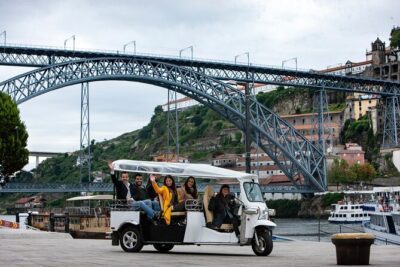
Discover Porto’s Highlights on a 2-Hour Private Electric Tuk Tuk
Read our review →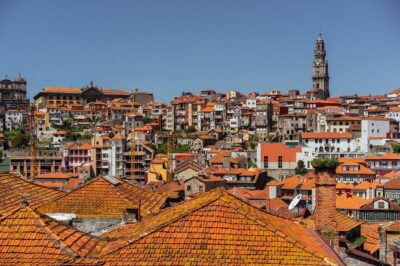
Porto PRIVATE TOUR With Locals: Highlights & Hidden Gems
Read our review →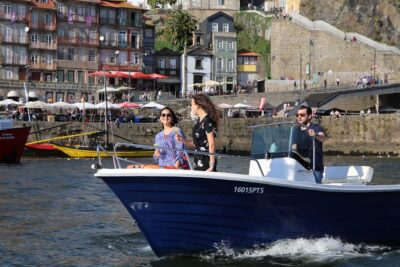
Private tour in the Douro (1 to 4 people) on a boat just for you
Read our review →
Historic Porto by Private Electric Tuk Tuk to Top Landmarks
Read our review →
Private Tour of the Historic City in a Classic Ford T
Read our review →
Porto Private Food and Drink Tasting Tour with Local
Read our review →