
Reviewed · PORTO WALKING TOURS
Porto, unveiling the city | walking tour | city gems
Porto reveals itself best at street level, where tiled stations, old jail walls, steep lanes, river views, and working markets sit close together. This private walk with Rui Silva gives you the broad picture without leaving out the small details, including Jewish history, writers, local food, and the stories behind Porto’s monuments.
I like the route’s range, from São Bento Railway Station and Livraria Lello to the Horto das Virtudes garden and Bolhão Market. I also like the private format, since Rui can adjust the walk to your interests and offer useful ideas for the rest of your stay, such as francesinha, fado, viewpoints, and nearby places to visit.
The main thing to consider is pace. Sixteen stops in about three hours means some places receive only a quick introduction, and several famous attractions are viewed from outside unless you pay for entry separately. You’ll also need moderate fitness for walking through Porto’s slopes and streets.
Key points to know before booking
- Private guidance from Rui Silva: Your group gets one guide, with room to ask questions and shape the walk around your interests.
- A strong first look at Porto: The route links São Bento, the cathedral, Clérigos, Ribeira, Dom Luís I Bridge, Bolhão Market, and other central sights.
- More than the usual monument circuit: Jewish history, writers, art galleries, local culture, and working market life all appear along the way.
- Mostly an exterior walking tour: Several stops last only a few minutes, and entry tickets for places such as Clérigos Tower, Livraria Lello, and the Soares dos Reis Museum are not included.
- Coffee and pastry included: The experience includes an espresso and pastry, a useful pause during a three-hour walk.
- Best for early orientation: It runs on Saturday and Sunday from 10 a.m. to 1 p.m., making it a practical way to begin a Porto visit.
A smart way to begin at São Bento Station
The tour starts at São Bento station, in Praça de Almeida Garrett. This is a strong meeting point because you are already in central Porto, close to several major sights and public transportation.
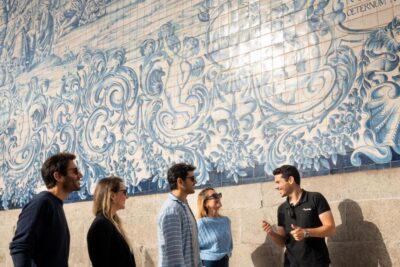
São Bento is more than a place to catch a train. Its grand entrance hall is known for its azulejos, the painted ceramic tiles that appear throughout northern Portugal. The stop is short, about five minutes, so you should expect an introduction to the station’s importance and decoration rather than a long architectural talk.
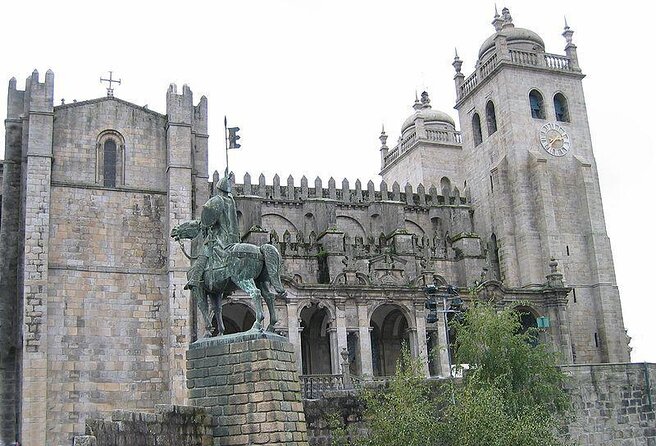
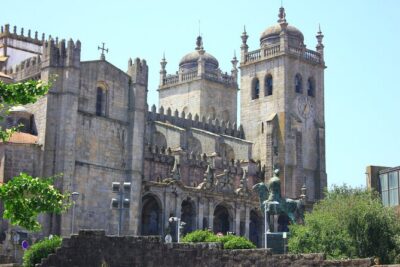
From there, the walk heads to Porto Cathedral. The cathedral area gives you a quick sense of the city’s age, religious influence, and high position above the Douro. The description of the site reaches back to the Iron Age, so Rui uses the area to connect Porto’s earliest settlement with later periods of Portuguese history.
The cathedral stop lasts about ten minutes. Admission is listed as free, though the tour does not promise time inside every part of the building. If you later want to explore the cathedral tower, the experience can help you understand what you are seeing. One detailed account describes returning afterward to visit the tower, with the ticket costing three euros at that time. Prices can change, so check locally.
More walking tours in Porto:
- Porto Walking Tour, Lello Bookshop, River Cruise and Cable Car
★ 5.0 · 3,354 reviews - Experience Porto’s Charm: 3-Hour Guided Walking Tour
★ 5.0 · 2,432 reviews - Porto: 3-Hour Guided City Highlights Walking Tour
★ 4.8 · 2,050 reviews
Porto’s literary and architectural landmarks
The next section brings you past the Antiga Cadeia da Relação, the old city jail. You will spend only about a minute here, so think of it as a story stop rather than a museum visit. The building is linked to one of Portugal’s best-known love stories, giving Rui a chance to show how literature and local memory cling to Porto’s streets.
The route then passes Torre dos Clérigos, one of the city’s clearest symbols. The tower was designed by Nicolau Nasoni and is listed as a brief three-minute stop. You can learn why it matters and decide later if climbing it suits your plans. Admission is not included.
Livraria Lello receives another short stop. The bookstore is often presented as one of the most beautiful in the world, and its carved wood, dramatic staircase, and ornate interior have made it a major Porto attraction. This walk does not include admission, and the listed time is only three minutes, so you should not book the tour expecting a full bookstore visit.
That limitation is important. The walk is designed to explain Porto and help you choose where to return, not to provide long visits inside every paid attraction. If Livraria Lello or Clérigos Tower is a priority, plan separate time and budget for it.
Art, gardens, and stories beyond the main sights
The Miguel Bombarda Art Block adds a different side of Porto. Here, the focus shifts from historic monuments to street art and galleries. The stop itself is short, only about two minutes, but it signals that Porto’s culture is not limited to churches, bridges, and old stone buildings.
The Museu Nacional Soares dos Reis follows as a brief introduction to Portuguese art. Admission is not included, and the walk does not allow time for a full museum visit. Still, this is useful if you want to decide which cultural sites deserve a longer visit during your stay.
One of the more unusual stops is the Jardim Municipal do Horto das Virtudes. The garden connects several layers of Porto: a creek, a former Jewish neighborhood, a battlefield, and a steep urban garden. The five-minute visit gives you a pause from the main streets and a chance to see how small green spaces can hold several chapters of the city’s past.
I especially like this part of the route because it breaks up the standard checklist. You are not only moving between famous buildings. You are also being shown how geography, faith, conflict, and daily life shaped Porto.
Ribeira and the Dom Luís I Bridge
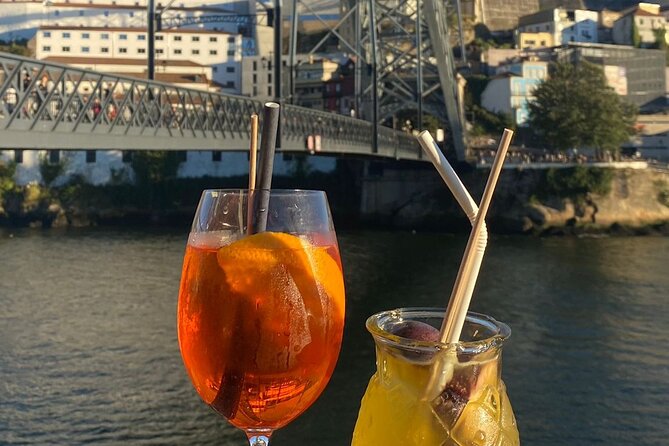
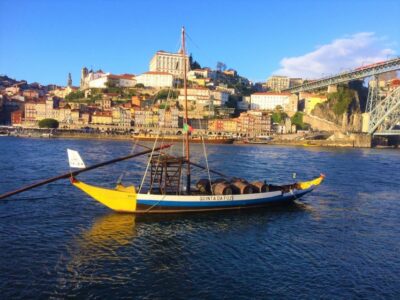
The walk continues to Praça da Ribeira, the postcard view most closely tied to Porto. This former market square sits beside the river and offers a natural place to stop, look across the water, and recharge.
The scheduled pause is about ten minutes. That is enough to take in the setting, ask questions, and get your bearings, though it is not a long meal break. The river is central to Porto’s identity and history, so this is one of the places where the tour’s larger story comes together.
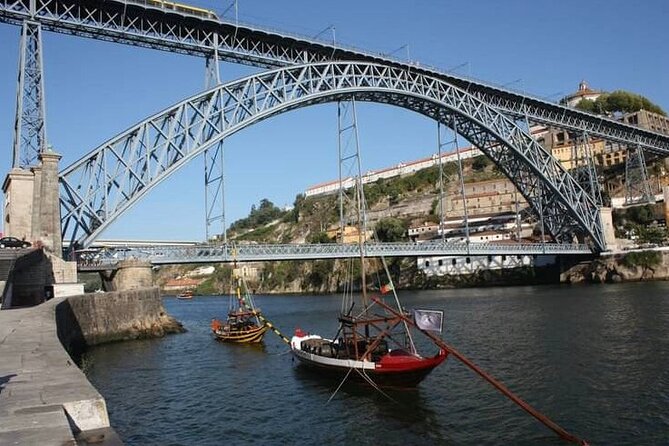
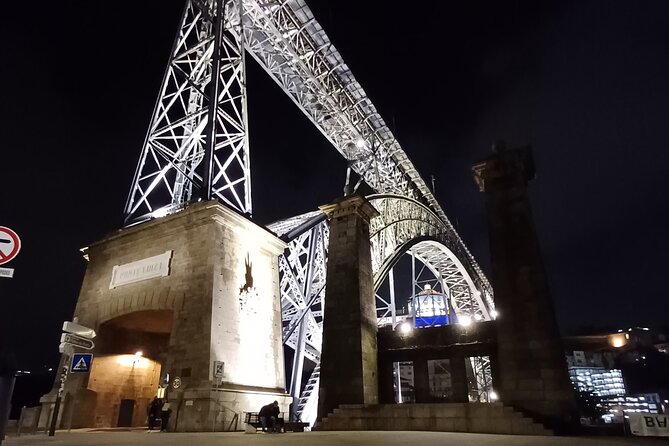
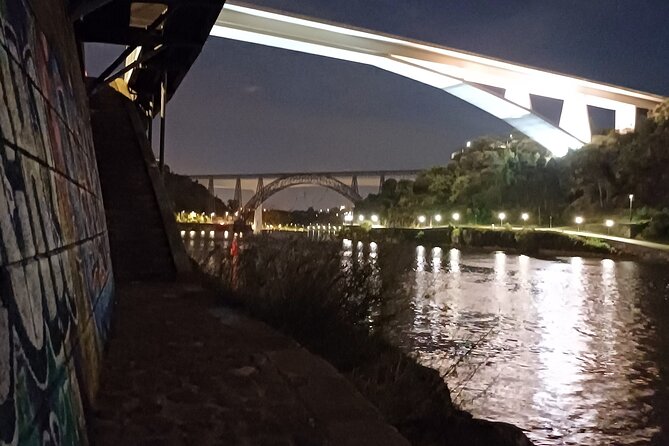
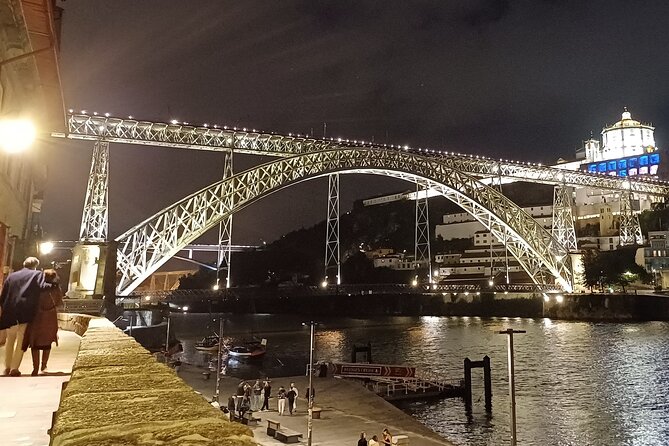
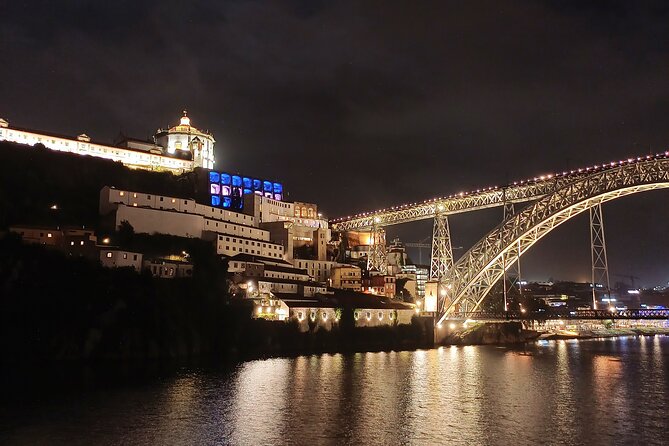
Next comes the Dom Luís I Bridge, Porto’s most recognizable crossing. The route includes crossing the bridge and discussing its stories. The listed stop is about five minutes, but the actual walking time may depend on the group’s pace and the route taken.
The bridge is also a practical reminder that Porto is hilly and divided by the river. You should wear shoes with good grip and expect slopes, steps, and uneven pavement. The tour requires moderate physical fitness, and this is not a flat city walk.
Same city, a completely different kind of day out:
- The Unvanquished Tour in Porto City Center
★ 5.0 · 26,497 reviews - From Porto: Douro Valley w/ Boat Tour, Wine Tasting & Lunch
★ 4.7 · 19,061 reviews - Complete Douro Valley Wine Tour with Lunch, Wine Tastings and River Cruise
★ 5.0 · 12,920 reviews - Porto: Six Bridges Cruise
★ 4.2 · 11,680 reviews
Batalha, theaters, and a famous café
After the bridge section, the walk reaches Praça da Batalha, near the edge of the old city walls. This is described as the end of the basic tour, with extra curiosities possible from this point. That flexibility matters in a private tour. If you are more interested in architecture, Jewish history, food, writers, or local customs, this is a natural time to guide the conversation.
The Teatro Nacional São João is nearby. It is described as the oldest theater in Porto, though the stop is only about two minutes and does not include a performance or interior visit. You will get context rather than a theater tour.
Café Majestic is another quick stop. This ornate café is known for its luxury and for queues to enter. It is also associated with J.K. Rowling, who confirmed that she had been there. The walk takes you through the area, but you should not assume that a table or extended café visit is part of the tour.
These short stops are useful for orientation. They show you where Porto’s grand public spaces, cultural institutions, cafés, and shopping streets fit together. At the same time, you may want to return later if you care about seeing the interiors.
Bolhão Market and everyday Porto
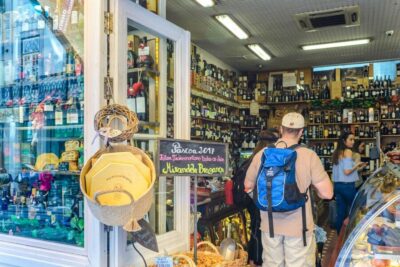
Mercado do Bolhão is the longest scheduled stop, with about twenty minutes. That extra time makes sense. The recently renewed city market is a place for products, food, drink, and the people who work the stands.
This is one of the best parts of the route for seeing Porto as a living city rather than a collection of monuments. You can look at local products, consider a snack, and watch the daily rhythm of the market. The tour does not include a meal, but the market gives you a chance to decide if you want to eat or shop there.
Because the market stop is longer than most of the others, you can ask Rui practical questions about food and local customs. His advice on francesinha was particularly useful to one couple, who also received suggestions for a fado show and viewpoints. Those recommendations can save you from spending the rest of your visit guessing where to go.
The included espresso and pastry fit well with this part of the walk. The information provided does not specify exactly where or when the refreshment is served, but you can expect coffee and a pastry to be included in the experience.
Porto’s writers, squares, and local identity
The route then continues to the Monumento Almeida Garrett. Garrett was one of Porto’s notable writers, and the monument gives Rui another way to explain the city through its literary figures. The stop lasts about five minutes.
Praça da República follows. This historic square is used to discuss cultural differences among local people and the way Porto developed. The scheduled stop is short, but the subject is broad enough that a private conversation can make it more useful. If you have questions about local identity, language, food, or customs, ask them here.
The final stop listed is simply the river, described as essential to Porto’s life and origin. That broad ending makes sense. After seeing stations, churches, markets, gardens, bridges, and squares, you finish with the force that helped shape the city in the first place.
The tour returns to the starting point at São Bento station. Since the route includes many central sights, you should leave with a clear map of areas worth revisiting on your own.
What the private format is really worth
The price is $60.01 per person. For three hours, that is not the cheapest way to see Porto, especially because several attraction tickets are extra. But the price covers a private experience, not a large shared group, and that changes the value.
You get direct time with Rui, an English-speaking guide who can adjust the walk to your questions and interests. This matters if you want more than a rehearsed list of dates. One person may want Jewish history, another may care about writers and art, while someone else needs restaurant and fado suggestions. A private format can accommodate those differences.
The tour also gives you practical value beyond the three-hour route. Specific suggestions for francesinha, fado, viewpoints, Crystal Palace Gardens, Castro’s, and the Porto Cathedral tower helped shape one couple’s later plans. You should not expect every recommendation to be included, but you can use the walk to build the rest of your visit.
Group discounts are available, and the experience is offered in English. It is booked, on average, 25 days ahead, so I would not leave it until the last moment if your weekend schedule is fixed.
Who will enjoy this Porto walk most
I would choose this experience if you want a first-day orientation and prefer conversation to a fixed audio guide. It suits couples, families, and small private groups that want to move at their own pace and ask plenty of questions.
It is also a good match if you have already seen the obvious sights in other cities and want some local context around art, writers, Jewish history, markets, and city development. The route does not stay only on the main monument path.
You should think twice if your main goal is extended time inside Porto’s major attractions. The cathedral, Clérigos Tower, Livraria Lello, and Soares dos Reis Museum receive short stops, and paid admission is not included. You may need to return later.
The walk is not ideal for anyone who struggles with hills or uneven streets. Porto’s slopes are part of its character, but they require sensible shoes and a moderate level of fitness. Service animals are allowed, and the meeting point is near public transportation.
The experience runs Saturday and Sunday from 10 a.m. to 1 p.m. That timing works well for an early visit, but it gives you less scheduling choice than a daily tour. Free cancellation is available up to 24 hours before the start time. If poor weather cancels the walk, you are offered another date or a full refund.
Should you book it?
Book this walk if you want Porto explained by a local guide who can connect monuments to food, writers, religion, art, and everyday life. Rui Silva’s strongest contribution is the personal advice and flexible conversation, not simply the number of stops.
Skip it if you want long museum visits, interior tours, or a slow photo walk focused on only two or three landmarks. At $60.01 per person, the value comes from private attention, city orientation, and useful suggestions for the rest of your stay. For a first weekend in Porto, that can be a fair trade.
FAQ
How long is the Porto walking tour?
The experience lasts approximately three hours, from 10 a.m. to 1 p.m.
Where does the tour start?
It starts at São Bento station, at Praça de Almeida Garrett, 4000-069 Porto, Portugal.
Where does the tour finish?
The activity ends back at the meeting point.
Is this a private tour?
Yes. Only your group participates in the activity.
What language is the tour offered in?
The tour is offered in English.
How much does the experience cost?
The listed price is $60.01 per person. Group discounts are available.
Are attraction tickets included?
No. Admission is not included for places such as Antiga Cadeia da Relação, Torre dos Clérigos, Livraria Lello, and Museu Nacional Soares dos Reis. Several other stops are listed as free.
Is food or drink included?
An espresso and pastry are included. The tour also stops at Mercado do Bolhão, where you can eat, drink, or shop at your own expense.
What level of fitness is needed?
A moderate level of physical fitness is recommended. You will be walking through Porto, including areas with slopes and uneven streets.
Can I cancel the tour?
You can cancel up to 24 hours before the start time for a full refund. Changes or cancellations made less than 24 hours before the start time are not accepted for a refund. If poor weather cancels the activity, you are offered a different date or a full refund.
Newest Porto reviews on the site
- Porto – Old Town Tour with an official guide★ 5.0 · 6 reviews
- Yacht Douro Tour★ 4.8 · 11 reviews
- Vila Nova de Gaia: Porto Discovery Tasting★ 4.8 · 17 reviews
- Visit to a Port Wine Cellar★ 4.8 · 5 reviews
- Vila Nova de Gaia: Winery Tour with 2 DOC Douro & 1 Port★ 4.8 · 101 reviews
- WOW Porto: The Wine School Workshops and Tastings★ 4.7 · 20 reviews
- Vila Nova de Gaia: Douro Discovery★ 5.0 · 4 reviews
- Private Portuguese Cooking and Wine Experience in Porto★ 5.0 · 30 reviews
Porto Walking Tours, compared.
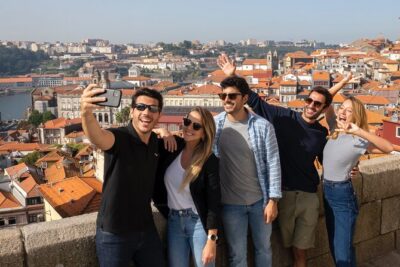
Porto Walking Tour, Lello Bookshop, River Cruise and Cable Car
Read our review →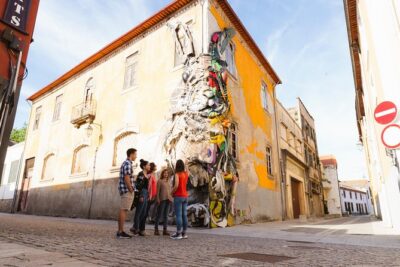
Experience Porto’s Charm: 3-Hour Guided Walking Tour
Read our review →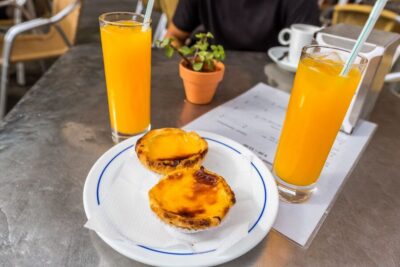
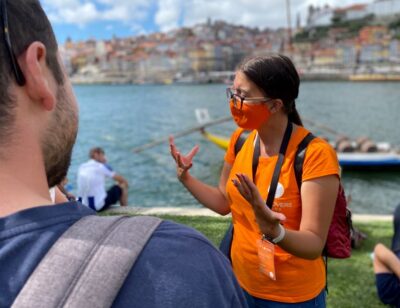
Walking Tour, Lello Bookshop, Boat and Cable Car
Read our review →Browse the lists this tour appears in