
Reviewed · PORTO WINE TASTINGS
Porto: Wine Tasting with Tapas Walking Tour
Port wine makes more sense when you see where it is stored, hear how it is made, and taste it beside other Portuguese wines. This three-hour walking tour links a cellar visit in Vila Nova de Gaia with Porto’s old streets, Douro River views, and a relaxed tapas stop.
I like two things right away: you get a useful introduction to five wines, including Port, Vinho Verde, and Douro Valley bottles, and the walking route gives you more than a tasting room. Guides such as Rita, Daniela, Carlos, and Mariana are praised for clear explanations and good local tips.
The main catch is the walking. Porto has steep lanes, cobbles, and uphill stretches, and one person found the route tiring. A late guide has also caused a rough start for at least one group, though the overall experience remained highly rated at 4.4 out of 5 from 1,541 ratings.
Key points at a glance
- Five Portuguese tastings: Expect two Port wines, Vinho Verde, and wines from the Douro and other Portuguese styles, with the exact selection possibly varying.
- A real cellar visit: You spend about 50 minutes learning about Port production and tasting two varieties in a Port wine cellar.
- Porto on foot: The route includes the Douro River, old neighborhoods, historic streets, scenic viewpoints, and the Ribeira district.
- Tapas with local flavor: Portuguese snacks include codfish cakes, cheese, cured meats, bread, and other small bites.
- Strong guide element: Rita, Daniela, Solange, Catia, Carlos, Mariana, and other guides have been praised for history, wine explanations, humor, and restaurant advice.
- Good first-day option: The tour combines orientation, food, wine, and sightseeing in one compact outing.
Why this Porto wine walk works so well
This is not just a succession of glasses at a bar. The experience joins three parts of Porto’s identity: the Douro River, the Port cellars across the water, and the food served in local eating spots.
That combination matters. If you only visit a cellar, you learn about Port but may not get a feel for the city around it. If you only walk Porto, you may see the famous views without understanding why wine has shaped the city for centuries. Here, the guide connects the two.
The tour lasts about 3 to 3.5 hours, which is enough time to cover a lot without taking up an entire day. I would schedule it early in your Porto stay. The city walk helps you get your bearings, and several guides, including Ana, Rita, and Solange, have offered practical suggestions for restaurants and things to do afterward.
The tone seems informal rather than academic. You learn how to taste wine, but you are not expected to know wine terms beforehand. That makes this a good fit if you enjoy wine but usually just drink it without thinking much about the work behind it.
More food tours in Porto:
- Porto Food & Wine Tasting Tour with Lunch or Dinner Option
★ 5.0 · 2,303 reviews - Porto Craft Beer Tour: 7 Beers + 3 Food Pairings in a Small Group
★ 5.0 · 1,725 reviews - Porto: Douro Valley & Amarante Wine, Food & River Tour
★ 4.7 · 1,411 reviews
Starting beside the Douro River
The meeting point can vary by booking option, with one listed start at Maria Odete near the Pilares Ponte Pênsil. Check your confirmation carefully, since arriving at the wrong side of the river would be an unpleasant way to begin.
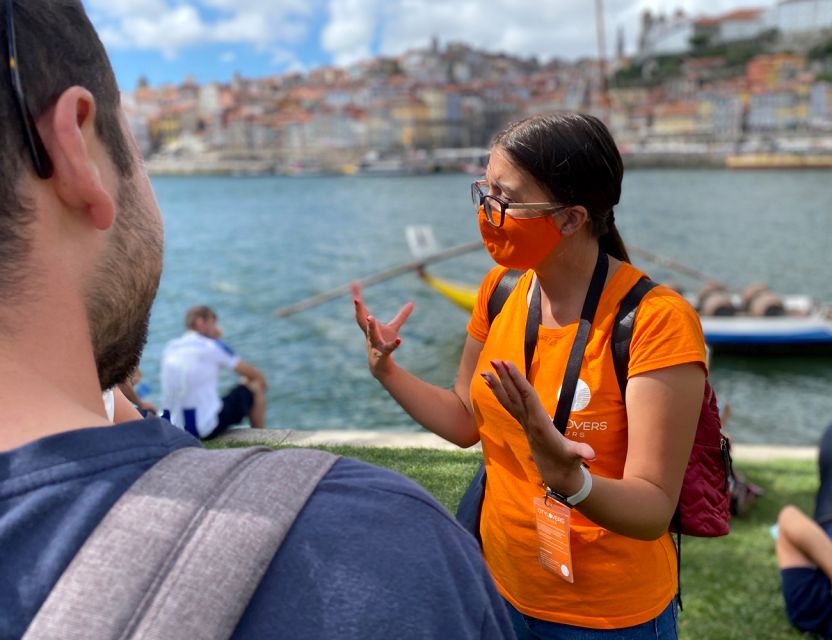
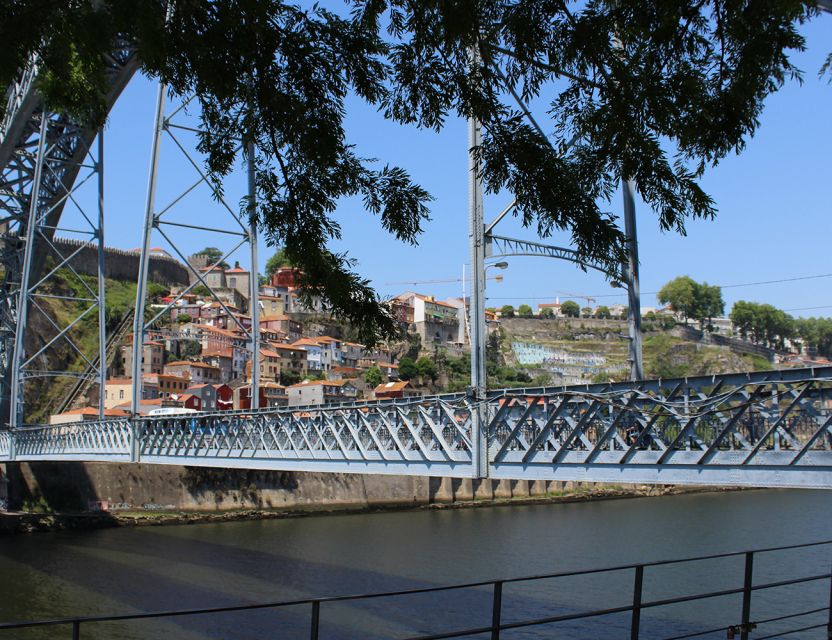
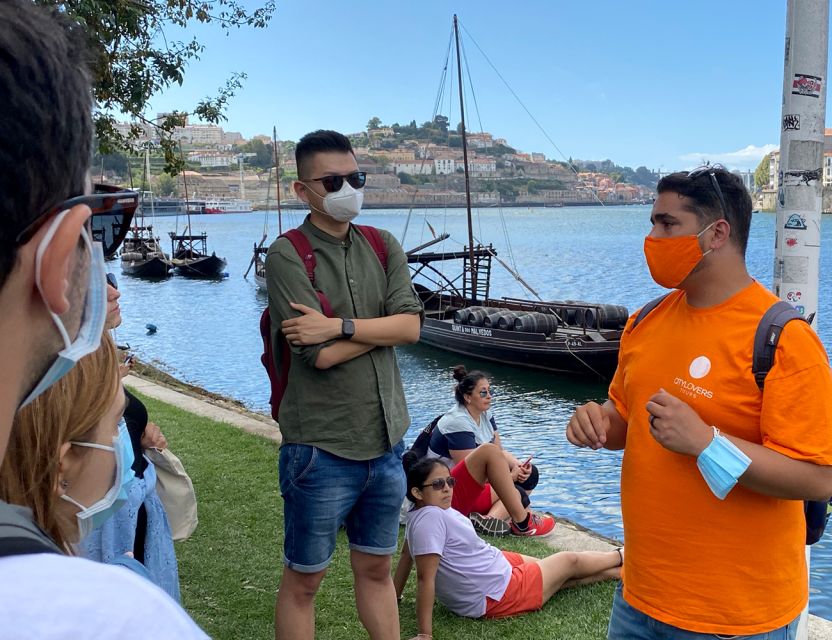
The first river portion takes about 15 minutes with the guide. This is a short introduction, not a full river cruise. Its value is the setting: the Douro gives you the geographical key to Porto and Vila Nova de Gaia, where the famous Port cellars are located.
The riverfront also sets the mood for the walk. You get views toward the bridges, old buildings, and the two sides of the city. Bring a camera, but keep your attention on the route as well. Porto’s riverfront is easy to admire, yet the tour is moving toward the cellar and later tasting stops.
Inside the Port wine cellar
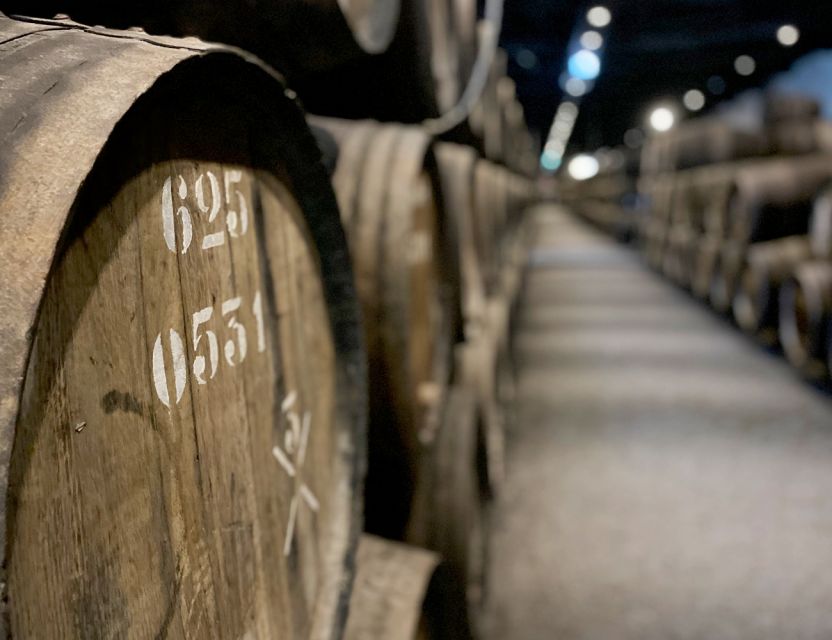
The cellar visit lasts roughly 50 minutes and includes an explanation of Port production followed by two Port tastings. The entrance fee is included, so you do not need to budget separately for this part.
This is the most focused section of the tour. You learn why Port is different from ordinary table wine and how the production process developed around the Douro Valley and Porto’s export trade. The cellar setting gives the explanation some weight. You are not simply hearing a guide describe barrels in the abstract.
The exact cellar experience can depend on the guide and the day. One booking includes a visit to the Fonseca Port Wine Cellars, which is also listed as the finishing point. The route details indicate a Port cellar visit, but you should check your confirmation for the precise venue and end point.
You will taste two different Port styles. The goal is not to rush through them, but to compare how the wines look, smell, and taste. The guide also explains how to approach a glass, which is useful if you want to get more from the later tastings.
One point for careful readers: a cellar presentation may move at a brisk pace. If you want to read every information panel, you may not have much time at each one. Listen to the guide first, then ask questions during the tasting, when the pace is usually more relaxed.
Walking Porto’s old streets and Ribeira
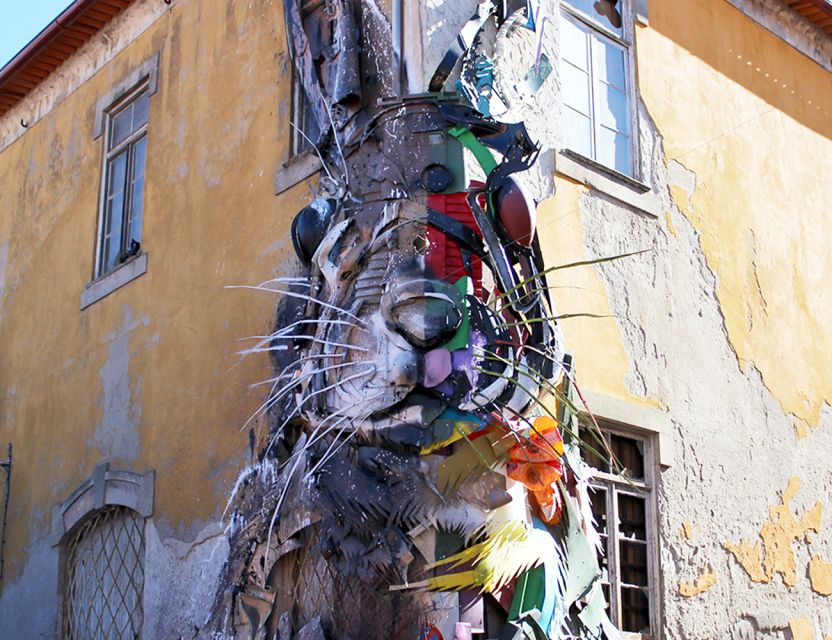
After the cellar, the tour shifts from wine production to the city itself. The walking section lasts about 30 minutes and includes narrow cobbled streets, historic buildings, scenic views, and the Ribeira district.
This is a compact city walk, not a full historical tour of Porto. Still, it adds useful context. You hear stories about Porto’s past, its wine trade, and the people who shaped the city. Guides have also pointed out local places and shortcuts, which can be handy when you explore independently later.
The route may cross between Porto and Vila Nova de Gaia, depending on the starting option and the exact order of stops. That is one of the best features for a first visit because you see both the old city and the cellar side of the river.
Plan for uneven pavement and some uphill walking. Porto is not flat, and the cobblestones can be hard on thin soles. Wear proper walking shoes, as requested in the tour information. On a hot day, the guide may pause in shaded spots, but you should still bring water and dress for the weather.
The walking pace seems manageable for most people, but this is not the right choice if you want to avoid hills altogether. One person described the walk as exhausting, while another called it very doable. Your comfort will depend on the heat, your footwear, and how used you are to Porto’s slopes.
More walking tours in Porto:
- Porto Walking Tour, Lello Bookshop, River Cruise and Cable Car
★ 5.0 · 3,354 reviews - Experience Porto’s Charm: 3-Hour Guided Walking Tour
★ 5.0 · 2,432 reviews - Porto: 3-Hour Guided City Highlights Walking Tour
★ 4.8 · 2,050 reviews - Porto: Historic City Center Walking Tour
★ 4.7 · 1,172 reviews
Portuguese wines beyond Port
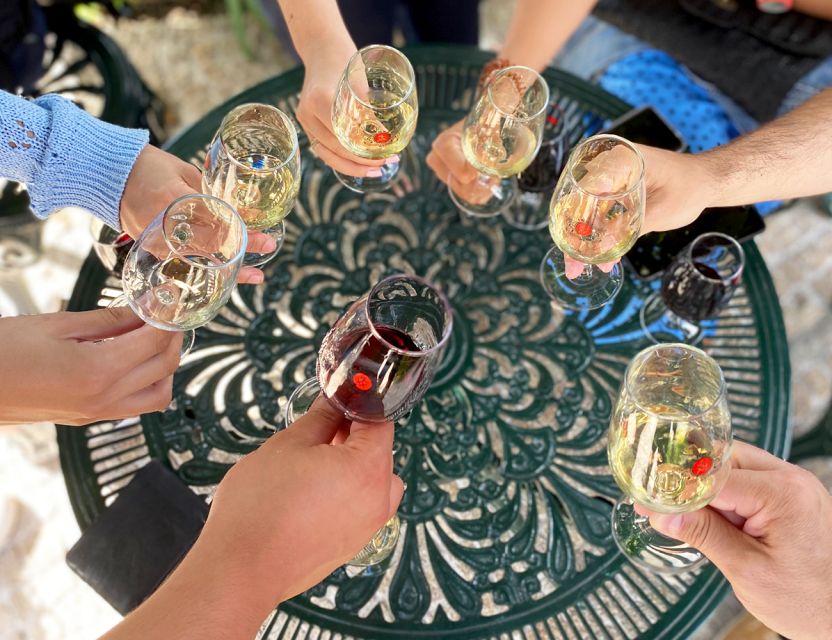
The tasting is broader than the name suggests. Along with two Port wines, the experience includes Vinho Verde and wines from the Douro Valley, bringing the total to five wine tastings.
Vinho Verde gives you a useful contrast. It is a Portuguese wine style that feels very different from sweet or fortified Port, and tasting both helps you understand that Portugal is not a one-wine country.
Douro wines add another comparison. The Douro Valley is best known internationally for Port, but the region also produces still wines. Trying these styles side by side makes the wine lesson more practical than a long lecture.
A past tasting included two Ports, one green wine, one white, one rosé, and one red, along with snacks. That selection may not be identical every day, but it shows the range you might encounter. If you are hoping for a particular grape or producer, this is not presented as a specialist wine seminar. The strength is variety and introduction.
You also learn basic tasting habits. Look at the color, smell the wine, take a small sip, and notice how the flavor changes. You do not need polished wine vocabulary. A good guide can help you identify what you like, which is more useful than memorizing technical terms.
Tapas, codfish cakes, and shared plates
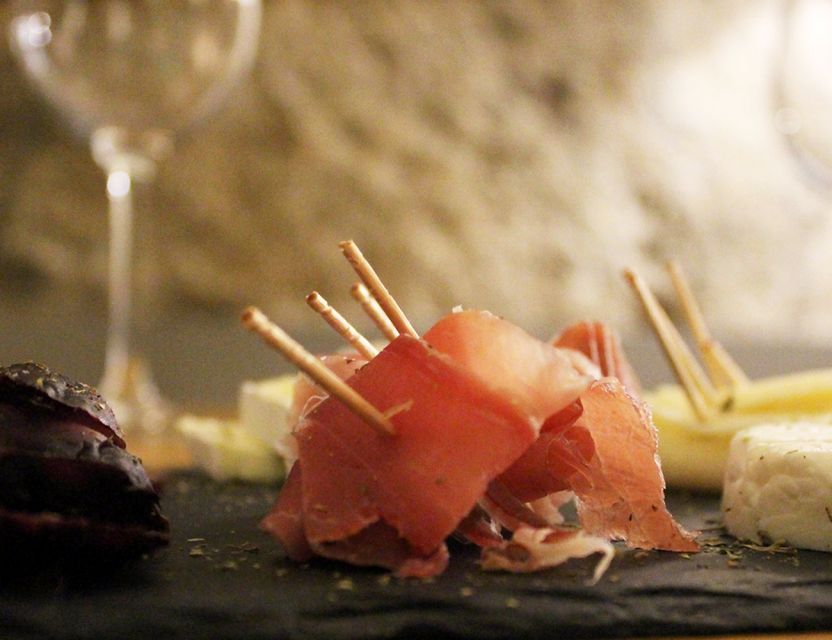
The food stop lasts about an hour and includes Portuguese tapas, wine, cheese tasting, and other small bites. Codfish cakes are specifically included, and the selection can also feature cheese, cured meats, and bread.
This is more than a token snack beside a glass. Food changes how wine tastes, and the stop gives you a chance to slow down and talk with the group. It also introduces everyday Portuguese flavors in a simple format.
Shared platters can be less predictable than individual servings. One past group found that bread portions were small and that dividing the platters evenly took some attention. Keep that in mind if you arrive very hungry. The listed food is tapas, not a full multi-course meal.
Another practical point is that snacks may not appear at every stop. The main food service is at the later tasting venue, so do not expect a bite with every glass. Have a light meal beforehand if you need more than small portions.
The setting is intended to be informal and social. Guides often use this stop to answer questions, explain pairings, and offer suggestions for other restaurants. That personal exchange is one reason the experience feels more useful than a standard cellar visit.
The guides make much of the difference
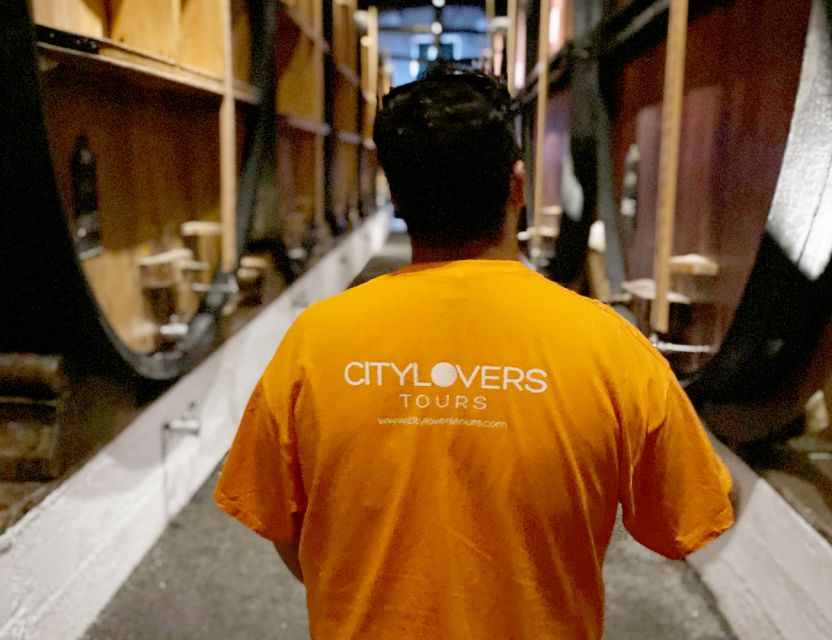
The experience is sold with a live guide in English, Spanish, French, or Portuguese. Guide quality matters here because the tour mixes wine instruction, city history, logistics, and group pacing.
Rita has been praised for explaining Porto directly and clearly, sharing useful restaurant advice, and showing real affection for her home city. Daniela is noted for linking wine and city history while keeping the group together. Solange has been singled out as a warm first-day guide, and Mariana for bringing the Douro Valley and Port-making process to life.
Carlos, Ana, Catia, Mafalda, Anxela, Benjamin, and others have also received strong praise for friendliness, humor, patience, and local recommendations. The recurring theme is not a formal lecture. It is a guide who talks with you, answers questions, and helps the group feel comfortable.
There is one operational caution: one group reported that the guide arrived late and that part of the booked group did not turn up. That appears to be an exception rather than the norm, but it is worth allowing a little patience at the start.
Group size can vary. In one case, a booking became a private tour because no one else joined. You should not count on that, but a small group can make it easier to ask questions and shape the conversation.
Is $53 a fair price?
At $53 per person, the price is reasonable if you would otherwise pay separately for a cellar entrance, several wine pours, tapas, and a guided city walk.
The value comes from the combination. You receive five tastings, cellar admission, a guide, food, and a route through two connected parts of Porto. Booking each piece independently could cost more and would require you to organize the timing yourself.
This is not the cheapest way to taste one glass of Port. If your sole aim is to visit a cellar, you can find a simpler outing. The price makes more sense for someone who wants a structured introduction to Porto, wine, and local food in one half-day.
The tour also saves planning time. You do not need to choose a cellar, compare wine bars, and work out how to cross between Porto and Gaia. For a first visit, that convenience has real value.
Who should book it?
I would recommend this to first-time visitors who want a broad introduction rather than a specialist wine course. It suits couples, friends, and solo visitors who enjoy meeting a guide and sharing food at a table.
It is also a good choice for casual wine drinkers. You can learn how to taste without feeling tested, and the range of Port, Vinho Verde, red, white, or rosé styles gives you plenty of comparison.
Book it if you enjoy walking and want city views between tastings. Skip it if hills, cobbles, or shared tapas are likely to make you uncomfortable. Pregnant women should not book this experience, as it is listed as unsuitable for them.
Wear comfortable shoes, bring your passport or ID card, and allow enough time to reach the correct meeting point. Since the start location may vary, confirm the exact option before setting out.
Free cancellation is available up to 24 hours before the start for a full refund, and you can reserve now and pay later. Those terms are useful if your Porto plans are still shifting.
Should you book this Porto wine tour?
Book it if you want one well-packed afternoon covering Port, other Portuguese wines, local bites, Porto’s old streets, and the Douro waterfront. The best reason to choose it is the mix: you learn in the cellar, get oriented on foot, then sit down with wine and food.
I would not choose it for a quiet luxury tasting or a deep study of one producer. The route is active, the food is tapas-sized, and the city walk includes hills. But at $53, it offers a practical and friendly introduction to Porto, especially early in your stay.
FAQ
How long does the Porto wine and tapas tour last?
The tour lasts about 3 to 3.5 hours, depending on the schedule and route.
How many wines are included?
Five wine tastings are included. The selection includes two Port wines, Vinho Verde, and wines from the Douro Valley, with one past tasting also including white, rosé, and red wine.
Is the Port wine cellar entrance included?
Yes. Entrance fees at the cellar are included in the tour price.
What food is included?
The tour includes Portuguese tapas, with codfish cakes specifically mentioned. The food stop may also include cheese, cured meats, bread, and other local bites.
Where does the tour start?
There are two possible starting options, and one listed meeting point is Maria Odete near Pilares Ponte Pênsil. The exact meeting point depends on the option booked.
Which languages are available?
Live guides are available in English, Spanish, French, and Portuguese.
Is the tour suitable for someone who does not know much about wine?
Yes. The tour explains the Port-making process and basic wine tasting, so you do not need previous wine experience.
What should I bring?
Bring a passport or ID card and comfortable shoes. The walk includes cobbled streets and uphill sections.
More Porto wine and port tastings
- From Porto: Douro Valley w/ Boat Tour, Wine Tasting & Lunch
★ 4.7 · 19,061 reviews - Complete Douro Valley Wine Tour with Lunch, Wine Tastings and River Cruise
★ 5.0 · 12,920 reviews - Porto: Live Fado Show with Glass of Port Wine
★ 4.8 · 6,498 reviews - Douro Valley: Historical Sites, Wine Experience, Lunch & Cruise
★ 5.0 · 5,133 reviews
Newest Porto reviews on the site
- Douro Valley Premium Tours – Private Driver & Guide★ 5.0 · 93 reviews
- Douro Valley Delights Wine Tasting and Scenic Vistas★ 5.0 · 3 reviews
- Douro valley Majestic★ 5.0 · 12 reviews
- Private off the beaten Douro Valley Wine Tour★ 5.0 · 100 reviews
- Tour the Douro wine region, and discover the fantastic landscape★ 4.5 · 4 reviews
- Douro Valley Private Full–Day Tour from Porto★ 5.0 · 23 reviews
- Private Tour to stunning Douro Valley and most renowned wineries★ 5.0 · 39 reviews
- Douro Tour on a Private Yacht in Porto★ 4.5 · 10 reviews
Porto Wine Tastings, compared.

Douro Valley w/ Boat Tour, Wine Tasting & Lunch
Read our review →
Complete Douro Valley Wine Tour with Lunch, Wine Tastings and River Cruise
Read our review →

Historical Sites, Wine Experience, Lunch & Cruise
Read our review →
Douro Valley Small-Group Tour with Wine Tasting, Lunch and Boat
Read our review →
Authentic Fado Show, Port Wine & Handmade Instruments
Read our review →
Douro Valley Tour with Wine Tasting, Cruise and Lunch
Read our review →Browse the lists this tour appears in