
Reviewed · PORTO WALKING TOURS
Best of Porto Private Walking Tour
Porto reveals itself best on foot, one steep street and grand viewpoint at a time. This three-hour private walk links the city’s key sights, from City Hall and Clerigos Tower to São Bento Station, the old riverside district, and the view from Jardim do Morro.
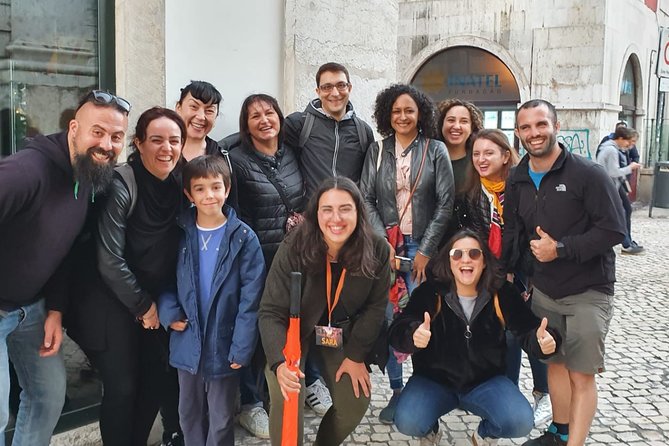
I like the personal guide and the strong mix of history, architecture, and local advice. Guides such as Monica, Jorge, Gianfranco, Caio, and Filipe have helped make the route lively for couples, families, and first-time visitors. The main drawback is the pace: Porto is hilly, and three hours leaves little time for long indoor visits.
- A private route from central Porto to a Douro viewpoint, with only your group taking part.
- Major first-day sights, including Clerigos Tower, Igreja do Carmo, São Bento Station, and the old city.
- Useful historical context, especially Portugal’s Age of Discoveries and Porto’s place in it.
- A guide-led walk rather than a simple photo stop, with room for questions and personal recommendations.
- A final view across the river at Jardim do Morro, in Vila Nova de Gaia.
- Free cancellation up to 24 hours before the start, with a different date or refund if bad weather cancels the tour.
Why this is a smart first look at Porto
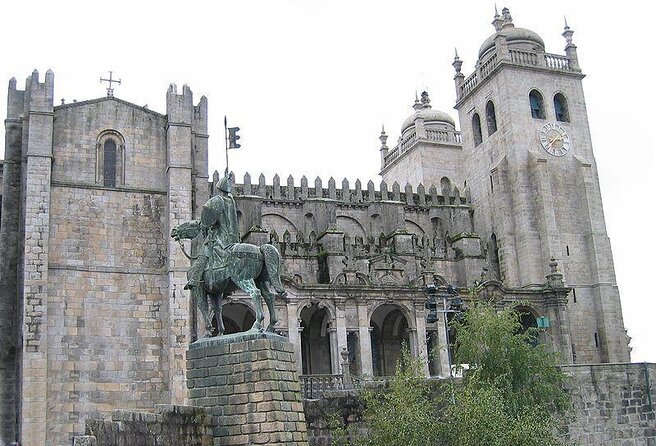
Porto is compact on a map but not always easy to read on foot. The old center rises and falls sharply, streets change character within a few minutes, and the most important sights are scattered between churches, plazas, railway tracks, and the Douro River.
This walk gives you a useful framework before you spend the rest of your visit exploring alone. You begin at Fonte dos Leões by Praça de Gomes Teixeira and finish across the river at Jardim do Morro. That point-to-point design matters. You are not simply returning to the place where you started, and the final view gives the route a satisfying finish.
I especially like the private format. You can ask why Porto’s buildings use so much tile, how the city relates to the Age of Discoveries, or which sights deserve a second visit. The guide can also adjust the tone for your group. Monica, for example, has been praised for keeping children interested, while other guides have brought a stronger focus on architecture, politics, or Portuguese and Brazilian history.
The tradeoff is that this is a highlights walk, not a slow museum tour. Several stops are short, often five or ten minutes. You will see the outside of many major buildings, learn why they matter, and perhaps enter a church or station, but you should not expect a long visit inside every attraction.
Starting beside the university and City Hall
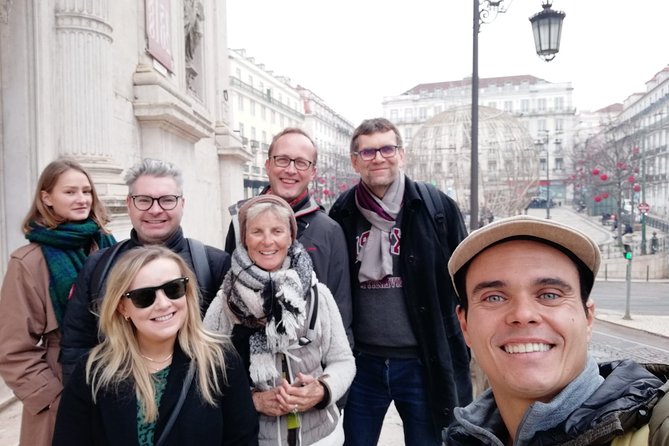
The meeting point is Fonte dos Leões, near Praça de Gomes Teixeira. From there, the route moves toward Porto City Hall, a handsome civic building with an imposing presence at the top of Avenida dos Aliados.
The City Hall stop is brief, listed at about five minutes, but it helps set the scene. This part of Porto feels formal and open, with a broad avenue leading toward the center. Your guide can give you the city’s basic orientation before the walk narrows into older streets.
The nearby university is also part of the opening stretch. It is described as the most important university in northern Portugal, and its presence helps explain the youthful energy around this part of town. This is a useful early stop because Porto is not only a historic city of churches and merchants. It is also a working university city.
Expect short distances to feel longer than they look. Porto’s center is hilly, and the walk includes slopes and uneven streets. Comfortable shoes are more important here than stylish ones. The tour information says most people can participate, but anyone who finds hills difficult should keep the route’s terrain in mind.
More walking tours in Porto:
- Porto Walking Tour, Lello Bookshop, River Cruise and Cable Car
★ 5.0 · 3,354 reviews - Experience Porto’s Charm: 3-Hour Guided Walking Tour
★ 5.0 · 2,432 reviews - Porto: 3-Hour Guided City Highlights Walking Tour
★ 4.8 · 2,050 reviews
Clerigos Tower and Porto’s grandest views
Clerigos Tower is one of Porto’s defining symbols. Even if you do not climb it during this tour, learning how it fits into the city helps you read Porto from almost any high point. Its tall profile is easy to spot, and it gives the center a clear visual marker.
A private guide can do more here than name the tower. You can ask how its position relates to the surrounding streets, churches, and viewpoints. The experience is strongest when the guide connects the building to the wider shape of Porto instead of treating it as an isolated monument.
Do not confuse seeing Clerigos Tower with visiting it at length. The tour is built around a walking overview, and the listed stops do not promise a tower climb or a long interior visit. If you want that experience, ask the guide whether there is time or plan a separate visit.
Igreja do Carmo and Porto’s famous tilework
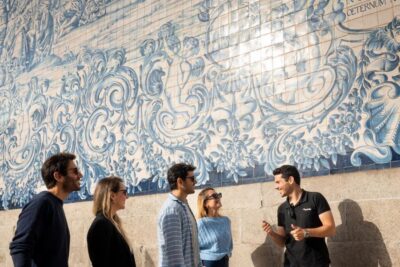
Igreja do Carmo is one of the most rewarding visual stops. Its façade is known for striking blue and white tilework, the kind of detail that makes Porto feel instantly different from other European cities.
The stop lasts about ten minutes and admission is free. That short visit is enough to appreciate the exterior and hear why tiled façades matter in Portuguese architecture. The tiles are not mere decoration. They turn a church wall into a broad historical image, designed to be read from the street.
This is also a good point to slow down for photographs. The façade works best from a little distance, so resist the temptation to stand directly against it. Your guide may point out details you would miss while simply passing by.
The limitation is time. Ten minutes lets you see the church and understand its importance, but it does not leave room for a quiet, detailed look at every tile panel. If churches are a major interest, return later on your own.
São Bento Station, where history meets daily life
São Bento Railway Station is often called one of the world’s most beautiful stations, and it earns that reputation through its interior tile panels. This is not a frozen museum. Trains still arrive and depart, so the building combines grand civic design with ordinary city life.
The stop lasts about ten minutes and admission is free. That makes it one of the best-value moments on the route. You get an impressive interior without paying an extra entry fee, while the guide explains the scenes shown in the tiled hall.
The station is especially useful for understanding Portugal’s public art. The building is part transport hub, part historical gallery. You can see how national stories were placed in a setting used by people every day.
Again, keep your expectations realistic. Ten minutes may be enough for the main hall, but the station can be busy, and trains do not pause for sightseeing. Stay close to your guide and let the explanation give the visit shape.
Same city, a completely different kind of day out:
- The Unvanquished Tour in Porto City Center
★ 5.0 · 26,497 reviews - From Porto: Douro Valley w/ Boat Tour, Wine Tasting & Lunch
★ 4.7 · 19,061 reviews - Complete Douro Valley Wine Tour with Lunch, Wine Tastings and River Cruise
★ 5.0 · 12,920 reviews - Porto: Six Bridges Cruise
★ 4.2 · 11,680 reviews
The churches, fountain, and bookshop stops
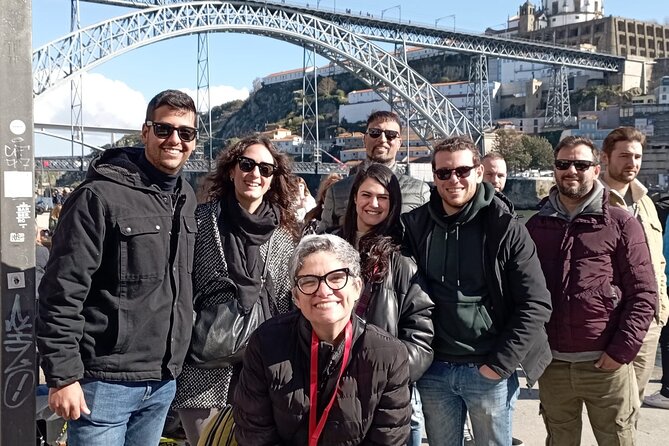
The route also includes Porto’s best-known fountain, one of the city’s oldest and most important churches, and a famous bookshop recognized around the world. The descriptions identify these places by their importance rather than by full names, so the exact order can depend on the guide and the walking conditions.
The bookshop is likely to be a major visual stop for many people. Its fame comes from its ornate interior and literary atmosphere, but a short walking tour does not guarantee an extended visit or a reserved entry. Ask your guide how the stop is handled if seeing the inside matters to you.
The fountain adds a smaller, more local-scale pause between the grand sights. Porto is full of details that make more sense when someone explains them, and a guide can show how a fountain, church frontage, or plaza fits into the city’s daily life.
The older church provides another contrast with São Bento and Igreja do Carmo. Instead of seeing Porto only through its most photographed façades, you get a sense of the city’s long religious and civic development. The tour does not promise lengthy interior visits, so consider this route a guided introduction rather than a church-by-church inspection.
From the Stock Exchange to Henry the Navigator
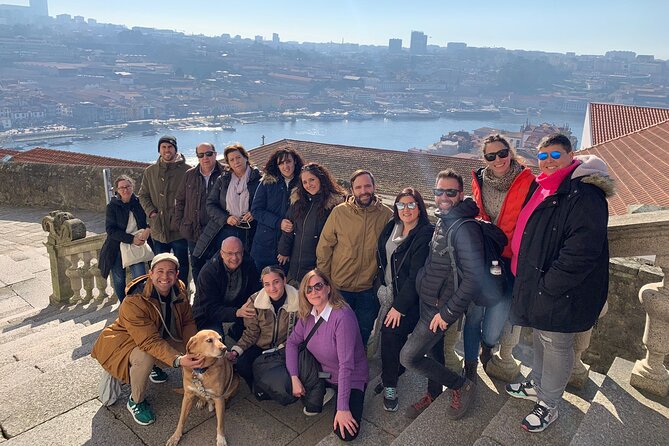
Porto’s history is closely tied to trade, the sea, and Portugal’s Age of Discoveries. The walk includes the former Stock Exchange, an important civic and commercial building, as well as the birthplace of Henry the Navigator, described as the father of the Discoveries.
These stops give the tour more substance than a string of attractive buildings. You begin to see how Porto’s wealth, political influence, and Atlantic connections shaped its architecture. The guide’s job here is to connect the places, not simply list dates.
This is where the quality of the individual guide matters most. Filipe has been praised for his academic background in history. Artur has been appreciated for linking Porto and Portugal with Brazil, drawing on both Portuguese and Brazilian history. Caio has brought an international perspective and a clear affection for the city he now calls home.
You should not expect a full course in maritime history. The value is the framework: Porto’s monuments become easier to understand when you know how trade, exploration, religion, and civic power overlap.
Entering Porto’s oldest district
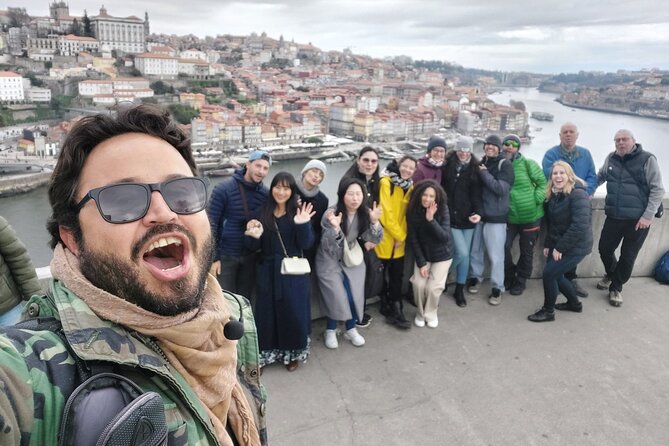
The walk reaches Porto’s oldest area, a district named a UNESCO World Heritage Site in 1996. This is the part of the city where the route’s various themes come together: steep lanes, old churches, commercial history, and the river below.
The old district can feel more rewarding than a single famous monument because it asks you to notice the whole setting. Look up at façades, down narrow lanes, and across the changing levels of the streets. The guide can help you spot corners you might otherwise pass without understanding.
This is also the point where the walking format earns its keep. A vehicle can show you Porto’s main outline, but it cannot give you the same sense of how the old streets connect. The private setting lets you stop for questions without holding up a large group.
The practical warning is simple: the old quarter is hilly and may involve uneven paving. Rain can make the stones slippery. The tour requires good weather, and if poor weather causes cancellation, you can choose another date or receive a full refund.
Crossing toward Jardim do Morro
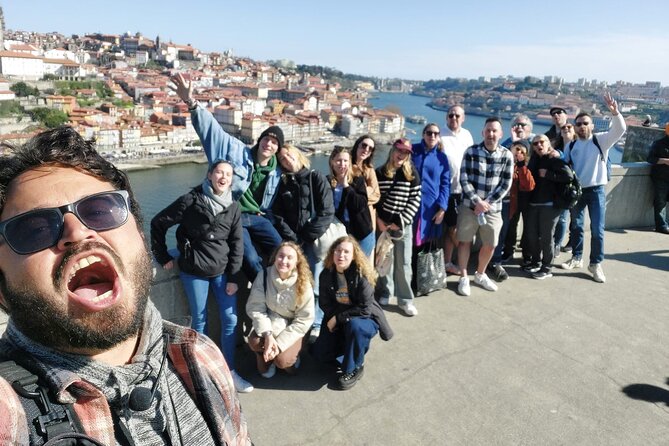
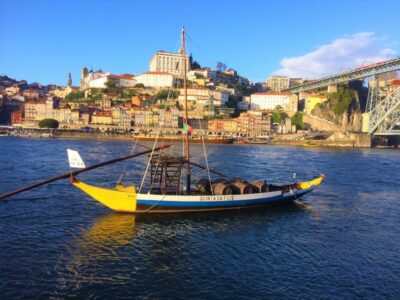
One of the route’s most memorable landmarks is the remarkable bridge built by one of Eiffel’s disciples. The description points to the Dom Luís I Bridge, the great steel crossing over the Douro that links Porto with Vila Nova de Gaia.
The bridge is more than a photo backdrop. It explains the relationship between the two sides of the river. Porto occupies one bank, while Gaia is closely linked with the riverfront view and the area associated with port wine. Crossing toward Gaia changes your perspective and gives you a broad look back at Porto.
The tour ends at Jardim do Morro, in Vila Nova de Gaia, with an open view of the Douro River. This is a strong finishing point because you can finally see the city as a whole rather than as a series of close-up façades.
Plan your next move before the tour ends. Since the route finishes across the river from its starting point, you may want to stay for the view, continue exploring Gaia, or make your way back to Porto. The tour does not include transport after the finish.
What the private format is worth at $84.48
At $84.48 per person, this is not the cheapest way to get oriented in Porto. You are paying for a private experience, not simply for a guide walking a large crowd past the same buildings.
The value improves if you are traveling with family or friends and can use the group discount. A private guide is especially useful when your group has mixed interests. Children may need a lighter pace, history fans may want more context, and food-focused visitors may prefer practical tips over long architectural explanations.
The guide can also help with the rest of your stay. Monica has provided restaurant and shop suggestions, and one family group was taken to a local cervejaria for lunch. That kind of advice can be worth more than a long list of sights, though you should not assume every tour includes a meal or restaurant visit. Treat it as a possible benefit of the private format, not a guaranteed part of the schedule.
The tour is offered in English and uses a mobile ticket. Confirmation arrives when you book, and the meeting point is near public transportation. Those details make it easy to use on your first full day, when you want a clear start without spending time working out the city’s layout alone.
Which guide style might suit you
The provider uses several guides, and the experience may vary by personality. Monica has been especially effective with families and children, adjusting the walk to keep younger participants involved. Jorge has been praised for making Porto’s history enjoyable and approachable.
Gianfranco brings humor and a lively style while covering the city’s main sights. Caio, also referred to as Caoi, has spent more than a decade in Porto and has been valued for clear explanations and local context. Artur connects Portuguese and Brazilian history, while Filipe brings a strong academic background in history.
You cannot necessarily select a specific guide unless the provider confirms it, so book for the tour’s structure rather than one individual. Still, if a particular guide matters to you, it is reasonable to ask at the time of booking.
The overall pattern is clear: the strongest part of this experience is the human connection. The buildings are excellent, but the guide turns them into a story you can use for the rest of your visit.
Who should book this Porto walk
I would choose this tour for a first day or first full day in Porto. It gives you the city’s main visual markers, explains the Age of Discoveries, and ends with a view that helps you understand the river and the two connected cities.
It suits couples, families, and small groups that want flexibility. It is also a good fit if you prefer asking questions to listening quietly in a large group. The private format lets you tell the guide what interests you, though the three-hour schedule still requires a brisk overview.
I would choose something else if your main goal is long museum visits, a dedicated food tour, or a slow photographic walk. The route covers many places, but most stops are short. You will see more than you study.
Should you book it?
Book this walking tour if you want a strong introduction to Porto, prefer a private guide, and are happy to cover hills and major sights at a steady pace. The route is practical, the finish at Jardim do Morro is excellent, and the personal recommendations can help shape the rest of your stay.
Skip it if you already know Porto well or want to spend three hours inside a few specific monuments. For a first visit, though, $84.48 per person can be fair value, particularly when shared among a group and used as a way to get your bearings fast.
FAQ
How long does the Best of Porto Private Walking Tour last?
The tour lasts approximately three hours.
Where does the tour begin?
It begins at Fonte dos Leões, Praça de Gomes Teixeira 10, 4050-161 Porto, Portugal.
Where does the tour end?
The tour ends at Jardim do Morro, 4430-210 Vila Nova de Gaia, Portugal, with a view of the Douro River.
Is this a private tour?
Yes. Only your group participates in the private activity.
What language is offered?
The tour is offered in English.
What sights are included?
The route includes Porto City Hall, Clerigos Tower, a famous bookshop, a major fountain, a university, Igreja do Carmo, São Bento Railway Station, important churches, the major bridge, the former Stock Exchange, Henry the Navigator’s birthplace, and Porto’s oldest UNESCO World Heritage district.
Is admission included?
The listed stops at Porto City Hall, Igreja do Carmo, and São Bento Railway Station have no admission charge. The tour does not state that paid entry to every attraction is included.
Can I cancel for a refund?
You can cancel at least 24 hours before the experience start time for a full refund. Changes or cancellations made less than 24 hours before the start are not accepted for a refund. If poor weather cancels the tour, you can receive a full refund or choose another date.
Newest Porto reviews on the site
- Douro Valley Premium Tours – Private Driver & Guide★ 5.0 · 93 reviews
- Douro Valley Delights Wine Tasting and Scenic Vistas★ 5.0 · 3 reviews
- Douro valley Majestic★ 5.0 · 12 reviews
- Private off the beaten Douro Valley Wine Tour★ 5.0 · 100 reviews
- Tour the Douro wine region, and discover the fantastic landscape★ 4.5 · 4 reviews
- Douro Valley Private Full–Day Tour from Porto★ 5.0 · 23 reviews
- Private Tour to stunning Douro Valley and most renowned wineries★ 5.0 · 39 reviews
- Douro Tour on a Private Yacht in Porto★ 4.5 · 10 reviews
Porto Walking Tours, compared.
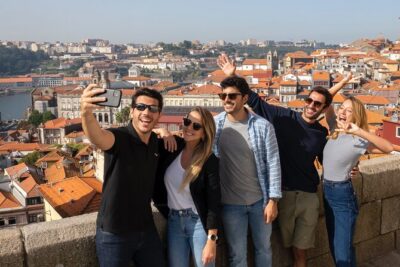
Porto Walking Tour, Lello Bookshop, River Cruise and Cable Car
Read our review →
Experience Porto’s Charm: 3-Hour Guided Walking Tour
Read our review →

Walking Tour, Lello Bookshop, Boat and Cable Car
Read our review →Browse the lists this tour appears in