
Reviewed · PORTO TUK TUK TOURS
Cruise Shore Excursion – Private Tuk Tuk Tour to the Historic Center
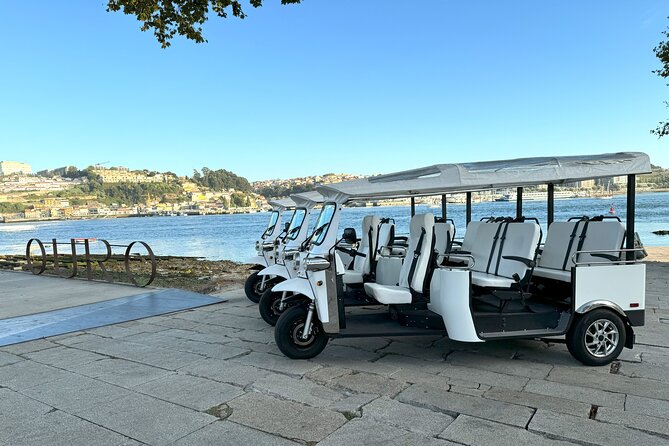
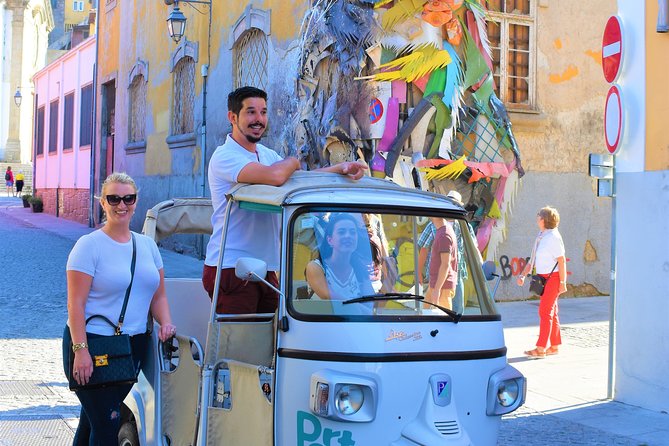
Porto’s steep streets, tight lanes, and river views make a tuk tuk a smart cruise-day choice. You can reach places a bus cannot, avoid much of the uphill walking, and get a lively introduction from guides such as Ana, Fabio, Gonçalo, and Gabby. I especially like the port pickup and the chance to cross into Gaia for a Port wine taste. The small vehicle is also nimble enough for Porto’s old center.
I like the private format, which can let you shape the outing around viewpoints, churches, markets, and food advice. I also like that the ride covers far more ground than a walking tour in just three and a half hours. The main caution is that the tuk tuk can be cramped for three people, and communication about pickup times has occasionally been slow.
Key points to know before booking
- The port pickup matters: Leixões is in Matosinhos, not central Porto, so the ride saves you the trouble of arranging transport into town.
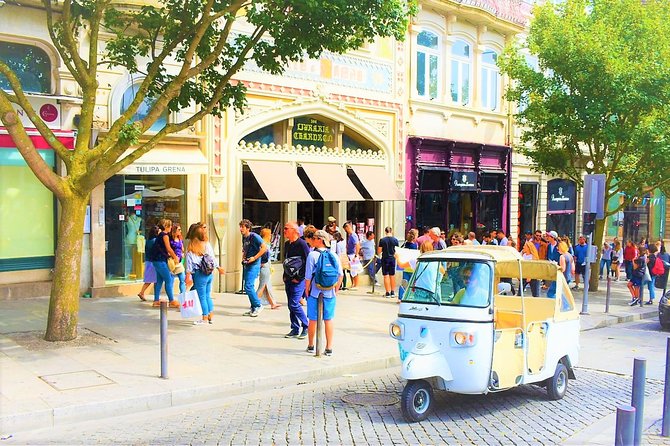
- Small streets are the advantage: The tuk tuk can reach lanes and viewpoints that larger buses cannot.
- The tour is mainly sightseeing: You see many landmarks, but interior visits and shopping time are limited.
- Port wine is included: Expect a small tasting cup poured during the outing, often at a viewpoint rather than in a bar.
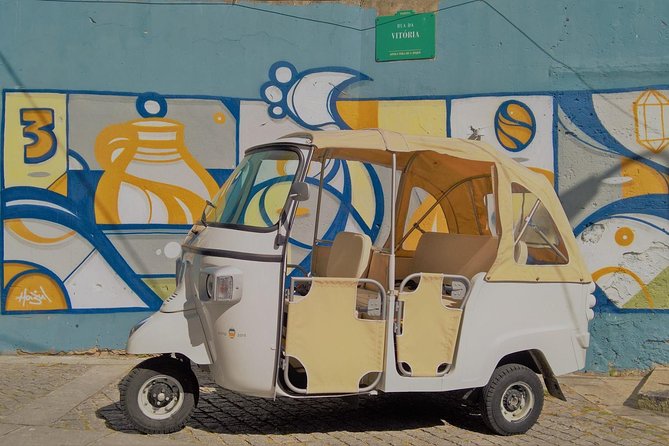
- The vehicle suits two people best: Three can fit in some tuk tuks, but comfort may suffer, especially over cobblestones.
- Book early for a cruise day: The tour is often reserved months ahead, and you must provide ship and re-boarding details.
Why a tuk tuk works so well in Porto
Porto is compact on a map but demanding on foot. The old center rises and falls sharply, its pavement is often uneven, and the best views are not always close to the main squares. A tuk tuk handles the hills while still giving you the open-air feel of a small sightseeing ride.
I see this as an orientation tour rather than a series of long museum visits. You will pass a large number of important places, stop at selected viewpoints, and hear the story behind Porto’s churches, bridges, streets, and markets. That is a good fit for a first visit from a ship, especially if you want to decide where to return later.
The private setup should make the day more flexible than a standard bus tour. Guides have offered choices, suggested restaurants, explained how long it takes to walk back to the port, and adjusted stops to suit the group. Still, private does not always mean fully custom scheduled. The advertised morning operating window runs from 8:00 to 11:00, and the tour starts no later than one hour after the ship arrives.
More tuk tuk tours in Porto:
- Porto: Guided Tour by Tuk-Tuk & Optional Douro River Cruise
★ 4.5 · 5,980 reviews - Discover Porto’s Highlights on a 2-Hour Private Electric Tuk Tuk
★ 4.5 · 1,860 reviews - Historic Porto by Private Electric Tuk Tuk to Top Landmarks
★ 4.5 · 735 reviews
Getting from Leixões Port to the old center
Pickup is at the outdoor main gate of Leixões Port, Matosinhos Port, or Doca Norte. This detail deserves attention because the cruise port is not in central Porto. A map pin can be misleading, so use the pier gate instructions rather than assuming the driver will meet you inside the terminal.
The drive into Porto is part of the experience. You get a look at the coastal and industrial side of the area before entering the historic center. Guides have handled changed docking terminals and delayed disembarkation, but you should still give the operator your ship name, docking time, disembarkation time, and re-boarding time when booking.
The tour is scheduled for about three hours and 30 minutes. Since cruise days leave little room for error, I would not plan a tight independent activity immediately afterward. The tour ends back at the meeting point unless you arrange otherwise, although some guides have dropped people in central Porto at the end when that suited their plans.
First views, modern Porto, and the Douro
The route can begin with sights connected to Porto and nearby Matosinhos’s seafaring and industrial past. One sculpture uses three chimney-like support poles and a net structure to recall local smokestacks, lighthouses, and fishing. It is a quick visual introduction to the working side of the region, not just its postcard center.
You may also see a small granite tower with a red balcony and lantern. The compact structure has a separate white annex and offers a useful reminder that Porto’s sights are not all grand churches and palaces. Some of the unnamed early stops are viewed from the vehicle, so do not expect a long visit at every point.
The Arrábida Bridge is one of the route’s strongest engineering stops. Designed by Edgar Cardoso, it opened in 1963 with a 270-meter reinforced-concrete arch, then the largest of its kind in the world. The bridge links Porto and Vila Nova de Gaia and gives you a sense of how the Douro shapes the city.
A garden near the coast or western side of the city may also appear in the route. Its features include palms, a granite fountain from the former São Francisco Convent, two Nasoni obelisks, a small 1874 romantic chalet, a miniature golf course, a bandstand, and an Art Nouveau-tiled public bathroom from 1910. This is more of a passing city portrait than a main stop, but it adds variety.
Passeio das Virtudes and Porto’s best open-air view
Passeio das Virtudes is one of the places I would pay close attention to. The lane looks down over the Douro toward its mouth, with the Fountain of Virtues and the terraces descending toward São Pedro de Miragaia in front of you. Along the river, you can spot the imposing former Customs House.
This is the kind of stop that explains Porto better than a list of monuments. You see the river as a working route, the layered hills of the city, and the way the old neighborhoods spill downhill. The stop is listed at about 10 minutes, so take your photos promptly and listen for the guide’s advice on what you are seeing.
The ride then moves through the Cordoaria area. The former prison, a granite building dating from 1582 and rebuilt in 1767, now houses the Portuguese Centre for Photography. Its 103 windows give it a stern, geometric look, while its connection to writers and notorious prisoners adds an unusual human detail.
Next door, Jardim de João Chagas is better known as Cordoaria Garden. The park began as a rope-making area and became a public garden in the 19th century under German landscaper Emile David. Statues, modern sculpture, palms, and the old garden layout make this a pleasant short pause. The usual stop is about 10 minutes.
More shore excursions from Porto:
- Yacht Cruise Excursion to 6 Bridges on the Douro
★ 5.0 · 3 reviews
Clérigos, Lello, and the university quarter
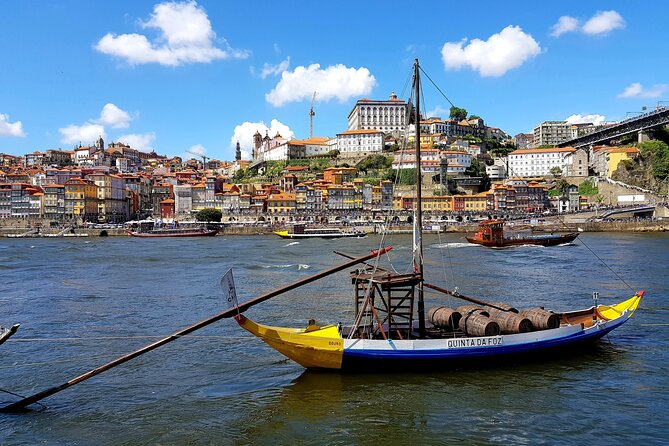
The Clérigos Tower is Porto’s great vertical marker. Nicolau Nasoni designed this Baroque tower in the first half of the 18th century, and 240 steps lead to its city and river view. The tour allows about 20 minutes, but the entrance fee is not included. That time is not enough for every visitor to climb, visit the collection, and enjoy the top without rushing.
If you want to go up, ask your guide exactly how the timing works on your day. The complex also has a multisensory installation for people who cannot make the climb, but admission remains separate. From the vehicle, you still get a close look at one of Porto’s most recognizable buildings.
Livraria Lello is another famous stop, with about 20 minutes allowed and entry not included. The 1906 building has an Art Nouveau facade, neo-Gothic details, painted surfaces made to resemble wood, a grand red staircase, and a stained-glass skylight carrying the library’s motto.
Here is the practical catch: the time is usually enough to see the exterior and perhaps enter with a prearranged ticket, but not to stand in a long regular line. Buy a skip-the-line ticket online before the tour if seeing the interior is important to you. Several people have found the outside, the staircase, and the crowd around the entrance interesting even without going in, but you should not assume the tour includes admission.
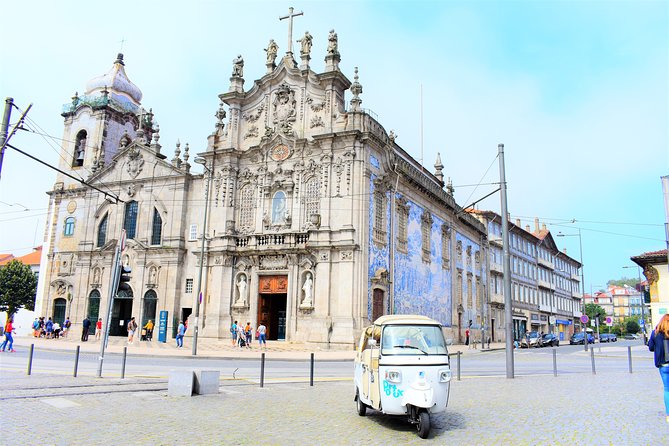
Across the area, Fonte dos Leões is an easy photo stop. The 19th-century fountain was made by a French company and cast at the Val d’Osne foundry. Its lions copy much of a fountain in Leicester, England. Nearby are the Carmo and Carmelitas churches, both tied to Porto’s 18th-century religious architecture.
I would look closely at Igreja do Carmo’s side wall. The blue-and-white tile panels, added in 1912, show scenes connected with devotion to Our Lady. The church is considered an important Rococo building, while Igreja dos Carmelitas has a classical facade, a Porto Rococo altarpiece, and links to Nasoni. The Carmo interior has an entrance fee, while Carmelitas is listed as free.
From Praça do Infante to São Francisco
The route continues through the historic center toward Praça do Infante. The square has the Mercado Ferreira Borges, the Palácio da Bolsa, a small garden, and a monument to Prince Henry the Navigator. The monument celebrates Portugal’s seafaring ambitions and was completed around 1900.
Mercado Ferreira Borges began as an iron market in 1885. It had a short life as a market and later became an entertainment venue housing Hard Club. Its red iron structure gives you a different architectural view of Porto than the granite churches and tiled facades nearby.
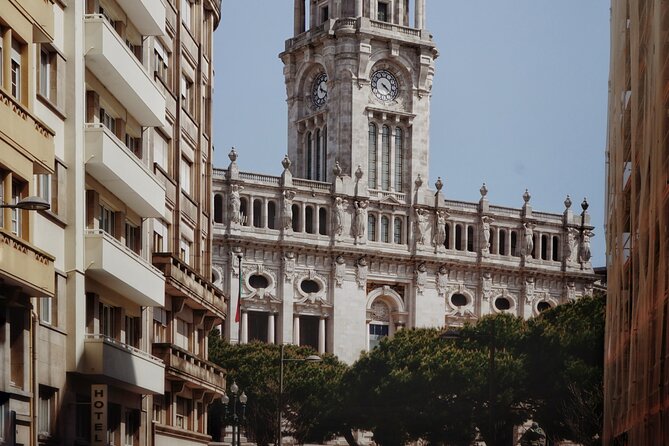
The Palácio da Bolsa is one of the city’s grandest interiors, especially the Arabian Room. Built for Porto’s Commercial Association in a Neoclassical style beginning in 1842, it is still used as a cultural and conference venue. The entrance is not included, and the tour timing makes this primarily an exterior visit unless you have arranged your own admission and are willing to shorten another part of the day.
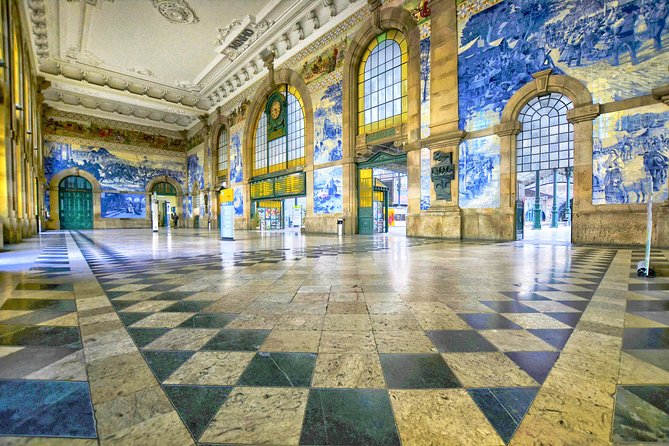
Igreja de São Francisco is the major church stop. Gothic construction began in the 14th century, but the interior was transformed by 17th and 18th-century gilded woodwork. The result is so lavish that it earned the nickname Church of Gold. The Tree of Jesse and catacombs are key features, but the admission fee is extra and the listed visit is only about 15 minutes.
This is one place where a quick look may leave you wanting more. If the church interior is high on your list, ask the guide how much time you can realistically spend inside. The tour gives you a strong introduction, but it is not built around extended monument visits.
Bridges, Gaia, and the Port wine taste
The Dom Luís I Bridge is the visual centerpiece of the Douro. Designed by Teófilo Seyrig, a disciple of Eiffel, it opened in 1886 with two overlapping iron decks. Its great arch reaches across the river between Porto and Gaia, and the upper deck now carries Porto’s metro.
The tuk tuk then reaches the Gaia side, where the Monastery of Serra do Pilar provides one of the best high viewpoints in the area. The monastery began in 1538 and was completed around 1670. Its circular church and circular cloister are unusual, and the terrace looks across Porto’s riverfront, the cathedral, Dom Luís I Bridge, Arrábida Bridge, and the Fontaínhas area.
The monastery stop is listed at about 15 minutes and is free. It is a good place to understand the city’s two-sided layout: Porto rises on one bank, Gaia rises on the other, and the Douro ties both together.
You may also see the Infante Dom Henrique Bridge, opened in 2003. Its high arch replaced road traffic on the upper level of Dom Luís I Bridge and was considered a world record in its category at the time. Seeing several bridges in one short ride helps explain why Porto’s riverfront feels so distinctive.
The included Port wine is a pleasant extra, but set your expectations correctly. It may be poured from a bottle into a small paper tasting cup at a lookout point, rather than served at a wine lodge or bar. I like this informal approach for a short cruise excursion, but it is not a substitute for a full cellar visit.
Ribeira, Batalha, and the city’s daily life
Praça da Ribeira is one of Porto’s oldest squares. Its medieval commercial roots, riverfront buildings, fountain, and central cube sculpture give you a useful connection between present-day nightlife and the city’s earlier trade. The square is closed to vehicles, so you will not simply ride through it. Expect to stop nearby and continue on foot for part of the visit.
The route can then pass Praça da Batalha, home to the São João National Theatre, Cine-Teatro Batalha, and a monument to Dom Pedro V. The square also marks the old line of the Fernando Wall. It is a short stop, listed at about five minutes, so think of it as a quick orientation point.
The Chapel of Souls is another memorable exterior. Its facade is covered with blue-and-white tiles showing scenes from the lives of Saint Francis of Assisi and Saint Catherine. The panels were restored in 1982, and the chapel offers one of Porto’s easiest examples of how religious art and street architecture overlap.
Bolhão Market is normally an important food and daily-life stop, with fish sellers, butchers, produce stands, and florists arranged in a Neoclassical building dating from the 19th century. It is currently closed for refurbishment, so do not count on entering. If you want market time, ask about an alternative. Some guides have used an indoor market or a sardine-themed stop instead.
Price, comfort, and guide quality
At $106.93 per person, this is not the cheapest way to see Porto. For two people, you are paying for a private vehicle, port pickup, a dedicated driver-guide, live commentary, and the ability to cover steep ground efficiently. You are not paying for monument admissions, and those costs can add up if you enter Clérigos, Livraria Lello, Carmo, the Palácio da Bolsa, or São Francisco.
I consider the price reasonable for a first Porto visit from a ship, especially if walking hills is difficult or your port call is short. It becomes less attractive if you mainly want indoor visits, shopping, or a relaxed meal. The value lies in orientation, transport, and local advice.
The strongest guides have included Ana, Fabio, Gonçalo, Gabby, Rafaella, Anna, Victor, and Claudio. The best guide style here is spirited but not pushy, with clear explanations and useful advice on food, Port wine, and walking routes. Guide quality can vary, and one quiet guide made the ride feel less lively for a group.
The vehicle itself is designed most comfortably for two. Three people may fit, but the ride can feel tight. Porto’s cobblestones also make for a bumpy trip, so I would not choose this option if you have serious back problems. The open vehicle may be affected by rain, and the experience requires good weather.
Cruise timing, communication, and cancellation
The operator aims to start within one hour of the ship’s arrival. That is convenient for a morning port call, but it is not a fully open appointment system. Some people have had trouble getting a later pickup time confirmed, so do not assume a private booking means you can move the start whenever you wish.
Communication has also been uneven. Some guides have waited through delayed disembarkation and handled changed terminals well, while other bookings had late confirmation or a last-minute cancellation. I would send the ship details early, confirm the pier gate, and keep all replies on hand.
A minimum of two people is required, and only your group should participate. Service animals are allowed, and children must be accompanied by an adult. Free cancellation applies if you cancel at least 24 hours before the local start time. Changes or cancellations inside 24 hours are not accepted for a refund, and poor weather may lead to a new date or full refund.
Who should book this Porto tuk tuk tour?
I would choose it for a first-time Porto visit from Leixões, particularly if you want to see the city’s main shape before deciding where to spend more time. It suits couples, families with older children, and anyone who prefers a moving overview to a long walk up steep streets.
I would be cautious if your main goals are shopping, extended church visits, a full Port cellar tour, or a leisurely lunch. The schedule is packed, the stops are often short, and the tuk tuk can be uncomfortable for three adults.
Book it if you value efficient sightseeing, strong viewpoints, and local guidance more than long interior visits. Skip it if you need guaranteed schedule changes, generous free time, or a roomy vehicle. For most cruise passengers with only one morning, it offers a lively and practical first look at Porto, provided you confirm the pickup details and reserve any must-see admissions in advance.
FAQ
Where does the tuk tuk tour pick up cruise passengers?
Pickup is offered at the outdoor main gate of Leixões Port, Matosinhos Port, or Doca Norte. The guide meets you at the pier gate, not inside the terminal.
How long does the experience last?
The tour lasts approximately three hours and 30 minutes. It ends back at the meeting point.
When does the tour start after a cruise ship arrives?
The tour starts no later than one hour after the ship arrives. You must provide the ship name, docking time, disembarkation time, and re-boarding time when booking.
Is the tour private?
Yes. It is described as a private activity for your group only, with a minimum booking requirement of two people.
Is Port wine included?
Yes. An alcoholic Port wine tasting is included. The tasting may be poured from a bottle into a small paper cup during the tour rather than served at a bar.
Are monument entrance fees included?
No. Admission to places such as Clérigos Tower, Livraria Lello, Igreja do Carmo, Palácio da Bolsa, and Igreja de São Francisco is not included.
Can I cancel for a full refund?
You can cancel for a full refund at least 24 hours before the experience begins. Cancellations or changes made less than 24 hours before the start time are not refunded, and poor weather may result in a different date or a full refund.
More boat trips and cruises in Porto
- From Porto: Douro Valley w/ Boat Tour, Wine Tasting & Lunch
★ 4.7 · 19,061 reviews - Complete Douro Valley Wine Tour with Lunch, Wine Tastings and River Cruise
★ 5.0 · 12,920 reviews - Porto: Six Bridges Cruise
★ 4.2 · 11,680 reviews - Porto: 6 Bridges Douro River Cruise
★ 4.3 · 6,472 reviews
More historic Porto tours
- Douro Valley: Historical Sites, Wine Experience, Lunch & Cruise
★ 5.0 · 5,133 reviews - Porto: Historic City Center Walking Tour
★ 4.7 · 1,172 reviews - Porto: An Intimate Fado Show in a Historical Tavern
★ 4.8 · 1,093 reviews - Porto: Historical Center Walking Tour
★ 4.8 · 898 reviews
Newest Porto reviews on the site
- Porto – Old Town Tour with an official guide★ 5.0 · 6 reviews
- Yacht Douro Tour★ 4.8 · 11 reviews
- Vila Nova de Gaia: Porto Discovery Tasting★ 4.8 · 17 reviews
- Visit to a Port Wine Cellar★ 4.8 · 5 reviews
- Vila Nova de Gaia: Winery Tour with 2 DOC Douro & 1 Port★ 4.8 · 101 reviews
- Vila Nova de Gaia: Douro Discovery★ 5.0 · 4 reviews
- WOW Porto: The Wine School Workshops and Tastings★ 4.7 · 20 reviews
- Private Portuguese Cooking and Wine Experience in Porto★ 5.0 · 30 reviews
Porto Tuk Tuk Tours, compared.
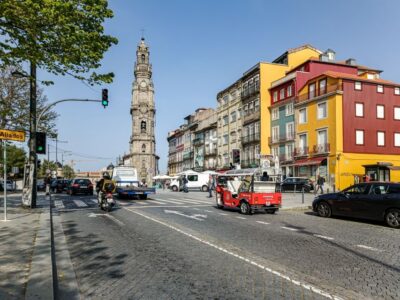
Guided Tour by Tuk-Tuk & Optional Douro River Cruise
Read our review →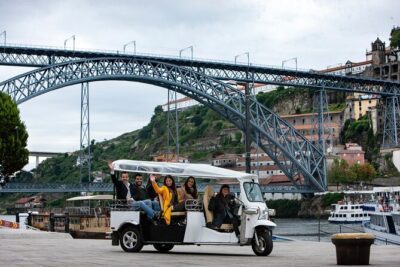
Discover Porto’s Highlights on a 2-Hour Private Electric Tuk Tuk
Read our review →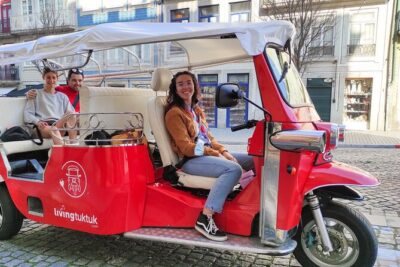
Historic Porto by Private Electric Tuk Tuk to Top Landmarks
Read our review →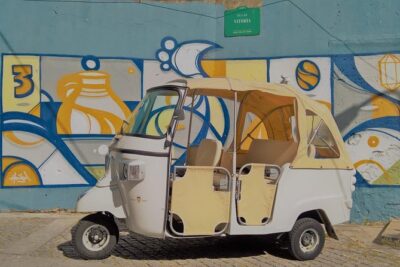
Porto Guided Tour to the Historical Center on a Tuk Tuk
Read our review →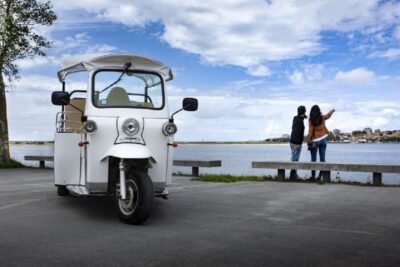
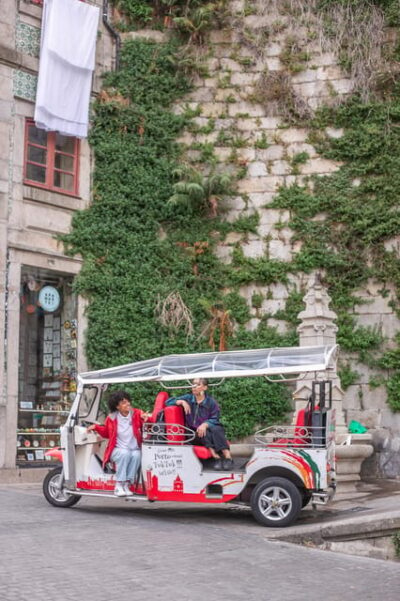
Oporto Tuk-Tuk Tour: Fast, Fun & Flexible – 1H to Full Day!
Read our review →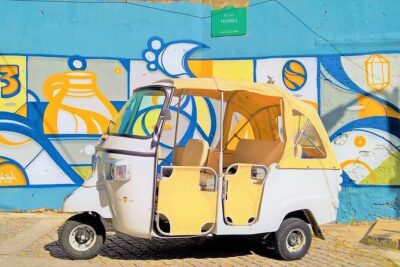
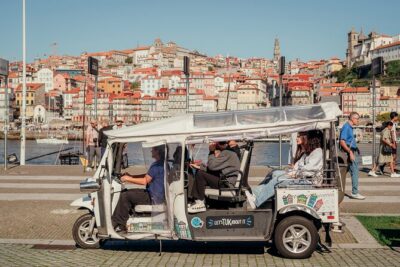
Porto Tuk Tuk: Clérigos, Seaside & Viewpoints – with Options
Read our review →Browse the lists this tour appears in