
Reviewed · HISTORICAL TOURS
LGBTour Porto: Walk through Porto, discover the LGBTQIA+ History
Porto looks different when you follow its LGBTQIA+ history, not just its churches, bridges, and tiled facades. Ricardo Barros leads a three-hour walk through Pride landmarks, queer businesses, student areas, and places tied to Portugal’s long struggle for rights. His own life in Porto gives the tour a personal edge that a standard city walk cannot match.
I like two things right away. First, the route treats queer life as part of the whole city, not as a quick stop at a bar. Second, the conversation includes politics, literature, education, social change, and personal memory, with time for questions. The possible drawback is that some subjects are painful, and this is a history-and-conversation walk rather than a greatest-hits tour of Porto’s famous monuments.
Key points to know before booking
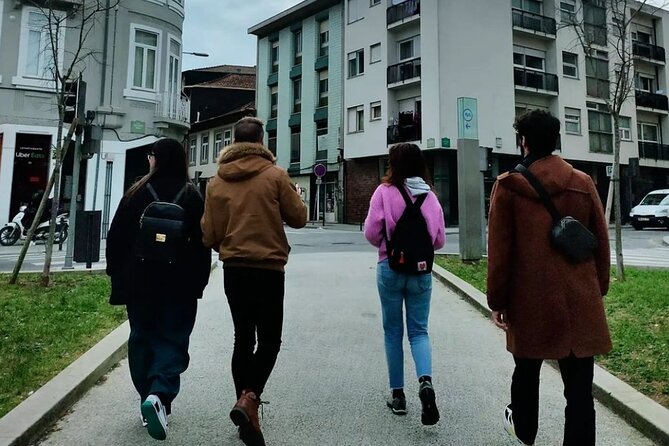
- Ricardo Barros brings lived experience: He connects major events in Porto and Portugal with stories from his own youth and adult life.
- The route begins at Campo 24 de Agosto: You see the site linked to Porto’s first LGBTQIA+ Pride march.
- A queer bookshop is part of the visit: The stop gives space to LGBTQ+ writers, representation, and the value of supporting queer businesses.
- The walk ends at Miradouro das Virtudes: You finish with Douro views and a relaxed discussion of the tour’s themes.
- Groups are limited to 15 people: That makes conversation easier than on a large city sightseeing tour.
- The price is $38.45: For three hours with a specialist local guide, I consider it fair, especially if you value personal context over monument entry tickets.
Porto through a queer local’s eyes
This experience is less about collecting landmarks and more about asking what those places have meant to LGBTQIA+ people over time. Porto’s grand streets and public squares become evidence of social change, public protest, exclusion, community, and visibility.
Ricardo’s approach is personal without being casual about the subject. He shares stories from growing up in Porto and connects them to the wider movement for LGBTQ+ rights in Portugal. You should expect an open conversation, not a memorized list of dates.
That difference matters. A general walking tour may tell you when a building was constructed. This walk asks who felt safe there, who could gather there, how tourism changed the area, and how public attitudes shifted. You also get a look at current questions around inclusion, government, activism, and representation.
The tour has received a perfect five-star rating from 51 reviews, with 100 percent recommending it. The strongest praise focuses on Ricardo’s warmth, storytelling, personal insight, and ability to make difficult history understandable without losing its human side.
More historic Porto tours:
- Douro Valley: Historical Sites, Wine Experience, Lunch & Cruise
★ 5.0 · 5,133 reviews - Porto: Historic City Center Walking Tour
★ 4.7 · 1,172 reviews - Porto: An Intimate Fado Show in a Historical Tavern
★ 4.8 · 1,093 reviews
Starting at Campo 24 de Agosto
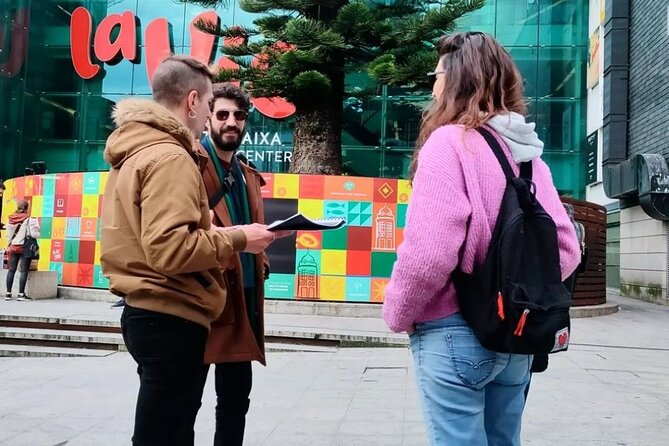
The meeting point is at Av. de Fernão de Magalhães 43, near public transportation. The first stop is Campo 24 de Agosto Garden, where Ricardo explains the location of Porto’s first LGBTQIA+ Pride march.
You spend about 20 minutes here, and there is no admission fee. The stop gives the tour a clear starting point: queer history is not only found in private venues or nightlife. It also belongs in public space, where people march, claim visibility, and ask the city to recognize them.
I like beginning here because it gives the rest of the walk a purpose. You are not simply touring Porto’s center. You are tracing how a movement made itself visible and how the city changed around it.
The stop may feel modest if you are expecting a grand monument. That is part of the point. Important moments in social history do not always happen at places designed for tourists. Listen closely, and the ordinary garden becomes a marker of collective courage.
Rua de Santa Catarina and the cost of change
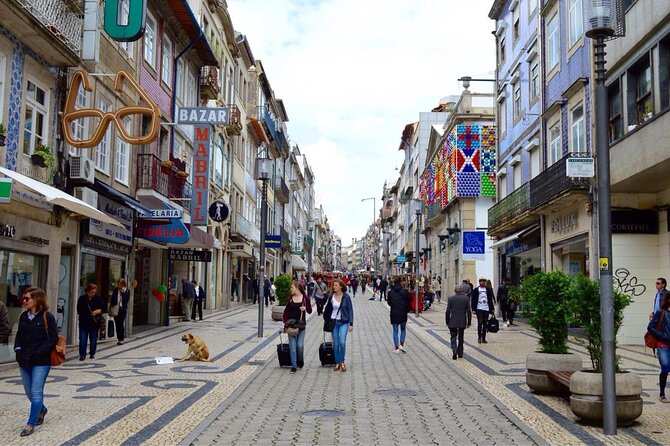
The next stop is Rua de Santa Catarina, one of Porto’s busy commercial streets. The visit lasts around 10 minutes and focuses on how time and tourism have changed an area that once mattered to the LGBTQ+ community.
This is one of the tour’s more useful ideas: progress can bring gains and losses at the same time. Streets may become cleaner, busier, and more attractive to visitors while older communities, informal meeting places, and local businesses face pressure.
Ricardo uses the street to ask you to look again at familiar urban change. A tourist may see shops and foot traffic. This tour adds another layer, showing how queer communities used, experienced, and adapted to these spaces.
Do not expect a large amount of free time for shopping here. The stop is short and focused. Its value comes from the interpretation, not from an attraction you enter.
Praça da República, Pride, and queer books
At Praça da República, you pause for about 40 minutes. This is where the current Pride march begins, and the group discusses the Teófilo Braga Garden and the public meaning of the square.
This is also where the walk turns toward culture and community support. You visit a bookshop connected with Diversity and Inclusion Books, then talk about LGBTQ+ writers and how literature shapes representation.
For me, this is a strong part of the route because it moves beyond a simple story of protest. Pride is about public rights, but queer life also grows through books, art, conversation, and places where people can find their own stories reflected.
The bookshop visit lasts around 30 minutes. It is not presented as a shopping detour. The point is to understand why queer businesses matter and how buying a book, attending an event, or supporting an independent space can help sustain community life.
You may appreciate this stop most if you enjoy cultural history. It also gives the experience a practical side. Ricardo can help you see queer tourism as more than visiting nightlife venues. Supporting LGBTQ+-focused shops and cultural spaces can be part of how you travel responsibly.
More walking tours in Porto:
- Porto Walking Tour, Lello Bookshop, River Cruise and Cable Car
★ 5.0 · 3,354 reviews - Experience Porto’s Charm: 3-Hour Guided Walking Tour
★ 5.0 · 2,432 reviews - Porto: 3-Hour Guided City Highlights Walking Tour
★ 4.8 · 2,050 reviews - Porto: Wine Tasting with Tapas Walking Tour
★ 4.4 · 1,541 reviews
Students, education, and changing social views
After Praça da República and the bookshop, the route passes through a busy part of Porto with several familiar tourist references and a large student presence. The precise stop is not named, but the subject is clear: education and social change linked to diversity and inclusion.
This part helps connect older struggles to present-day life. Universities and student areas often become places where social ideas are challenged, discussed, and tested. Ricardo uses the setting to talk about how attitudes change across generations and how education affects the way people understand identity and difference.
The mix of tourist traffic and student life is useful. You see how the city serves several audiences at once, while the tour asks what kind of city each group is helping create.
The route is not designed to take you inside every major tourist attraction. Instead, famous places appear as reference points while the conversation shifts toward people and movements that standard sightseeing can overlook. If you want a full architectural tour, this will leave gaps. If you want context that changes how you see Porto, those gaps are intentional.
Tribunal da Relação do Porto and the law
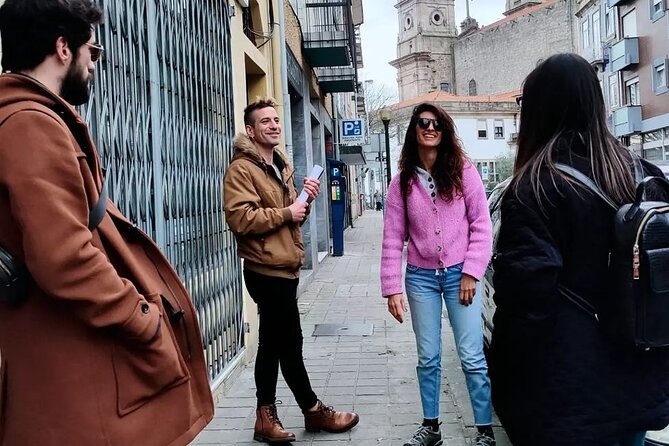
Near the end of the walk, you pass the Tribunal da Relação do Porto. This stop lasts about 25 minutes and takes place near the statue of Justice.
Here, Ricardo explains key dates in the queer history of Porto and Portugal. The courthouse setting gives the discussion a natural focus: law can protect people, fail them, or change only after years of organizing and pressure.
This is where the national story becomes especially important. The tour is not limited to local anecdotes. It connects Porto’s LGBTQIA+ experience with wider changes in Portugal, including the relationship between activists, government, Parliament, and the community.
The subject matter can be serious. You may hear about discrimination, difficult periods, and the limits of legal progress. At the same time, the tour also covers successes and the work still being done. Ricardo’s style, as described by the experience itself, is warm and conversational, so the stop is not simply a lecture beside a government building.
I would pay attention here if you are interested in moving to Portugal, studying its politics, or understanding how human rights developed in the country. One particularly useful quality of the tour is its attention to the gap between legal rights and everyday acceptance.
Finishing at Miradouro das Virtudes

The walk ends at Chafariz das Virtudes and the Miradouro das Virtudes, at Calçada das Virtudes 5. You spend about 30 minutes here, looking over the Douro and reviewing the ideas raised along the route.
This is a smart ending. After several hours of history, public spaces, law, and personal stories, you get room to slow down. Ricardo also talks about his youth in Porto and how he saw the queer movement grow.
The viewpoint is enjoyed by both locals and visitors, so it gives the tour a pleasant finish without pretending that the city’s story is settled. You can sit, take in the view, and think about how much of Porto’s LGBTQIA+ past remains invisible unless someone points it out.
The views are a bonus, not the main reason to book. You can visit many scenic viewpoints on your own. What you cannot easily recreate is the final conversation with a local guide who has tied the city’s history to his own life.
How Ricardo’s guiding style shapes the walk
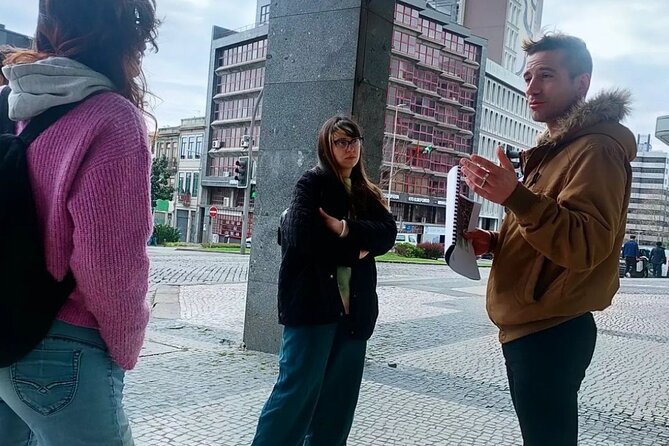
Ricardo Barros is the central reason this experience feels different from a standard city walk. His role is not only to provide facts. He links history to personal memory, current community life, literature, activism, and the everyday experience of moving through Porto as a queer person.
The strongest feature is his ability to make the walk feel intimate. Several comments describe solo visits, private-feeling conversations, and a genuine connection with him. That makes this a particularly good choice if you are traveling alone or want a thoughtful introduction to the city.
He also appears comfortable adjusting the experience to the people in front of him. One participant with a disability said he reduced the walking and slowed the pace, even continuing with a single booking. That is encouraging, though you should still discuss your needs before booking because the published information does not promise a fully accessible route.
You should also be ready to participate. This is not a headset tour where you tune out and take photographs. You will get more from it if you ask questions, share your own perspective, and allow time for sensitive subjects.
Price, pace, and practical details
The cost is $38.45 per person for about three hours. There are no admission charges at the listed stops, so you are paying mainly for Ricardo’s time, research, interpretation, and personal connection to Porto.
I think the price is good value if you want a specialist history walk. It is less compelling if you are looking only for famous buildings, photographs, or nightlife recommendations. The tour’s main product is understanding.
You can choose a morning or afternoon start. A morning departure can help you see Porto through this lens early in your visit, while an afternoon walk may work better after a slow start or a morning of sightseeing.
The group is limited to 15 people. That is small enough for questions, but the experience can feel even more personal if the booking is lightly attended. The start and finish are in different parts of the city, so plan to continue from Virtudes rather than return to the starting point.
Most people can take part, service animals are allowed, and the route is near public transportation. Wear comfortable shoes, since this is a walking tour through Porto’s streets and public spaces. No special entrance tickets are needed.
Free cancellation is available up to 24 hours before the start time. If you cancel later, the amount paid is not refunded, and changes made inside that 24-hour window are not accepted.
Who should book LGBTour Porto
I would choose this tour if you want to understand Porto beyond its postcard views. It suits LGBTQIA+ visitors, allies, students, anyone interested in human rights, and people considering a longer stay in Portugal.
It is especially useful for solo visitors. Ricardo’s conversational style can help you get oriented while giving you a social experience that does not depend on nightlife. Couples and small groups should also find plenty to discuss afterward.
You do not need to know Portuguese queer history in advance. The walk is designed to explain the major themes as you go. You should, however, be comfortable with a serious and reflective tone. The experience includes joy, community, and progress, but it also addresses discrimination, struggle, and the personal cost of social change.
I would not book it as your only Porto sightseeing tour. Pair it with a general city walk or your own visits to the major monuments. This experience adds a different viewpoint rather than replacing the city’s architectural highlights.
Should you book it?
Yes, if the story behind a city matters as much to you as its scenery. At $38.45, LGBTour Porto offers three hours with Ricardo Barros, a small group, a queer bookshop, Pride-related locations, legal and political context, and a personal account of Porto’s changing LGBTQIA+ life.
Book it early if the dates matter to you, since the experience is commonly reserved about 22 days ahead. Choose the morning if you want a thoughtful start to your stay, or the afternoon if you prefer a slower pace.
Skip it only if you want a fast monument checklist or a nightlife crawl. For a personal, local, and socially aware look at Porto, this is a strong use of an afternoon.
FAQ
How long is LGBTour Porto?
The tour lasts approximately three hours.
What language is the tour offered in?
The tour is offered in English.
Where does the tour begin?
It begins at Av. de Fernão de Magalhães 43, 4300-169 Porto, Portugal.
Where does the tour end?
It ends at the Miradouro das Virtudes, at Calçada das Virtudes 5, 4050-629 Porto, Portugal.
What is the price?
The listed price is $38.45 per person.
Are morning and afternoon departures available?
Yes. You can choose a morning or afternoon start time.
How large is the group?
The maximum group size is 15 people.
Can I cancel for a full refund?
Yes. You can cancel at least 24 hours before the experience start time for a full refund. Cancellations or changes made less than 24 hours beforehand are not accepted for a refund.
Newest Porto reviews on the site
- Douro Valley Premium Tours – Private Driver & Guide★ 5.0 · 93 reviews
- Douro Valley Delights Wine Tasting and Scenic Vistas★ 5.0 · 3 reviews
- Douro valley Majestic★ 5.0 · 12 reviews
- Private off the beaten Douro Valley Wine Tour★ 5.0 · 100 reviews
- Tour the Douro wine region, and discover the fantastic landscape★ 4.5 · 4 reviews
- Douro Valley Private Full–Day Tour from Porto★ 5.0 · 23 reviews
- Private Tour to stunning Douro Valley and most renowned wineries★ 5.0 · 39 reviews
- Douro Tour on a Private Yacht in Porto★ 4.5 · 10 reviews
Historical Tours, compared.

Historical Sites, Wine Experience, Lunch & Cruise
Read our review →
Historic Porto by Private Electric Tuk Tuk to Top Landmarks
Read our review →
Private Tour of the Historic City in a Classic Ford T
Read our review →
Douro Valley History & Wine Tour with Cruise & Lunch
Read our review →
Porto Guided Tour to the Historical Center on a Tuk Tuk
Read our review →Browse the lists this tour appears in