
Reviewed · PORTO WALKING TOURS
Porto and Gaia: Walking Tour of Douro’s Two Riversides
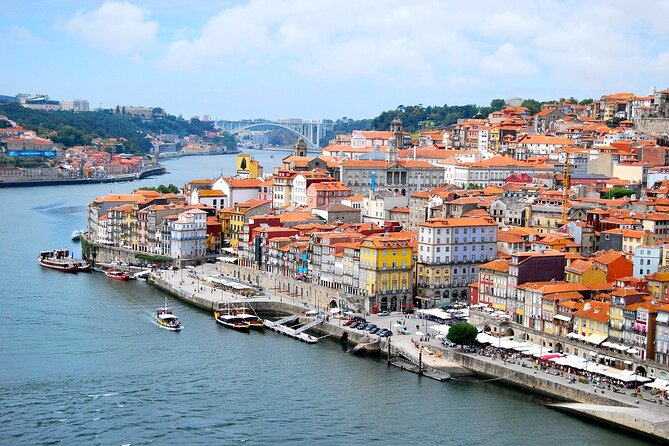
The best thing about this tour is its simple idea: see Porto from both sides of the Douro in two hours. You begin at Infante Square, pass major sights in the old city, cross toward Vila Nova de Gaia, and finish near the port-wine cellars.
I like the small group limit of 15, which gives you a better chance to ask questions. I also like the guides’ personal approach. Sofia brings an architect’s eye, while Susana, Michael, and Arturo are praised for making Porto’s past clear and enjoyable. The main drawback is the possible confusion over the 15-minute river crossing. It may involve a water taxi rather than a sightseeing boat, and the taxi may not run.
Key points to know before you book
- Two riversides in two hours: Walk through Porto’s historic center, cross the Douro, and finish in Gaia.
- A small group: The tour accepts no more than 15 people, a useful size for city streets and questions.
- Strong local storytelling: Guides explain Porto’s culture, bridges, architecture, port wine, and daily life.
- The boat detail needs care: The planned crossing may be a water taxi, not a full sightseeing cruise.
- Port tasting costs extra: The tour ends near a Gaia cellar, but food and drinks are not included.
- Good central start: Meet at Jardim do Infante Dom Henrique at 2:30 pm, near public transport.
Starting at Infante Square in Porto
Meet your guide at Jardim do Infante Dom Henrique, a central square on Rua do Infante Dom Henrique. It is an easy place to find, and the 2:30 pm start gives you time to reach the area after lunch.
The square honors Henry the Navigator, a major figure in Portugal’s age of overseas exploration. You will spend about 15 minutes here, using the setting to get your bearings and place Porto’s story in context.
This is not a tour built around one grand monument. Instead, it links several nearby places so you can understand how Porto developed around trade, religion, the river, and movement between the two banks.
Your guide may speak English or Spanish, though this departure is offered in English. Guides named Sofia, Susana, Michael, and Arturo have led this route. Their styles differ, but the useful thread is clear explanation rather than a rush through dates and names.
More walking tours in Porto:
- Porto Walking Tour, Lello Bookshop, River Cruise and Cable Car
★ 5.0 · 3,354 reviews - Experience Porto’s Charm: 3-Hour Guided Walking Tour
★ 5.0 · 2,432 reviews - Porto: 3-Hour Guided City Highlights Walking Tour
★ 4.8 · 2,050 reviews
Porto’s grand buildings and working past
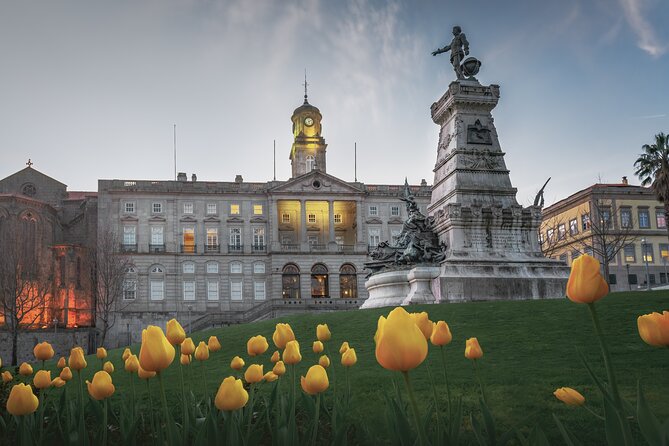
From Infante Square, the walk moves through the old center toward some of Porto’s most important buildings. One stop is Portugal’s first Stock Exchange Palace, a striking building tied to the city’s commercial life.
The palace is especially valuable on a walking route because it helps explain why Porto grew as a trading city. You are not simply looking at a handsome facade. You are seeing a place connected to business, merchants, and the financial side of Portugal’s past.
The Church of St. Francis brings a different mood. Its religious importance and powerful decoration make it one of the major churches in Porto. The tour does not include a ticket for every interior attraction, so ask your guide what you will see from outside and what you may want to revisit later on your own.
That distinction matters. A two-hour walking tour can point out the city’s strongest sights, but it cannot give each one the time of a full museum visit. I would use this route to identify the places you want to enter later, especially if church interiors and historic buildings are high on your list.
You also pass a house in Porto’s historic center that has UNESCO World Heritage recognition. Its setting helps show how much of Porto’s story remains tied to its old streets, buildings, and compact urban plan.
Ribeira and the city beside the Douro
Ribeira Square is one of the oldest and most active parts of Porto. Here, the river is not just scenery. It is the reason the city’s trade, bridges, and neighborhoods matter so much.
Your guide brings together the visible pieces: the waterfront, the old lanes, the buildings rising behind the square, and the traffic between Porto and Gaia. This is one of the best sections for understanding Porto as a lived-in city rather than a collection of photo stops.
The streets can be uneven, and the route is taken on foot, so comfortable shoes are sensible. Most people can take part, but you should be ready for a continuous walk through historic neighborhoods rather than a slow, seated tour.
I especially like this part for first-time visitors. You get a useful mental map early in your stay, with Ribeira on one side and the port cellars of Gaia across the water.
Alminhas da Ponte and a painful bridge story
The stop at Alminhas da Ponte takes about 15 minutes and is free. These small monuments recall the tragic collapse of a bridge in 1809, during the French invasions.
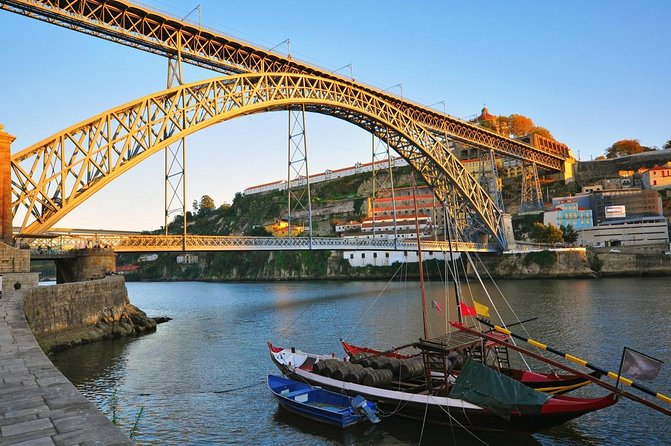
This is a good example of the tour’s approach. A bridge is not treated as a simple crossing. It becomes a doorway into war, local memory, kings, legends, and the people who used the river.
The story also prepares you for the next part of the walk. Porto’s bridges connect two banks, but they also connect different chapters of the city’s past. Your guide explains those links while you look across the Douro and follow the route toward Gaia.
The value here is the setting. You are standing near the river while hearing about a disaster tied to that same stretch of water. That makes the story easier to picture than a brief explanation in a museum gallery.
Same city, a completely different kind of day out:
- The Unvanquished Tour in Porto City Center
★ 5.0 · 26,497 reviews - From Porto: Douro Valley w/ Boat Tour, Wine Tasting & Lunch
★ 4.7 · 19,061 reviews - Complete Douro Valley Wine Tour with Lunch, Wine Tastings and River Cruise
★ 5.0 · 12,920 reviews - Porto: Six Bridges Cruise
★ 4.2 · 11,680 reviews
The Douro crossing, with one important warning
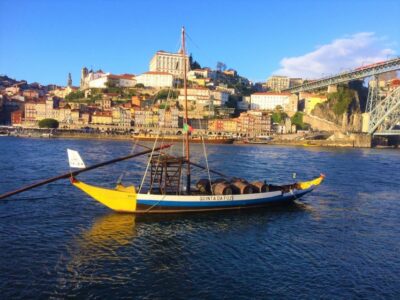
The tour includes a walk across the Douro and describes a 15-minute crossing. This is the point where you should read the details carefully.
One person who took the tour expected a boat trip and found that the plan was for a water taxi instead. On that occasion, the water taxi was not running, so the group crossed the bridge on foot instead. The walk was manageable, but the experience did not match the expectation of a short boat ride.
That is the clearest weakness in the tour. If your main reason for booking is a proper sightseeing cruise, this is not the right product to count on. It is primarily a walking tour, with a possible river transfer, not a dedicated boat excursion.
If the water taxi operates, you get a short change of pace and a different view of the riverbanks. If it does not, the guide may reverse course or take the group over the bridge. Either way, you still reach Gaia, but you should treat the boat element as uncertain.
I would book a separate Douro cruise if being on a sightseeing boat matters to you. Keep this tour for the guide-led walk and the link between Porto and Gaia.
Arriving in Gaia, the home of port wine
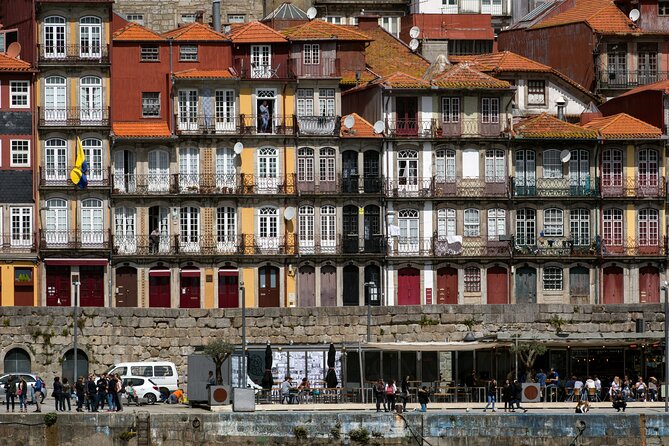
Once across the Douro, the focus shifts to Vila Nova de Gaia and its famous port-wine cellars. This is where the route becomes especially useful for anyone who wants to understand why so many wine lodges sit on the Gaia side.
Your guide introduces the cellar district and explains the role of port wine in the area. The walk ends at Largo Joaquim Magalhães 4, close to one of Gaia’s cellars. That makes the final stop practical: you can continue with a tasting if you want to spend more time with the subject.
The tasting is not included. Food and drinks are also excluded from the tour price, so plan to pay separately if you choose to sample port.
The final cellar may be small and dark rather than a polished major-name operation. That can appeal to you if you prefer a more modest setting, but it may not satisfy you if you want a large, highly produced wine visit.
You have other options nearby. One person on the tour found a tasting at Graham’s and recommended it highly. That does not make it part of this experience, but it is a useful tip if the suggested cellar does not suit your taste or is not offering the kind of visit you want.
What the guide adds to the walk
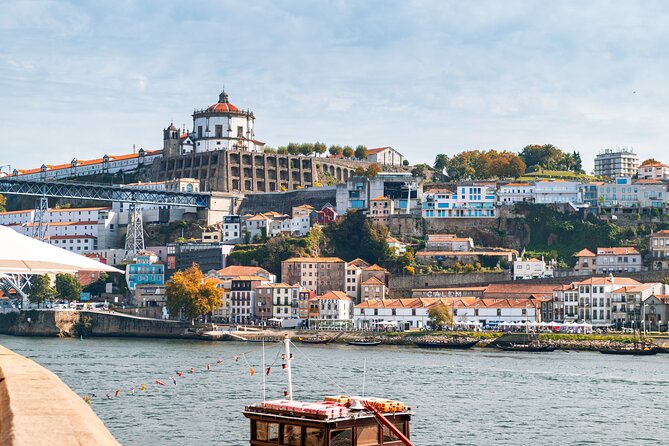
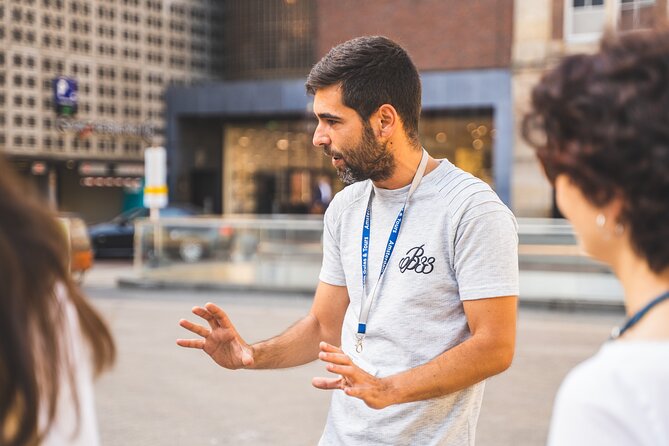
The guide is the main reason to choose this tour over walking the same streets with a map. A well-placed explanation can change how you see a church, a bridge, or a square.
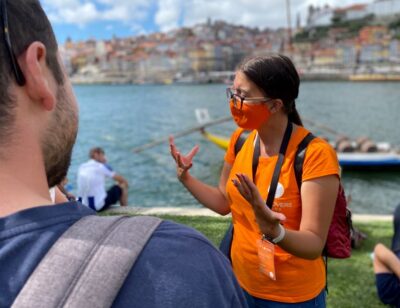
Sofia, a former architect, is especially suited to readers who want more than a quick list of dates. Her background gives her a useful way to discuss buildings and the shape of Porto’s old center.
Susana brings an upbeat manner and clear affection for the city. Michael has been praised for making local history engaging and for taking the group to places that are easy to miss without help. Arturo is described as clear, friendly, and strong at explaining the growth of Porto on both sides of the Douro.
You should not expect every departure to feel identical. Much depends on the guide assigned that day and on the questions your group asks. The small size helps because conversation is easier than it would be with a large crowd.
The tour also includes personal recommendations for eating, drinking, and seeing Porto like a local. That can be useful early in a visit, when you still need help deciding where to spend your remaining time.
Is $36.74 a fair price?
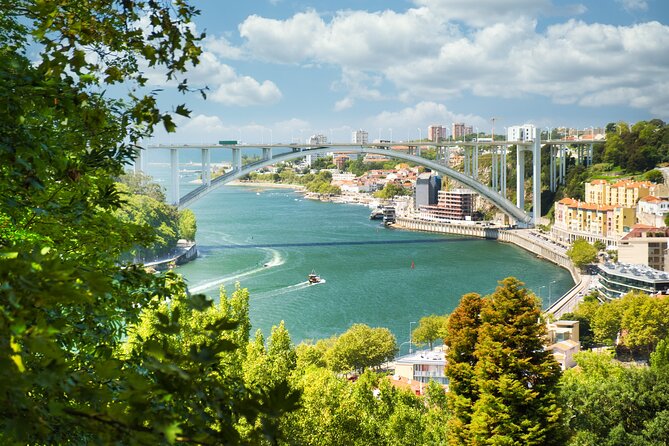
At $36.74 per person, the price is higher than a basic free walking tour, but you are paying for a fixed small group, an English-speaking local guide, and a route that links Porto and Gaia.
The value is strongest if you want orientation. In two hours, you cover Infante Square, the Stock Exchange Palace area, St. Francis Church, the UNESCO-recognized historic center, Ribeira, the bridge memorials, the Douro, and Gaia’s cellar district.
It is also useful if your schedule is tight. You do not need to arrange transport between the two sides, and the end point places you near port tastings.
The value is weaker if you expect entrance tickets, a full winery tour, or a guaranteed boat ride. None of those are included. You should also remember that the advertised price does not cover food or drinks.
For me, the cost is reasonable when the tour is used as a city introduction. I would not pay it solely for the river crossing or the port tasting.
Who will enjoy this Porto and Gaia walk?
This tour suits you if you are visiting Porto for the first time and want a clear introduction without spending half a day on a formal excursion. It also works well for solo visitors and couples who like meeting a few people but do not want a large group.
You will get the most from it if you enjoy stories about architecture, religion, trade, bridges, and local culture. The route is also a good fit if you want to finish in Gaia and decide for yourself which cellar deserves your time and money.
It may not suit you if you have trouble with a continuous city walk or if you want extensive interior visits. The two-hour schedule gives you an overview, not a detailed tour of every building.
I would also choose something else if a boat ride is essential. Book a dedicated cruise separately, then take this walk for its historical connections and neighborhood views.
The cancellation terms are practical: you can receive a full refund if you cancel at least 24 hours before the 2:30 pm start. The tour requires a minimum number of people, and if that minimum is not met, you are offered another date, another experience, or a full refund.
Should you book it?
Book this tour if you want a compact, guide-led introduction to both Porto and Gaia. The route gives you useful context, the group size is manageable, and the final location works well for continuing with port wine.
Go in with the right expectations. This is not a full winery visit, and the water taxi is not guaranteed. If you value local stories, city orientation, and a practical way to connect the two riversides, the tour is a good choice. If you want a guaranteed boat trip or a serious wine tasting, add those separately.
FAQ
Where does the tour begin?
It begins at Jardim do Infante Dom Henrique on Rua do Infante Dom Henrique in Porto, Portugal.
What time does the tour start?
The tour starts at 2:30 pm.
Where does the tour end?
It ends at Largo Joaquim Magalhães 4 in Vila Nova de Gaia, near a port-wine cellar.
How long does the walking tour last?
The tour lasts approximately two hours.
Is the tour offered in English?
Yes. The experience is offered in English, and the local guides speak English and Spanish.
Is a boat trip included?
The route includes a planned 15-minute crossing of the Douro, but the crossing may involve a water taxi rather than a sightseeing boat. If the water taxi is not operating, the group may cross by bridge.
Is port wine tasting included in the price?
No. The tour ends near a Gaia cellar where you can choose to join a tasting, but drinks and food cost extra.
How many people can join the tour?
The maximum group size is 15 people.
Newest Porto reviews on the site
- Porto – Old Town Tour with an official guide★ 5.0 · 6 reviews
- Yacht Douro Tour★ 4.8 · 11 reviews
- Vila Nova de Gaia: Porto Discovery Tasting★ 4.8 · 17 reviews
- Visit to a Port Wine Cellar★ 4.8 · 5 reviews
- Vila Nova de Gaia: Winery Tour with 2 DOC Douro & 1 Port★ 4.8 · 101 reviews
- Vila Nova de Gaia: Douro Discovery★ 5.0 · 4 reviews
- WOW Porto: The Wine School Workshops and Tastings★ 4.7 · 20 reviews
- Private Portuguese Cooking and Wine Experience in Porto★ 5.0 · 30 reviews
Porto Walking Tours, compared.
Porto Walking Tour, Lello Bookshop, River Cruise and Cable Car
Read our review →
Experience Porto’s Charm: 3-Hour Guided Walking Tour
Read our review →
Walking Tour, Lello Bookshop, Boat and Cable Car
Read our review →Browse the lists this tour appears in