
Reviewed · PORTO WALKING TOURS
Porto Historic Center: Small Group Walking Tour & Cathedral
Porto reveals itself one steep street at a time, and this three-hour walk links its best-known sights into one useful route. I especially like the São Bento tile hall, where blue-and-white panels tell stories of Portugal, and the Dom Luís Bridge crossing, which opens wide views toward the river, Gaia, and Serra do Pilar.
I also like the way the route finishes in Ribeira rather than leaving you at a museum door. You reach the river through medieval lanes, then see Casa do Infante, Palácio da Bolsa, São Francisco Church, and the old customs district. The catch is simple: Porto is hilly, and this is a continuous three-hour hike with stairs and uneven streets.
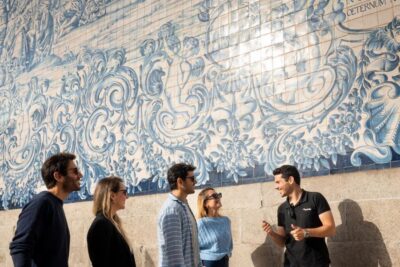
- São Bento’s azulejos: See some of Porto’s finest tile panels and learn how they connect to local and national history.
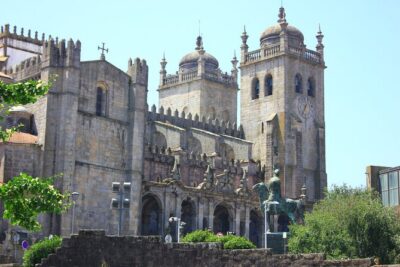
- Cathedral entry included: Visit Porto’s stark Romanesque cathedral, including its ornate gilded woodwork.
- Small group of up to 10: A compact group makes it easier to hear explanations and ask questions.
- Views from Dom Luís Bridge: Walk across the upper level for views of the Douro, Serra do Pilar, city walls, and Rabelo boats.
- A useful finish in Ribeira: End beside the river among old lanes, historic buildings, and postcard views.
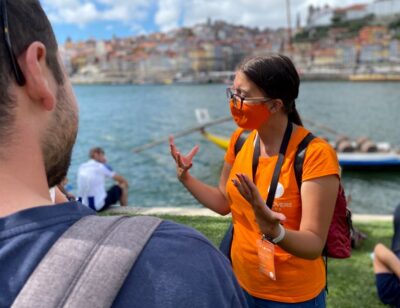
- Local advice from Magda: Guide Magda Laires Pinheiro Monteiro, who grew up in Porto, also gives practical suggestions for restaurants and further sightseeing.
From Porto City Hall to the twin churches
The meeting point is in front of Câmara Municipal do Porto, Porto’s City Hall, beside the statue of writer Almeida Garrett. Look for the guide carrying a green card with her name. This is a central place to begin, but the square can feel busy, so arrive early enough to locate the statue without rushing.
The first stop is the Carmo and Carmelitas churches, often called Porto’s twin churches. Their close arrangement is one of those small city details that makes more sense with a guide beside you. You get an introduction to the churches, their façades, and their place in the old center before the route continues uphill and downhill through the city.
I like beginning here because you start with Porto’s streets, not just a ticketed attraction. You see how churches, narrow passages, shops, and public squares fit together. The route is already doing two jobs: showing you famous sights and helping you understand the shape of the center.
Lello, Clérigos, and the city’s famous skyline
The walk brings you near Livraria Lello, Porto’s celebrated bookshop. The schedule includes a guided stop connected with the bookshop, but the supplied inclusions do not list a Lello entrance ticket. If entering the shop is important to you, confirm that detail before booking rather than assuming admission is covered.
Nearby, the 76-meter Clérigos Tower gives Porto one of its most recognizable vertical markers. The tour includes a guided look at the tower and a visit to Clérigos Church, the church of the Brotherhood. The church is sumptuous, and its interior gives you a counterpoint to the more severe Romanesque style of Porto Cathedral later in the walk.
The tower is also a practical orientation point. Porto’s center can seem like a jumble of slopes until you begin to recognize its landmarks. I like having Clérigos early in the route because it gives you a clear sense of how the upper city relates to the river below.
Do not expect a leisurely museum pace here. The experience moves from sight to sight, and the route includes slopes. You may pause for photographs, but the main value is the explanation connecting the buildings rather than long, private time at each one.
More walking tours in Porto:
- Porto Walking Tour, Lello Bookshop, River Cruise and Cable Car
★ 5.0 · 3,354 reviews - Experience Porto’s Charm: 3-Hour Guided Walking Tour
★ 5.0 · 2,432 reviews - Porto: 3-Hour Guided City Highlights Walking Tour
★ 4.8 · 2,050 reviews
São Bento’s blue-and-white history lesson
São Bento Train Station is one of the strongest parts of the walk. You enter the station to see its famous azulejo panels, the painted ceramic tiles that appear across Portugal but reach a special level of detail here.
The panels are not just decoration. They depict events from Portugal’s past and scenes tied to the country’s identity. With a guide, you can look at the images as a visual account rather than a pretty blue wall. I would give this stop your full attention. The station is still a working transport hub, so people may be moving around you, but the tile panels reward a slower look.
This is also where the tour’s local focus pays off. Magda speaks Portuguese, French, and English, and the available feedback consistently praises her clear explanations, enthusiasm, and willingness to answer questions. She is from Porto, which gives her a personal connection to the places along the route.
Her practical advice is part of the value. She has suggested restaurants and ideas for spending the rest of a stay, and those recommendations have helped people adjust their plans. I would keep a note on your phone during the walk. A good city tour should help with the next day as well as the current three hours.
Crossing Dom Luís Bridge above the Douro
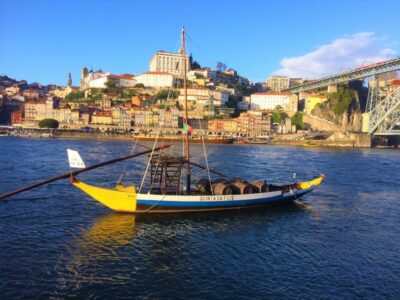
From the upper part of Porto, the route reaches Dom Luís Bridge. The walk across the top level provides broad views over the Douro River and the two cities on either side. You can look toward the Serra do Pilar monastery, sections of Porto’s old Fernandine wall, and the traditional Rabelo boats associated with the Douro wine trade.
This is the most scenic section of the route, but it is also exposed and busy at times. Keep your attention on the walking surface and on the group. The bridge gives you a memorable view, yet it is not a quiet lookout where you can linger without interruption.
I like this crossing because it turns the city’s geography into something visible. From here, Porto’s steep rise from the water makes sense. The bridge also sets up the next part of the tour, when you descend toward the cathedral and then continue down into Ribeira.
Porto Cathedral and its gilded interior
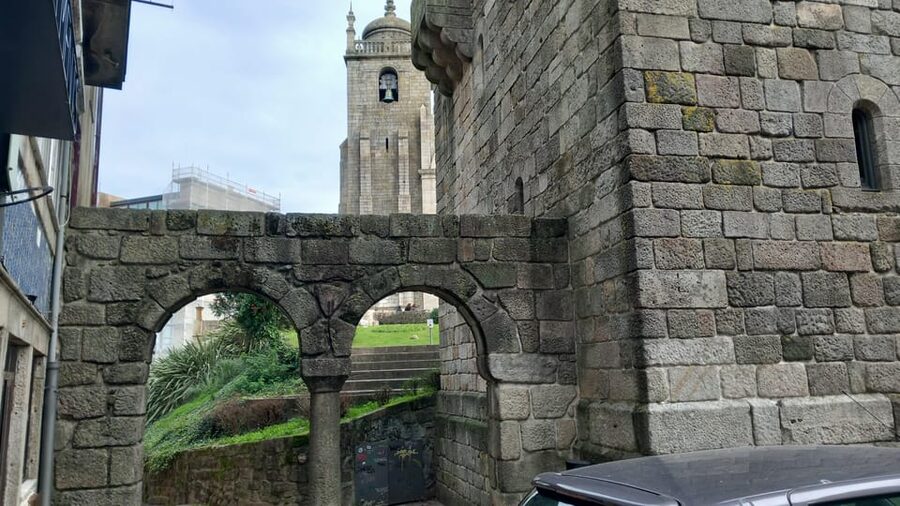
The Cathedral of Porto, or Sé do Porto, brings a heavier, more fortified feel to the walk. Its Romanesque style is stark compared with the decorative churches around Clérigos and Carmo. The contrast helps you see that Porto’s religious buildings are not all telling the same architectural story.
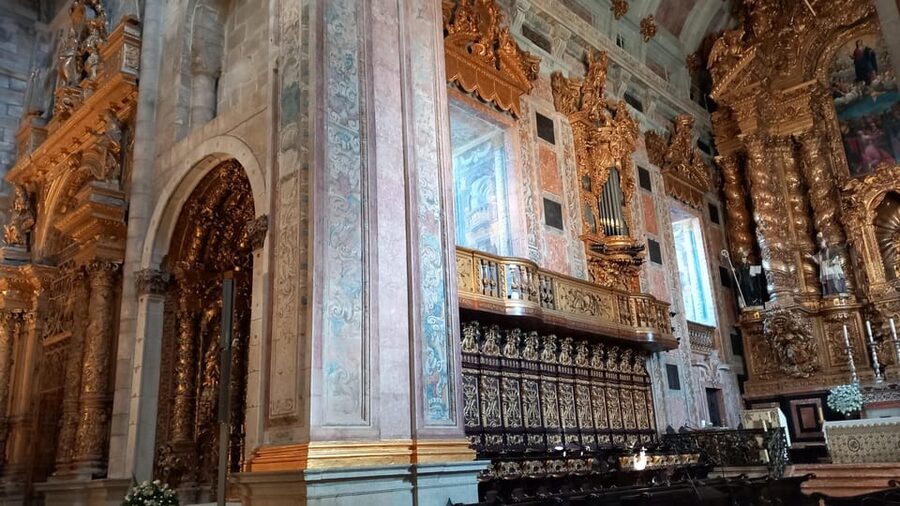
Cathedral admission is included, with an express security check. The interior’s gilded woodwork altarpiece is the detail to watch for. It adds warmth and glitter to a building whose exterior and overall form feel solid and severe.
This is the one listed entrance that clearly removes a common sightseeing nuisance. You do not need to arrange a separate Cathedral ticket as part of this experience. The Cathedral is closed on Christmas and Easter Day, so the tour cannot operate on those dates.
The Cathedral stop also comes at a sensible point in the route. By now, you have seen the upper center and the bridge. The Cathedral helps anchor the older part of Porto before you begin the descent toward the river.
More historic Porto tours:
- Douro Valley: Historical Sites, Wine Experience, Lunch & Cruise
★ 5.0 · 5,133 reviews - Porto: Historic City Center Walking Tour
★ 4.7 · 1,172 reviews - Porto: An Intimate Fado Show in a Historical Tavern
★ 4.8 · 1,093 reviews - Porto: Historical Center Walking Tour
★ 4.8 · 898 reviews
Down through medieval lanes to Ribeira
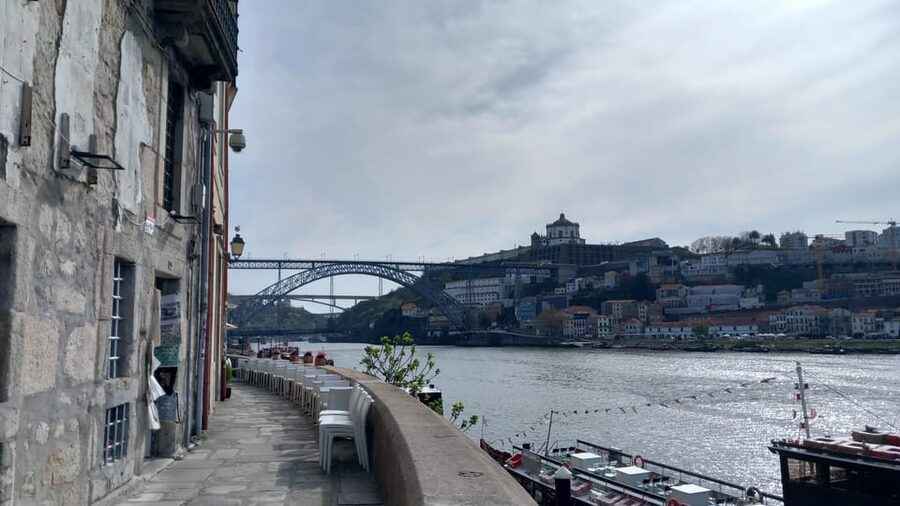
The descent into Ribeira is where the tour feels most like a walk through living Porto rather than a string of monuments. You pass through a tangle of medieval alleys and stairways, with the route dropping toward Cais da Ribeira.
This is the section that requires the most care from anyone with knee trouble or limited balance. Porto’s slopes are not a minor detail. Wear shoes with a firm grip, and choose comfortable clothing. Large bags and luggage are not allowed, which is sensible on narrow streets and stairs.
At the riverfront, you get the classic Porto view: colorful old buildings, the Douro, the bridge, and activity along the waterfront. I like reaching this point on foot because the postcard scene has more meaning after you have walked down from the upper city and learned how the neighborhoods connect.
The tour does not include food or drinks, and it does not provide hotel drop-off. That is easy to plan around. Finish the walk at the river, then choose your own place for a drink or meal, or continue exploring at your own pace.
Casa do Infante and the Age of Discoveries
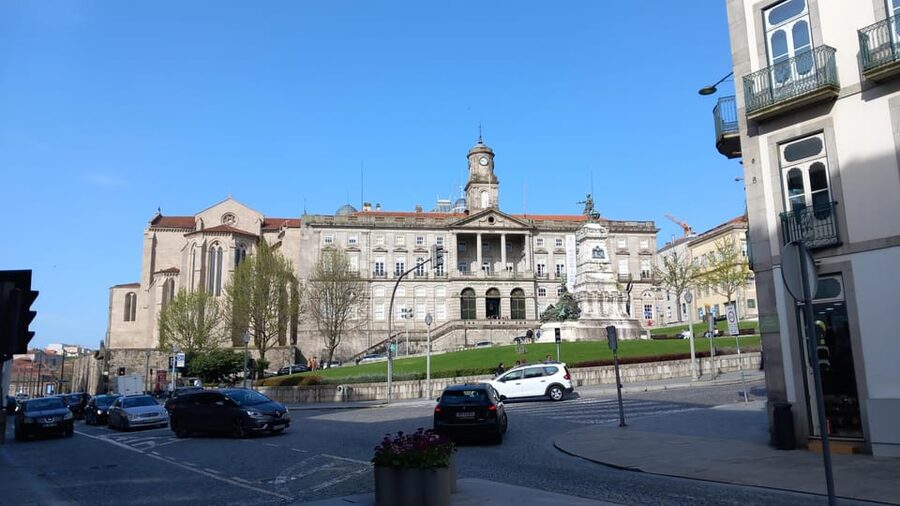
The final stretch brings you to Praça do Infante D. Henrique, where several important buildings gather close together. Casa do Infante, once known as the Royal Customs House, helps explain Porto’s connection with trade and the Age of Discoveries.
You also see Palácio da Bolsa, São Francisco Church, and Ferreira Borges Market. The square works well as a final history lesson because the buildings represent different periods and functions. Trade, religion, civic life, and royal administration all appear within a short walk.
The schedule lists guided attention to Casa do Infante, Palácio da Bolsa, São Francisco Church, and the square. It does not clearly list interior admission to every one of those sites, so think of this section mainly as an explained exterior and neighborhood walk unless the guide confirms otherwise.
That distinction matters if you want lengthy visits inside each monument. This tour is built to give you a connected view of Porto, not to replace separate admission visits to every major building.
What Magda adds to the experience
Magda Laires Pinheiro Monteiro is the named guide for this experience. The strongest pattern in the available feedback is her warmth, detailed explanations, and personal knowledge of Porto. She is praised for answering questions, listening to individual interests, and offering useful ideas for restaurants and independent sightseeing.
That matters in a small-group walk. With a maximum of 10 people, you have a better chance of asking about a building, a neighborhood, or your plans for later in the trip. A larger group can turn a city walk into a lecture heard from the back. This format should feel more direct.
The guide can lead the tour in English, Portuguese, or French. If you have a particular interest, such as architecture, food, local history, or what to do after the tour, raise it early. The available feedback suggests Magda responds well to questions and personal requests.
Is $81 a fair price for three hours?
At $81 per person, this is not the cheapest way to walk around Porto. The value depends on how much structure and explanation you want.
You are paying for a local guide, a small group capped at 10, Cathedral admission, and a carefully connected route through the historic center. You also save time working out how to link São Bento, Clérigos, the Cathedral, Dom Luís Bridge, and Ribeira on your own.
I consider the price reasonable for a first visit if you want context and do not want to spend half a day navigating the hills. It is less compelling if you are happy with a self-guided walk, already know Porto, or mainly want extended time inside Lello, Clérigos Tower, Palácio da Bolsa, and São Francisco Church. Not all of those entries are clearly included.
The practical benefit is greatest on a short Porto stay. Three hours gives you a strong orientation, then you can return to the places that caught your attention. The small group and local recommendations add value that a map alone cannot provide.
Who should book this Porto walk?
I would choose this tour for a first-time visitor who wants the old center explained in a logical sequence. It suits couples, friends, and families with older children who can manage a brisk walk and steep streets.
It is also a good fit if you want a local guide who can help shape the rest of your visit. Magda’s restaurant and sightseeing tips are especially useful when you arrive without a firm plan.
I would hesitate if you use a wheelchair, an electric wheelchair, or have a mobility impairment. The tour is not suitable for wheelchair users, and the three-hour route includes Porto’s steep streets, stairs, and uneven medieval lanes. Severe rain, wind, or flooding can also lead to rescheduling or cancellation.
Wear comfortable shoes, leave large luggage behind, and bring only what you need for the walk. Free cancellation is available up to 24 hours before the start, and you can reserve now and pay later, which helps if your Porto schedule is still shifting.
Should you book it?
Book this walk if you want Porto’s main historic sights tied together by a local voice, not simply photographed one by one. The best parts are São Bento’s tile panels, the Cathedral visit, the bridge views, and the descent into Ribeira.
Skip it if you want a slow, interior-heavy museum tour or need an accessible route. For most fit first-time visitors, the combination of a 10-person limit, Cathedral entry, strong city orientation, and Magda’s practical local advice makes the $81 worthwhile.
FAQ
Where does the Porto walking tour meet?
Meet in front of Câmara Municipal do Porto, Porto’s Town Hall, beside the statue of writer Almeida Garrett. The guide will carry a green card with her name.
How long does the tour last?
The walking tour lasts three hours. Starting times vary, so check availability when booking.
What languages are available?
The tour is available in Portuguese, French, and English.
Is Porto Cathedral admission included?
Yes. Entrance to Porto Cathedral is included, with an express security check. The Cathedral is closed on Christmas and Easter Day, so the tour cannot operate on those dates.
How large is the group?
The tour is limited to 10 participants.
Is the route suitable for wheelchair users?
No. The tour is not suitable for people with mobility impairments or wheelchair users. It involves a three-hour hike through a steep city with stairs and uneven streets.
Newest Porto reviews on the site
- Douro Valley Premium Tours – Private Driver & Guide★ 5.0 · 93 reviews
- Private off the beaten Douro Valley Wine Tour★ 5.0 · 100 reviews
- Douro Valley Delights Wine Tasting and Scenic Vistas★ 5.0 · 3 reviews
- Douro valley Majestic★ 5.0 · 12 reviews
- Tour the Douro wine region, and discover the fantastic landscape★ 4.5 · 4 reviews
- Douro Valley Private Full–Day Tour from Porto★ 5.0 · 23 reviews
- Private Tour to stunning Douro Valley and most renowned wineries★ 5.0 · 39 reviews
- Douro Tour on a Private Yacht in Porto★ 4.5 · 10 reviews
Porto Walking Tours, compared.
Porto Walking Tour, Lello Bookshop, River Cruise and Cable Car
Read our review →
Experience Porto’s Charm: 3-Hour Guided Walking Tour
Read our review →
Walking Tour, Lello Bookshop, Boat and Cable Car
Read our review →Browse the lists this tour appears in