
Reviewed · PORTO WALKING TOURS
Porto: Historical Center Walking Tour
Porto’s old center makes the most sense on foot, and this tour gives you the city’s basic shape in one well-planned walk. You begin beside the Sé Cathedral, descend through old lanes to Ribeira, then climb back through the historic center toward Clérigos, Lello Bookshop, Aliados, and São Bento Station. Lucas is especially good at bringing the past to life, with clear explanations and the occasional local tip.
I like the route for two reasons: it connects major sights rather than treating them as isolated photo stops, and it includes less obvious alleys, stairways, and the old Jewish quarter area of Juderia do Olival. The drawback is the terrain. Steep streets and uneven paving make this a poor fit for anyone with mobility limits, and you will spend much of the 2.5 hours standing or walking.
Key points at a glance
- A useful first look at Porto: The route links the cathedral, Ribeira, Cordoaria, Clérigos, Aliados, and São Bento.
- A strong local guide matters here: Lucas has been praised for his history knowledge, anecdotes, steady pace, and practical restaurant and port wine advice.
- The walk covers real elevation: Expect stairs, slopes, and uneven historic streets between the upper city and riverfront.
- Major sights come with context: You learn how religion, trade, defense, and city politics shaped Porto.
- Good value at $32: For 2.5 hours with a live English or Spanish-speaking guide, the price is fair if you want orientation rather than entry tickets.
- A flexible booking option: You can cancel up to 24 hours ahead for a full refund and reserve now while paying later.
Why this route is a smart introduction to Porto
Porto can feel confusing on arrival. The river sits below the upper city, the streets twist sharply, and a short walk can take you from grand civic buildings to a narrow stairway with no obvious connection to the wider city.
This tour solves that problem by showing you the structure of the historic center. You see the high religious quarter around the cathedral, the commercial riverfront at Ribeira, the old defensive line, and the grand monuments around Cordoaria and Aliados. By the end, you have a mental map that makes later exploring easier.
The experience lasts 2.5 hours, long enough to cover a lot without turning into an all-day march. Each main stop receives guided attention, with about 15 minutes at most locations and roughly 30 minutes at São Bento Station. That timing gives you an explanation of each place, though it does not leave much room for long interior visits or unhurried photography.
The guide is a major part of the value. Lucas has led many of these walks and is described as warm, adaptable, and very well informed about Porto and Portugal. He adjusts explanations to the group’s interests, answers questions directly, and adds local suggestions beyond the route. Andreia is also named as a guide, so your experience may depend on who leads the departure.
More walking tours in Porto:
- Porto Walking Tour, Lello Bookshop, River Cruise and Cable Car
★ 5.0 · 3,354 reviews - Experience Porto’s Charm: 3-Hour Guided Walking Tour
★ 5.0 · 2,432 reviews - Porto: 3-Hour Guided City Highlights Walking Tour
★ 4.8 · 2,050 reviews
Starting beside the Vimara Peres statue
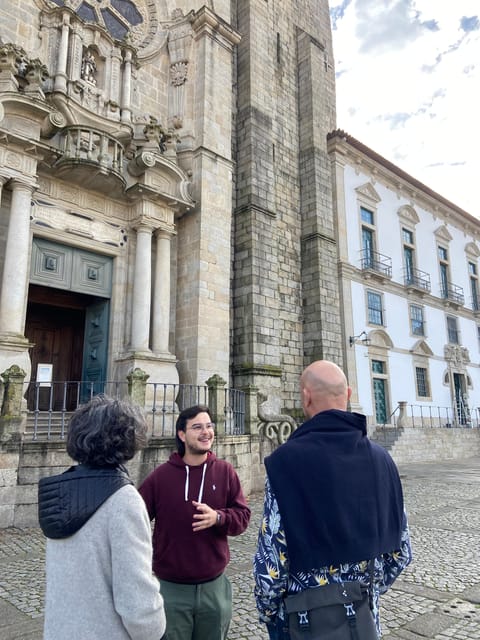
The meeting point is next to the Estátua de Vímara Peres near Porto Cathedral. This is a sensible place to begin because you start above the old center, with the city’s religious and medieval story already around you.
The statue commemorates Vimara Peres, a figure linked with the early formation of the County of Portugal. You do not need to arrive with background knowledge. The guide uses the opening section to explain how Porto grew and how religion shaped both the city and the wider country.
Look for your guide near the statue rather than expecting a large tour office. One practical point came up in the tour details: the guide may be easier to spot with a sign or other clear marker. Give yourself a little extra time at the meeting point, especially if you are unfamiliar with the cathedral square.
Porto Cathedral and the Bishop’s Palace
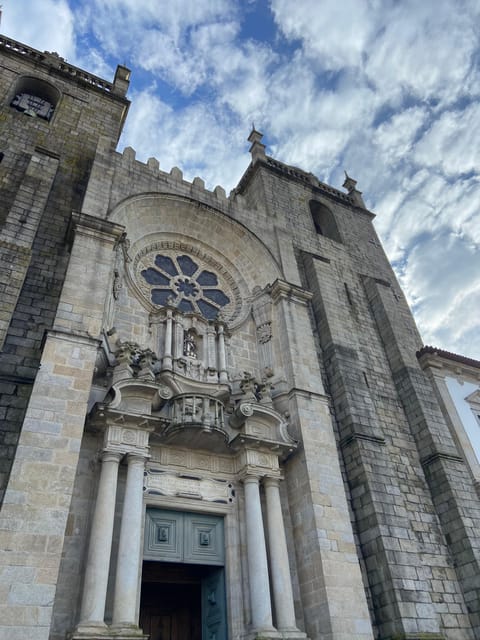
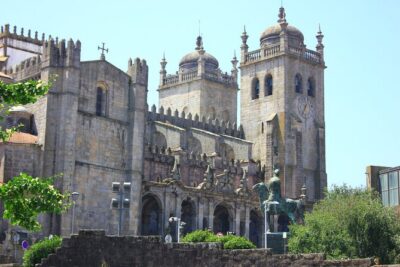
The Sé Cathedral is the first substantial stop, with about 15 minutes of guided attention. Its position high above the city immediately shows why this area mattered. From here, Porto’s old streets drop toward the Douro, and the route ahead becomes easier to understand.
The cathedral also introduces the tour’s main historical thread: the strong Judeo-Christian framework that shaped Portugal. The guide explains the influence of religious institutions and the connection between faith, power, and urban growth.
Nearby, the Paço Episcopal, or Bishop’s Palace, adds another layer to that story. The palace is a reminder that church authority was not confined to worship. It also played a major role in civic life and the city’s hierarchy.
The short stop is useful for orientation, but do not expect a full cathedral visit or an extended architectural lecture. This is a city walk, not a cathedral admission tour. If you want time to examine the interior in detail, plan to return later.
Down through alleys to Ribeira
The descent toward Ribeira is one of the most memorable parts of the route. Instead of taking only broad streets, the walk uses old alleys and stairways, giving you a better sense of how people once moved between the upper city and the river.
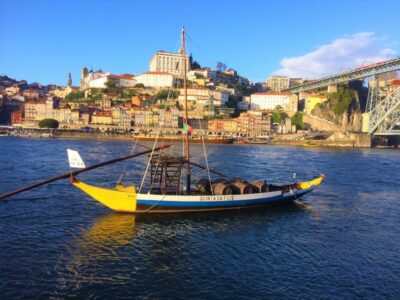
Ribeira was Porto’s riverside traders’ quarter, and its location explains much about the city’s character. Trade, shipping, and the Douro connected Porto to the outside world. The tour shows how the riverfront supported the city’s commercial life and why Porto developed such a strong link with port wine.
The official guided stop here lasts about 15 minutes. That is enough for a clear explanation and some orientation, but the riverfront can easily tempt you to linger. You may want to return later for a slower look, a meal, or a drink.
The descent is also where the physical demands become clear. Porto’s historic paving can be slick or irregular, and the route includes slopes and steps. Wear shoes with a firm sole, and do not choose this walk if you need step-free access.
More historic Porto tours:
- Douro Valley: Historical Sites, Wine Experience, Lunch & Cruise
★ 5.0 · 5,133 reviews - Porto: Historic City Center Walking Tour
★ 4.7 · 1,172 reviews - Porto: An Intimate Fado Show in a Historical Tavern
★ 4.8 · 1,093 reviews - Porto: Historical Center Walking Tour
★ 4.8 · 898 reviews
São Francisco Church and Bolsa Palace
From Ribeira, the route moves toward two of Porto’s major monuments: São Francisco Church and the Palácio da Bolsa. Both help explain the city’s religious and commercial power.
São Francisco Church is associated with Porto’s religious life, while the Stock Exchange Palace reflects the wealth created by trade and business. Seeing these places in the same section makes the contrast useful. Porto was not shaped by faith alone. Merchants, civic leaders, and international commerce also left a strong mark.
The walk offers guided attention at the Bolsa Palace, but the information provided does not include an interior admission or a full palace tour. Treat this stop as an exterior and historical introduction unless your guide says otherwise. If the ornate interior is high on your list, check separately whether you need a ticket and extra time.
This part of the route is valuable because it moves beyond the usual pretty-street approach. You are not simply collecting views. You are learning why particular buildings appeared where they did.
Vitória, Juderia do Olival, and the old defensive line
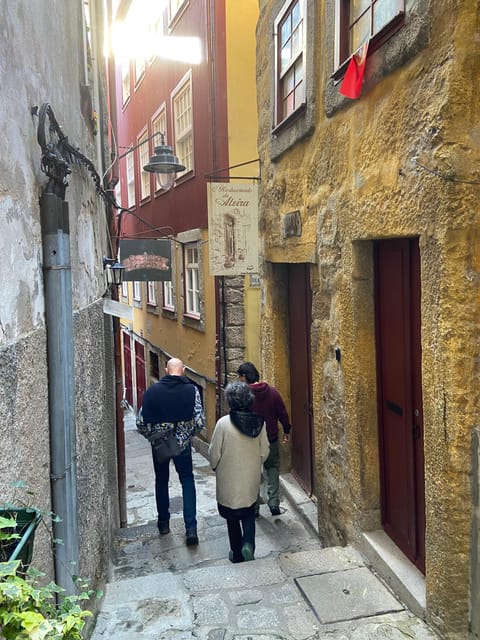
The route continues through Vitória and toward the former Jewish quarter known as Juderia do Olival. The tour description also follows part of the 14th-century defensive wall as it loops around the historic center.
This section should appeal to you if you enjoy city layers rather than only headline sights. Porto’s older quarters were shaped by different communities, boundaries, and practical needs. The Jewish quarter adds an important part of the city’s story, while the defensive wall shows how security once shaped the streets.
The guide’s job here is especially useful because the remains and street plan may not explain themselves. A local can point out how the old wall related to the city and help you read the narrow lanes as part of a larger plan.
The route does not promise a full archaeological visit or an intact walk along the entire wall. You are following its historic line and learning about the area while moving through the center. That keeps the pace lively, but it means the experience favors overview over detailed site study.
Clérigos Church and Tower
Clérigos is one of Porto’s signature landmarks, and the tour gives it a place in the Cordoaria section of the route. The church and tower are easy to recognize, but the guide adds meaning by placing them among the other monuments of the upper city.
This is a good point to appreciate Porto’s vertical character. The city is built on slopes, and the tower reinforces the sense of height that you have already noticed since leaving the cathedral. It also helps you connect the upper center with the river below.
The planned stop is about 15 minutes. That makes it a useful introduction, not a tower climb. If you want to climb Clérigos Tower, you will need to arrange that separately and allow extra time. The same applies to anyone hoping to explore the church at length.
Lello Bookshop and the Cordoaria area
Livraria Lello is one of Porto’s best-known sights, and it appears on the route alongside Clérigos. The shop draws crowds for its elaborate interior and literary reputation, but the walking tour treats it as one part of a larger historic district.
That is useful because Lello can easily take over a first visit to Porto. The guide helps place it among nearby monuments rather than presenting it as the whole story of the neighborhood. You learn about the surrounding streets and the Cordoaria area as well as the bookshop itself.
The tour includes a guided stop of about 15 minutes. An entry ticket is not listed among the inclusions, so do not assume that this walk includes admission. If you want to go inside, check current access arrangements and plan that visit separately.
This is a recurring pattern throughout the experience: you see the important sites, learn why they matter, and then decide which interiors deserve a return visit.
Aliados and São Bento Station
Avenida dos Aliados brings you into Porto’s grand civic center. The wide avenue and formal buildings feel very different from Ribeira’s cramped lanes and steep steps. That change is part of the route’s strength. You see how Porto moves from medieval streets to later civic planning.
The final major stop is São Bento Station, where the guided attention lasts about 30 minutes. That longer pause makes sense. São Bento is not just a transport hub. Its interior is famous for large tiled scenes that tell stories from Portuguese history and everyday life.
The station is one of the best places on the walk to connect art with national identity. The tiles give the guide plenty to explain, and the longer time here lets you look closely rather than rushing through for a single photograph.
The tour then returns to the Vimara Peres statue. Because the route loops back to its starting point, it is easy to continue exploring the cathedral area, return to a favorite stop, or use the walk as a base for the rest of your day.
How much value do you get for $32?
At $32 per person, this is a reasonable price for a 2.5-hour private-style city introduction with a live local guide, assuming the departure is shared with other participants as arranged by the operator. The inclusions are the walking tour and guide. Entry fees, food, drinks, and transport are not listed, so budget separately for those.
I see the best value in the route design and the guide’s local input. You cover the city’s main historic zones in one sitting, and Lucas has been especially good at adding restaurant suggestions and advice on where to sample port wine from smaller producers.
The price is less attractive if you already know Porto well or prefer to enter every monument. This is not an admission-heavy sightseeing pass. It is a guided orientation with historical explanation, route-finding, and local recommendations.
Who will enjoy this walk most?
I would choose this tour for a first or second day in Porto. It gives you the city’s basic layout before you spend time on individual churches, museums, viewpoints, or the riverfront.
It also suits you if you like history explained in plain language. Lucas is described as personable, entertaining, and able to connect different periods of Porto and Portugal. The guide adapts to interests, so you can ask about architecture, religion, trade, neighborhoods, or daily life.
The walk is less suitable for anyone with mobility impairments. You should expect slopes, stairways, old paving, and a descent to Ribeira followed by movement through the upper center. Comfortable clothes and shoes are specifically recommended, and that advice is worth taking seriously.
English and Spanish tours are available. The tour does not list food, wine, or monument admission as included, so think of local tasting tips as a useful extra, not part of the package.
My take: book it for orientation and context
I would book this Porto Historical Center walk if I wanted a clear first look at the city, especially with limited time. The route covers the cathedral, Bishop’s Palace, Ribeira, Bolsa, Vitória, Clérigos, Lello, Aliados, and São Bento without requiring you to solve Porto’s steep geography on your own.
Book it for the guide’s storytelling and practical advice, not for long interior visits. Lucas receives repeated praise for his warmth, answers, history knowledge, adaptable pace, and local recommendations. The biggest question is your comfort with hills and stairs.
At $32, it offers solid value for a focused 2.5-hour introduction. Wear good shoes, arrive near the Vimara Peres statue with a little time to find the guide, and keep part of the day free to revisit the places that catch your interest.
FAQ
How long does the Porto Historical Center Walking Tour last?
The tour lasts 2.5 hours.
Where does the tour meet?
The meeting point is next to the Estátua de Vímara Peres near Porto Cathedral in Porto.
Where does the tour finish?
The route returns to the Estátua de Vímara Peres, the starting point.
Which languages are available?
The live tour is available in English and Spanish.
Are entrance tickets included?
The listed inclusions are the walking tour and local guide. Entrance tickets to attractions are not listed as included.
Is the tour suitable for people with mobility impairments?
No. The tour is listed as unsuitable for people with mobility impairments, and you should expect hills, stairways, and uneven historic streets.
Newest Porto reviews on the site
- Douro Valley Premium Tours – Private Driver & Guide★ 5.0 · 93 reviews
- Douro Valley Delights Wine Tasting and Scenic Vistas★ 5.0 · 3 reviews
- Douro valley Majestic★ 5.0 · 12 reviews
- Private off the beaten Douro Valley Wine Tour★ 5.0 · 100 reviews
- Tour the Douro wine region, and discover the fantastic landscape★ 4.5 · 4 reviews
- Douro Valley Private Full–Day Tour from Porto★ 5.0 · 23 reviews
- Private Tour to stunning Douro Valley and most renowned wineries★ 5.0 · 39 reviews
- Douro Tour on a Private Yacht in Porto★ 4.5 · 10 reviews
Porto Walking Tours, compared.
Porto Walking Tour, Lello Bookshop, River Cruise and Cable Car
Read our review →
Experience Porto’s Charm: 3-Hour Guided Walking Tour
Read our review →
Walking Tour, Lello Bookshop, Boat and Cable Car
Read our review →Browse the lists this tour appears in