
Reviewed · PORTO
Porto: Impressive Monet & Brilliant Klimt
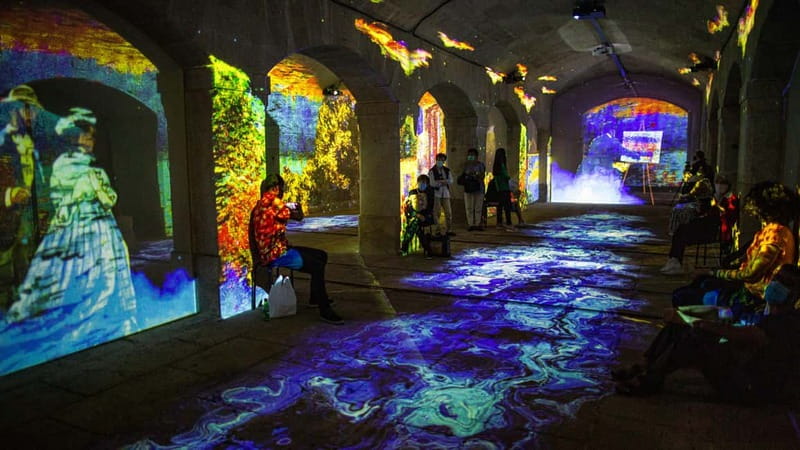
The best part of this Porto experience is the setting: the old Customs House becomes a giant screen, with art moving across walls, arches, and floors around you. Monet’s soft color and Klimt’s gold-heavy designs take on a new scale through light, music, and motion.
I like the low $12 price and the short 30-minute running time. It is easy to fit between sightseeing stops, and the indoor venue makes good sense on a wet Porto afternoon. The main drawback is that this is a projection show, not a museum. You will not see original paintings, and there is no formal seating.
Key points at a glance
- Porto’s Customs House becomes the artwork: The historic Alfândega building provides stone arches and a large interior for the projections.
- Two major artists share the program: The current show focuses on Claude Monet and Gustav Klimt, with each receiving about 15 minutes in the presentation.
- The $12 ticket is easy to justify: At half an hour, this is a modest-priced cultural stop, especially in poor weather.
- You move around the room: There are no seats supplied for the show, so wear comfortable shoes and choose your viewing spot as the images change.
- The effect is visual rather than educational: You get color, music, and motion, but little supporting information about the artists afterward.
- Mysterious Egypt may be available as an extra: This separate OCUBO production reimagines ancient Egyptian artifacts with light and design.
Immersivus Gallery Porto occupies the Alfândega building on Rua Nova da Alfândega, close to the riverfront. The address is not just a practical meeting point. The Customs House gives the show a strong sense of place, with old stonework and arches forming the backdrop for the projections.
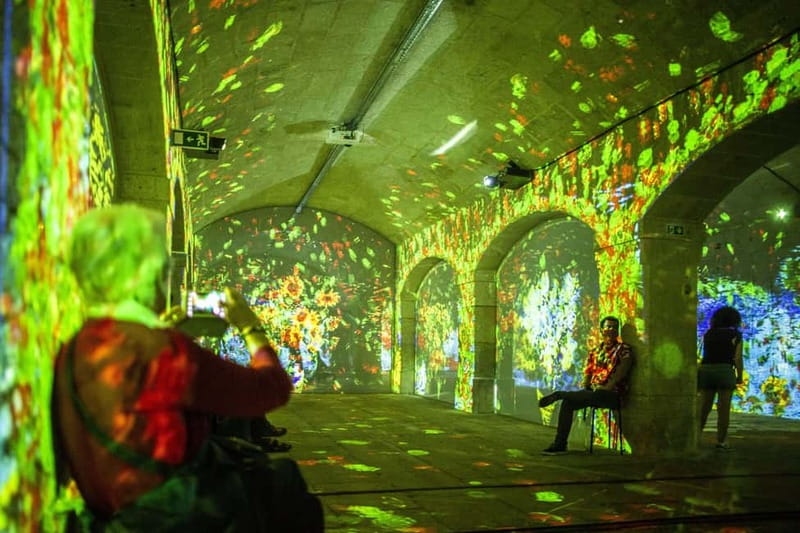
You enter a large gallery space rather than a conventional exhibition room. Instead of walking from one framed painting to another, you watch images spread across the surrounding surfaces. The room changes as the program moves from one artist to the next, so your attention shifts between walls, corners, and the floor.
The presentation currently includes Impressive Monet and Brilliant Klimt. The two artists make a sensible pairing. Monet gives the program a softer, more atmospheric mood, while Klimt brings pattern, gold, portraiture, and stronger decorative shapes. The contrast keeps the half hour from feeling visually flat.
You should think of the visit as a short audiovisual performance. It is not a guided museum tour, and no named guide leads you through the artists’ lives or techniques. English and Portuguese are the listed languages for the host or greeter, but the main communication comes through projected images, sound, and the space itself.
The Monet section works best if you give yourself time to watch the colors rather than trying to identify every picture. His familiar interest in gardens, water, light, and changing atmosphere suits a format where images can spread and shift across the room.
The Klimt section has a different visual character. His strong outlines, decorative surfaces, and gold tones create a more dramatic effect when enlarged across the Customs House walls. The movement and music add a theatrical layer that you will not get from standing in front of a single painting.
The current format is described as giving roughly 15 minutes to Monet and 15 minutes to Klimt. That makes the program easy to understand. You are not committing to a long evening performance, and you can see both artists without spending hours indoors.
I would keep your expectations in the right place. Projection shows can make familiar art feel fresh, but they also simplify it. You are seeing an edited visual presentation rather than the brushwork, scale, and physical surface of original canvases. If you want careful interpretation or detailed art history, this will feel light.
The show does provide something a traditional gallery cannot: you can notice how a small image becomes part of a large room. That change in scale is the central attraction. The best moments come when you stop trying to take in everything and simply watch the room transform.
Porto already has plenty of churches, tiled facades, viewpoints, and river scenery. The Alfândega building gives this activity a different character. Its old interior prevents the show from feeling like a projection inside an anonymous black box.
Stone arches and irregular architectural features help break up the images. Instead of one flat screen at the front, you get a room with depth and corners. That is why the setting matters as much as the content. The venue turns the show into a walk-through visual event, even though the visit itself lasts only half an hour.
The building also makes this a useful rainy-day choice. Porto weather can change quickly, and a short indoor stop gives you a break from wet pavements without asking you to spend half a day in a museum. The show is easy to pair with other central Porto sights, provided you allow enough time to reach the Alfândega building and find the entrance.
Do not expect a conventional gallery layout. There is no stated route with numbered rooms, and the presentation is built around a single changing space. You choose where to stand and adjust your view as the projections move.
The venue has no formal seats, so plan to stand or move around during the presentation. This is an important detail for anyone expecting a cinema-style experience. The space may offer places where you can pause, but you should not count on a reserved chair or a fixed sitting area.
I suggest arriving in comfortable shoes and avoiding a heavy schedule immediately afterward. Thirty minutes is brief, but standing and changing position can feel different from sitting through a film. If you want to see the images from more than one angle, the lack of seating becomes part of the format rather than a problem.
Try not to stay at the doorway. The room is designed for the projections to surround you, so moving farther into the space should give you a fuller view. Since the images cover different surfaces, there is no single perfect position for the entire show.
You may also want to watch the first few minutes before taking photographs. Phone screens can distract you from the changing light, and a photo rarely captures the scale of the room. If you do take pictures, use them as a reminder rather than expecting them to reproduce the experience.
The light and sound effects are intermittent. Anyone with epilepsy should not attend, as the activity is specifically marked as unsuitable for people with epilepsy. This warning is worth taking seriously because the show depends on rapid changes in projected light and audiovisual effects.
At $12 per person, this is priced as a small cultural attraction rather than a major day tour. The value depends on what you want. If you are looking for a quick, weather-proof activity with a distinctive setting, the cost is reasonable.
The short length helps. You do not need to build your whole day around the visit, and the program is long enough to give both artists space. A longer show might offer more context, but it could also become repetitive if the projection style is not your thing.
The price feels less compelling if you want original art, a detailed explanation, or an interactive display with hands-on features. Some similar projection shows add extensive interpretive material or a shop with information and souvenirs. Here, the main offering is the audiovisual performance itself.
The experience has earned a 4.4 rating from 529 reviews, which suggests broad appeal but not universal enthusiasm. That balance makes sense. The Customs House setting and the scale of the images can be genuinely striking, while the limited art information and lack of seating will not suit everyone.
If you have already seen a large-scale projection show based on another artist, compare your expectations carefully. Some people find Monet and Klimt beautiful but less powerful than other productions they have seen. The effect depends heavily on your interest in the artists and your response to music, motion, and changing light.
Immersivus Gallery Porto also offers Mysterious Egypt, described as the latest OCUBO creation at the venue. It reworks ancient Egyptian artifacts through light and design.
The supplied ticket information specifically includes access to Impressive Monet and Brilliant Klimt. If Mysterious Egypt is important to you, check the current availability and ticket conditions before booking rather than assuming it is included.
The Egypt show may suit you if you prefer historical symbols, artifacts, and dramatic visual motifs. It also gives repeat visitors another reason to return to the same gallery. Still, the Monet and Klimt ticket should be judged on its own, since the core experience is the two-artist presentation.
I would recommend this for you if you like art presented in a theatrical way. You do not need specialist knowledge of Monet or Klimt. The show is designed to communicate through color, music, movement, and scale, so a basic interest in visual art is enough.
It also suits couples, families, and solo visitors who want a short break indoors. The 30-minute format is manageable, and the room gives you some freedom to choose how closely you watch. The English and Portuguese host support helps with entry, though the show itself does not depend on a long spoken explanation.
This is a particularly practical option on a rainy day. The Customs House location keeps you near Porto’s riverfront, and the visit can fit between other central sights. The activity ends back at the same meeting point, so there is no transport arrangement to manage during the show.
I would be more cautious if you have difficulty standing or moving around for half an hour. The venue has an elevator for people with reduced mobility, which is helpful, but the show has no supplied seats. Contacting the provider before booking would be sensible if you need a specific seating arrangement.
Art students and serious museum visitors may want more background. There is limited information about the artists after the presentation, and the experience does not replace a visit to a collection with original works. You get a strong visual impression, not a full lesson in art history.
The start point is Rua Nova da Alfândega, Alfândega Building, 4050-430 Porto. Check the available start times when you book, since the exact schedule is not fixed in the information provided.
The listed host or greeter languages are English and Portuguese. The activity lasts 30 minutes, and it ends at the same meeting point.
You can cancel up to 24 hours in advance for a full refund. A reserve-now, pay-later option is also available, which is useful if your Porto plans are still shifting.
The gallery is wheelchair accessible, with an elevator for visitors with reduced mobility. Remember the light and sound warning if anyone in your group has epilepsy. The show is not suitable for people with epilepsy.
One small practical point: the venue may not guide you toward every extra facility in a highly obvious way. If you are looking for a shop or additional area, ask staff rather than assuming it is directly along the exit route. The main attraction remains the projection room.
Book it if you want a short, visually rich indoor stop in a memorable Porto building. At $12, the experience offers a fair amount of atmosphere for modest cost, especially when rain makes outdoor sightseeing less appealing.
Skip it if you want original paintings, a seated performance, or detailed commentary on Monet and Klimt. The show asks you to respond to art through scale, light, sound, and motion. That can be magical, but it is not the same as studying a canvas in a museum.
My practical choice would be to book it when the weather is poor, when you have a spare half hour near the river, or when someone in your group enjoys contemporary ways of presenting art. Go in expecting a visual performance inside an old Customs House, and the $12 price makes good sense.
FAQ
Other Porto trips people book alongside this one:
- The Unvanquished Tour in Porto City Center
★ 5.0 · 26,497 reviews - From Porto: Douro Valley w/ Boat Tour, Wine Tasting & Lunch
★ 4.7 · 19,061 reviews - Complete Douro Valley Wine Tour with Lunch, Wine Tastings and River Cruise
★ 5.0 · 12,920 reviews
Where does the Monet and Klimt show take place?
It takes place at Immersivus Gallery Porto inside the Porto Customs House, also called the Alfândega Building, at Rua Nova da Alfândega, 4050-430 Porto.
How long does the experience last?
The listed duration is 30 minutes. Check the available times when booking because the starting schedule can vary.
What artists are featured?
The current presentation features Claude Monet and Gustav Klimt. The program is titled Impressive Monet and Brilliant Klimt.
Same city, a completely different kind of day out:
- Porto: Six Bridges Cruise
★ 4.2 · 11,680 reviews - Porto: Live Fado Show with Glass of Port Wine
★ 4.8 · 6,498 reviews - Porto: 6 Bridges Douro River Cruise
★ 4.3 · 6,472 reviews - Porto: Torre dos Clerigos Entrance Ticket
★ 4.6 · 6,395 reviews
Are seats available during the show?
There are no seats at the venue for this show. You should expect to stand or move around the space while viewing the projections.
Is the gallery wheelchair accessible?
Yes. The venue has an elevator for people with reduced mobility.
Is the activity suitable for people with epilepsy?
No. The show includes intermittent light and sound effects and is specifically marked as unsuitable for people with epilepsy.
Newest Porto reviews on the site
- Douro Valley Premium Tours – Private Driver & Guide★ 5.0 · 93 reviews
- Douro Valley Delights Wine Tasting and Scenic Vistas★ 5.0 · 3 reviews
- Douro valley Majestic★ 5.0 · 12 reviews
- Private off the beaten Douro Valley Wine Tour★ 5.0 · 100 reviews
- Tour the Douro wine region, and discover the fantastic landscape★ 4.5 · 4 reviews
- Douro Valley Private Full–Day Tour from Porto★ 5.0 · 23 reviews
- Private Tour to stunning Douro Valley and most renowned wineries★ 5.0 · 39 reviews
- Douro Tour on a Private Yacht in Porto★ 4.5 · 10 reviews