Reviewed · PRIVATE
Porto Private Custom Tour with a Local: Highlights & Hidden Gems
Porto reveals itself best on foot, and this private tour lets you set the pace. Your host may lead you from Porto’s tiled train station to the Douro waterfront, then turn into narrow lanes, small shops, churches, and neighborhoods you might miss on a standard sightseeing route. I like the personal planning before the walk, and I like that a two-hour introduction can expand into an eight-hour city day.
I also like the practical advice that comes with a good host. Mayinka, Simon, Hanna, Alice, and Tiago are among the guides praised for history, local food tips, humor, and flexible pacing. The main caution is Porto’s hills. This is a walking tour, not a vehicle tour, and one four-hour route included plenty of inclines.
Key points before you book
- Your host contacts you before the walk: A short questionnaire helps shape the route around food, architecture, art, history, or local life.
- The format is genuinely private: Only your group takes part, so you can ask questions, pause for photos, or adjust the pace.
- The route can mix major sights with quieter streets: Expect possible stops at the market, the tiled train station, Miragaia, churches, the cathedral, and the Douro riverfront.
- You choose the length: Book for about 2 to 8 hours, depending on how much of Porto you want to cover.
- Porto’s hills are part of the deal: Wear shoes with a firm grip and tell your host about mobility limits before the route is set.
- The price is $48.23 per person: That is fair for a private walk, especially for a couple or small group, but food, attraction tickets, and transport cost extra.
A private Porto walk that changes with your interests
The useful thing here is not a fixed list of monuments. It is the chance to tell someone what you care about and have the day shaped around it. A history-minded visitor can focus on churches, the cathedral, Roman-era Porto, and Portugal’s past. Someone more interested in daily life can spend more time in the market, local shops, cafés, and residential streets.
That planning begins after booking. You receive a short questionnaire, then communicate directly with your host about interests, must-see places, and preferences. This is important because the tour can last only two hours or stretch to eight. A short visit needs a tight route. A longer one gives you room for side streets, riverside views, and a slower look at neighborhoods.
The experience is offered in English and is private to your party. That makes it easier to ask for explanations, stop when you want, or say that a certain sight is not for you. The strongest guide experiences combine useful facts with an easy personal manner. Mayinka is repeatedly praised for warmth, humor, photos, and thoughtful pacing. Simon is praised for pairing famous sights with less obvious streets. Hanna is described as flexible and good at keeping the pace comfortable.
Still, the host makes a major difference. One disappointing experience came from a route that felt unfocused and began with too much personal conversation. That is a useful warning: be clear in the questionnaire and at the start. Tell your host what you want to see, how far you can comfortably walk, and how much history you want.
More private Porto tours:
- Discover Porto’s Highlights on a 2-Hour Private Electric Tuk Tuk
★ 4.5 · 1,860 reviews - Porto PRIVATE TOUR With Locals: Highlights & Hidden Gems
★ 5.0 · 984 reviews - Porto: Private tour in the Douro (1 to 4 people) on a boat just for you
★ 5.0 · 744 reviews
Porto City Hall is a practical starting point
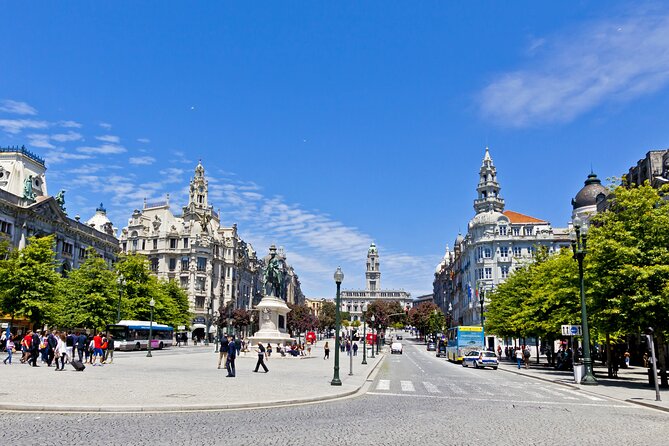
The stated meeting point is Porto City Hall, at PC GEN Humberto Delgado, 4049-001 Porto. Starting here gives the walk a central urban setting, though the exact route depends on your answers and the time you book.
The experience ends back at the meeting point. That matters if you have dinner reservations, a train to catch, or a timed attraction afterward. For a longer walk, ask your host early how the route will loop back and how much time you should leave for the return.
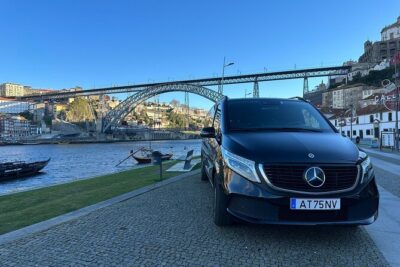
The tour is mainly on foot. Public transport or a local taxi may be used if moving between areas makes sense, but those costs are not included. Discuss any transport plan with your host after booking. Do not treat this as a private driving tour, because no private vehicle is provided.
The market: Porto through ordinary daily life
A market stop can be one of the best parts of a city walk because it shows what people buy, eat, and use. Here you might browse colorful produce, handmade goods, and local snacks rather than simply look at another grand façade.
I would use this stop as a chance to ask direct questions. What do people buy for breakfast? Which foods are seasonal? Which stalls are aimed at local shoppers? A host who knows the city can turn a quick pass through the market into a useful guide to Porto’s food culture.
Food and drinks are not included, so anything you taste or purchase is your own expense. That is not a problem, but it helps to budget for it. If you want a food-focused walk, say so clearly before the tour. The market can then become a central part of the route rather than a brief stop between monuments.
The market is also a good fit for visitors who want a gentler introduction to Porto. You can learn about the city without spending the whole morning inside churches or listening to dates. Just remember that markets are working places. Your host should help you look without blocking stalls or treating ordinary shoppers as part of a show.
The tiled train station and Portugal in blue-and-white
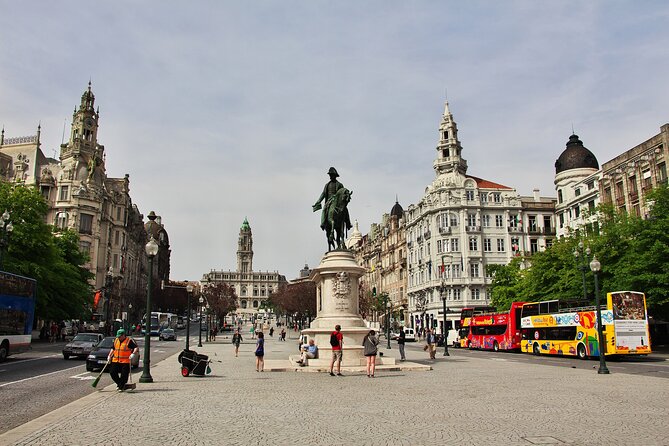
One possible stop is a grand train station lined with detailed azulejo murals. The tiles show scenes from Portugal’s past in vivid blue and white, turning a transport hub into a public history lesson.
This is a smart inclusion early in a Porto visit. You see a major piece of Portuguese art without needing a separate museum ticket, and the station helps connect the city’s architecture with its past. Ask your host to explain what the panels depict and why tilework became such a strong part of Portuguese design.
The station is likely to be busy, especially around arriving and departing trains, so do not expect a quiet gallery. You may need to stay aware of foot traffic and keep the group together. That said, the setting gives the stop a sense of place that a stand-alone museum cannot match.
If architecture interests you, tell your host you want time for details rather than only a quick photograph. The questionnaire is your chance to say so. If you are more interested in food or neighborhoods, the station can remain a brief orientation stop.
Same city, a completely different kind of day out:
- The Unvanquished Tour in Porto City Center
★ 5.0 · 26,497 reviews - From Porto: Douro Valley w/ Boat Tour, Wine Tasting & Lunch
★ 4.7 · 19,061 reviews - Complete Douro Valley Wine Tour with Lunch, Wine Tastings and River Cruise
★ 5.0 · 12,920 reviews - Porto: Six Bridges Cruise
★ 4.2 · 11,680 reviews
Miragaia, where Porto slows beside the Douro
Miragaia is described as a historic fishing quarter along the Douro. Its appeal is not one single monument. It is the combination of narrow lanes, colorful homes, river proximity, and a quieter rhythm than the busiest central streets.
This is the kind of place where a local host earns the fee. A map can show you how to reach the neighborhood, but it will not explain which streets feel residential, where the old fishing character survives, or how the quarter fits into Porto’s growth. A good guide can point out small details and connect them to the city’s working past.
Miragaia is also a reminder that Porto is not only grand churches and viewpoints. You see homes, passages, cats, doors, and everyday movement. One memorable route description included colorful houses, narrow passages, friendly cats, and streets where local life sits beside traces of earlier Porto.
The drawback is distance and terrain. Depending on the route, reaching Miragaia may mean hills or a long walk. If someone in your group is older or tires easily, say this before the route is planned. One group found that the guide did not adjust well enough for an 83-year-old member, so pace and comfort should be discussed plainly.
The Douro waterfront and Porto’s oldest quarter
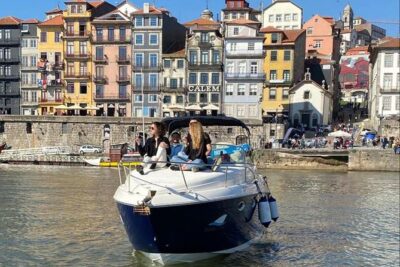
The riverside promenade offers the classic Porto view: water, old buildings, traditional taverns, and a long sweep of the city’s past. It is a natural place to pause, take photographs, and let your host explain how the river shaped trade and daily life.
The waterfront can also be touristy, especially compared with Miragaia’s lanes. That is not a reason to skip it. The value comes from pairing the postcard view with nearby streets and taverns, so you see both the public face of Porto and the places that feel more lived-in.
Several guides are praised for making the riverfront part of a larger story. Mayinka is singled out for the cathedral and Douro riverside. Simon is praised for including well-known sights while adding less obvious places. This mix is what I would request: begin with the river view, then ask to move away from the main promenade for a more local look.
Food and drink are not included, but your host can offer suggestions for the rest of your visit. That is especially useful on a first trip. Ask for advice based on the kind of meal you want, not just a generic list. You can also ask your host to send recommendations afterward, something one guide did following the walk.
Churches, the cathedral, and Porto’s long story
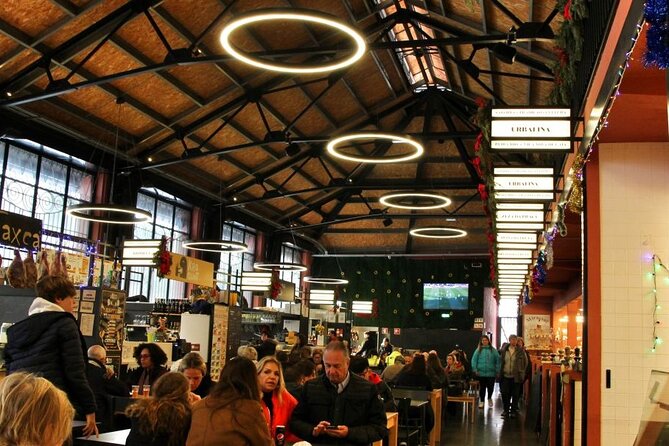
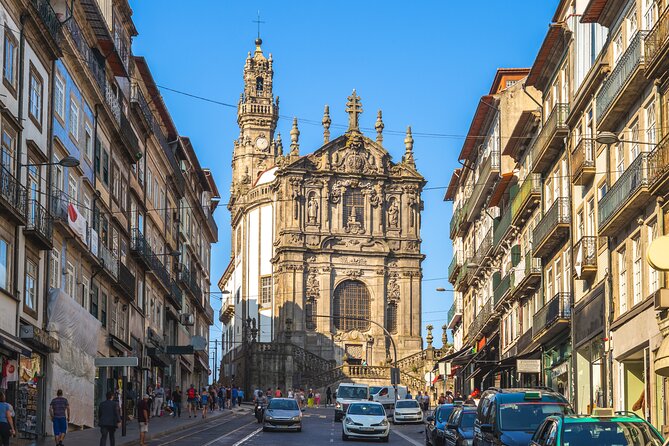
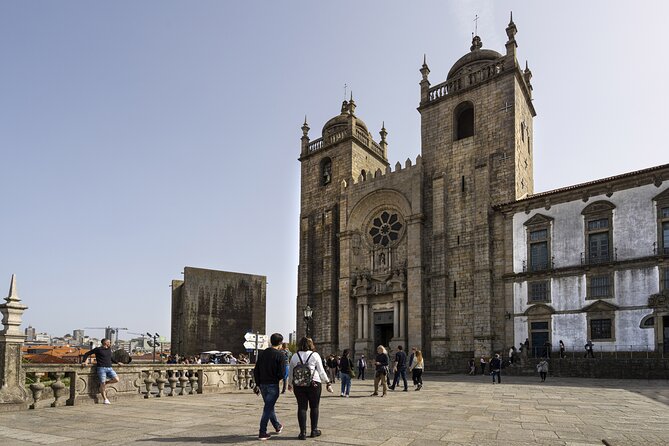
The possible route can include the cathedral and churches, and several guide experiences focus on the development of Porto from Roman times to the present. This gives the tour more substance than a walk that only points out pretty buildings.
Church visits may be brief or more detailed, depending on your interests and opening conditions. Admission tickets are not included, so ask your host which places require payment before entering. If you prefer exterior architecture and city views, say so. If you want religious art and the story behind church construction, say that instead.
I like the chance to connect churches with the streets around them. Porto’s past is not locked inside monuments. It appears in stairways, façades, narrow routes, and the way the city rises from the river. A host who explains those links can help you understand why Porto feels layered rather than simply old.
History should also be handled at the right pace. Some people want names and dates. Others want a few strong stories and more time to look around. The best fit here is a host who listens. Catia is praised for combining history, culture, food, and traditions, while Tiago is praised for answering questions with useful historical and cultural details.
Hills, stairs, weather, and the real walking effort
Porto is hilly. That fact affects almost every part of this experience. A four-hour walk may cover a lot of ground, but it may also include steep streets, stairs, and repeated climbs between the river and higher districts.
Wear comfortable shoes with good grip. Bring water, and allow time for pauses. If your group includes an older person, a child, or anyone with limited stamina, mention it in advance and repeat it when you meet. A private format gives the host room to adapt, but the guide needs accurate information to do that.
Weather can alter the feel of the day. One guide kept a group engaged in wet and windy conditions, and another made the most of rain. Still, Porto’s stone streets can be uncomfortable in bad weather, so bring suitable layers and a rain jacket. The tour does not include a vehicle or indoor backup plan unless you arrange part of the route with your host.
Service animals are allowed, the activity is near public transport, and most people can take part. Those details are helpful, but they do not remove the need to discuss walking limits. Accessibility depends on the route your interests produce.
Is $48.23 per person good value?
At $48.23 per person, the price is reasonable for a private experience, particularly if two or more people share the guide. You are paying for planning, a host assigned to your group, local orientation, and the freedom to shape the day. A two-hour walk gives you a useful start. A six-hour walk can function as a full first-day introduction.
The value is strongest when you use the customization. If you simply want a fixed list of famous sights, a standard group walk may cost less and may suit you better. Here, the advantage is conversation and adjustment. You can ask about food, art, churches, local neighborhoods, or the best way to spend the rest of your stay.
Remember the extras. Food, drinks, attraction tickets, and any public transport or taxi fares are not included. Gratuities are optional. A longer tour can therefore cost more in practice if you add meals, admissions, and transport.
The average booking point is 72 days ahead, which suggests that planning early is sensible if you want a particular date or guide. The experience is available in English and offers group discounts, but the exact discount is not specified. Check the price for your party before you commit.
Who should book this Porto experience?
I would choose this tour for a first visit, especially if you want help getting your bearings without being pushed through a fixed script. It also suits repeat visitors who want local neighborhoods, food advice, or a closer look at daily life beyond the main monuments.
It works well for couples, families, and small private groups that want to move at their own pace. The personal format is useful if one person wants churches, another wants food, and someone else mainly wants photographs and local streets.
I would be more cautious if you dislike walking, need a fully accessible route, or want guaranteed entry to specific attractions. Tell the host your limits and must-sees before the day. Also be clear about how much talking you want. One weak experience began with a long personal conversation and never found a clear direction.
Should you book it?
Book this Porto walk if you want a flexible introduction built around your interests, not a rapid checklist. The strongest guides, including Mayinka, Simon, Hanna, Alice, Catia, and Tiago, are praised for warmth, local tips, history, humor, and careful tailoring.
Choose the two-hour option if you want orientation and a short list of useful suggestions. Choose four to six hours if you want the cathedral, churches, train station, market, Miragaia, riverfront, and quieter streets in one broad outing. Consider eight hours only if your group is happy with a long day on foot.
My main advice is simple: complete the questionnaire carefully, explain your walking pace, and name the sights that matter most. Do that, and $48.23 can buy more than sightseeing. It can give you a practical start in Porto and a better sense of where to wander next.
FAQ
How long does the private Porto tour last?
The experience lasts approximately 2 to 8 hours. You select your preferred duration when booking.
Where does the tour begin?
It begins at Porto City Hall, listed at PC GEN Humberto Delgado, 4049-001 Porto, Portugal.
Where does the tour end?
The activity ends back at the meeting point.
Is the tour private?
Yes. Only your group participates in the activity.
Is the tour conducted in English?
Yes. English is the offered language.
Does the guide create a custom itinerary?
Yes. After booking, you receive a short questionnaire about your interests, preferences, and must-see places. Your host then uses that information to plan the walk.
Is transportation included?
No private vehicle is included. The experience is mainly on foot. Public transport or local taxis may be used at an additional cost, which you can discuss with your host.
Are food, drinks, and attraction tickets included?
No. Food, drinks, attraction tickets, and optional gratuities are not included.
Can I cancel for a full refund?
Yes, if you cancel at least 24 hours before the experience start time. Cancellations or changes made less than 24 hours before the start time are not accepted for a refund.
Newest Porto reviews on the site
- Porto – Old Town Tour with an official guide★ 5.0 · 6 reviews
- Yacht Douro Tour★ 4.8 · 11 reviews
- Vila Nova de Gaia: Porto Discovery Tasting★ 4.8 · 17 reviews
- Visit to a Port Wine Cellar★ 4.8 · 5 reviews
- Vila Nova de Gaia: Winery Tour with 2 DOC Douro & 1 Port★ 4.8 · 101 reviews
- Vila Nova de Gaia: Douro Discovery★ 5.0 · 4 reviews
- WOW Porto: The Wine School Workshops and Tastings★ 4.7 · 20 reviews
- Private Portuguese Cooking and Wine Experience in Porto★ 5.0 · 30 reviews
Private, compared.
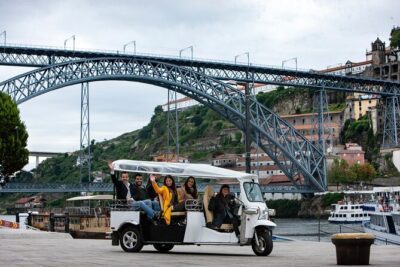
Discover Porto’s Highlights on a 2-Hour Private Electric Tuk Tuk
Read our review →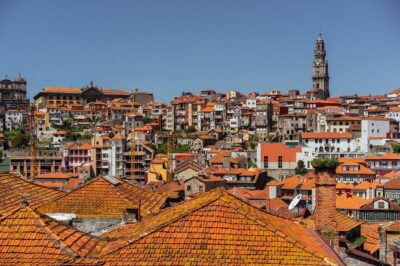
Porto PRIVATE TOUR With Locals: Highlights & Hidden Gems
Read our review →
Private tour in the Douro (1 to 4 people) on a boat just for you
Read our review →
Historic Porto by Private Electric Tuk Tuk to Top Landmarks
Read our review →
Private Tour of the Historic City in a Classic Ford T
Read our review →
Porto Private Food and Drink Tasting Tour with Local
Read our review →