
Reviewed · PORTO WALKING TOURS
3-Hour Porto Jewish Heritage Walking Tour with Local Guide
Porto’s Jewish past is easy to miss. Much of it was erased, renamed, or absorbed into the city’s later buildings. This three-hour walk helps you read those traces, starting at Porto Cathedral and moving through old Jewish quarters, medieval gates, memorials, and viewpoints above the Douro.
I like two things right away: the small-group format, capped at 10 people for a regular booking, and the strong focus on places you would likely pass without noticing. Guides such as Ricardo, Pablo, and Pedro bring documents, photographs, and stories that connect Jewish life with Porto’s merchant trade and the Portuguese Inquisition.
The main drawback is physical. This is a hilly walk with stairs and slick cobblestones, and there is not much intact Jewish architecture to see. If you expect a preserved Jewish quarter or a museum visit, this tour may feel more historical than visual.
Key things to know before booking
- The walk begins at Porto Cathedral and follows former Jewish areas toward the old waterfront and hillside viewpoints.
- Ricardo is often praised for his detailed research, clear English, humor, and ability to answer questions.
- The Jewish Synagogue and Jewish Museum are not included, so you will not enter either one on this tour.
- Expect steep streets, stairs, and cobblestones, with comfortable shoes essential.
- Morning and afternoon departures are available, making it easy to fit around other Porto plans.
- The $36.30 price is fair for a three-hour guided history walk, especially if you value context more than formal museum admissions.
Starting at Porto Cathedral
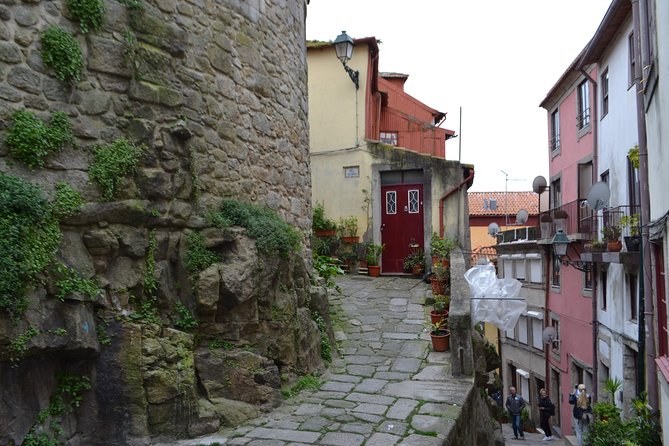
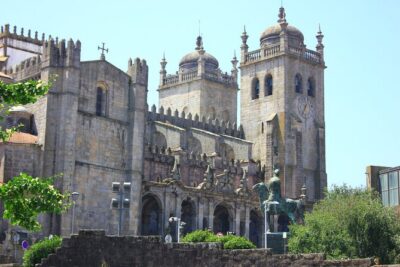
Meet your guide at Terreiro da Sé, beside Porto Cathedral. This is a sensible starting point because the cathedral sits high above the city, near the medieval center and close to the old routes that connected religious, commercial, and residential areas.
The cathedral visit itself is brief, about 10 minutes, with no admission charge included because the stop is treated as an exterior or introductory visit. Your guide uses the setting to explain Jewish life in Porto during Portugal’s early years, including the role Jewish merchants played in trade and city development.
This opening matters because the tour is not only about buildings once used by Jewish residents. It places Jewish history inside the wider story of Porto, including commerce, royal policy, forced conversion, and the changing shape of the city.
You may want to arrive early. The cathedral area is easy to recognize, but Porto’s streets can be confusing, especially if you are arriving by bus or trying to follow a phone map uphill. One person who missed the meeting point found that taking a taxi or Uber directly would have been easier. That is good advice if your schedule is tight.
More walking tours in Porto:
- Porto Walking Tour, Lello Bookshop, River Cruise and Cable Car
★ 5.0 · 3,354 reviews - Experience Porto’s Charm: 3-Hour Guided Walking Tour
★ 5.0 · 2,432 reviews - Porto: 3-Hour Guided City Highlights Walking Tour
★ 4.8 · 2,050 reviews
Reading Porto’s former Jewish quarters
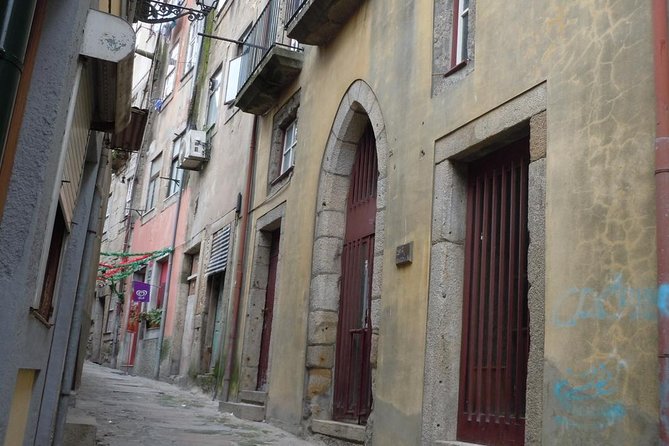
From the cathedral, the guide traces the outlines of Jewish neighborhoods both inside and outside the old city walls. These are not preserved districts with rows of marked houses. Instead, you will learn how to identify former boundaries, old lanes, gates, churches, and references in the urban fabric.
That distinction is important. If you want a visible quarter like those found in some Spanish or Central European cities, adjust your expectations. Porto’s Jewish story is often present through fragments, records, place names, and buildings that later served different purposes.
At Praça da Ribeira, the route turns toward the old waterfront. The stop lasts about 15 minutes and connects the former Jewish quarter with Porto’s trade routes. This is one of the more useful parts of the tour because it shows why the Jewish community mattered to the city’s commercial life, rather than treating Jewish history as an isolated subject.
You also get a feel for the distance between the hilltop center and the river. Porto’s geography shaped daily life, trade, and movement. The walk makes those relationships easier to understand than a short talk inside a museum would.
Medieval Porto at Postigo do Carvão
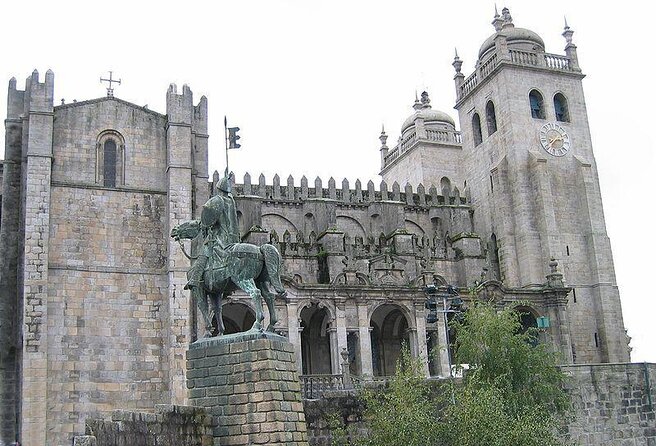
Postigo do Carvão is one of the route’s most atmospheric stops. This small medieval gate once opened toward the river and offers a direct link to the walled city. Your guide explains how Jewish residents were confined to a medieval ghetto and how access to different parts of the city was controlled.
The value here comes from the explanation. On its own, the gate is easy to overlook. With the historical setting supplied, it becomes evidence of how authorities separated communities and controlled movement.
The walk between stops is part of the lesson, but it is also where the physical demands become clear. Porto’s old center includes uneven paving, narrow lanes, steps, and sharp slopes. You will need steady footing, especially if rain has made the stones slippery.
Monastery, church, and erased memory
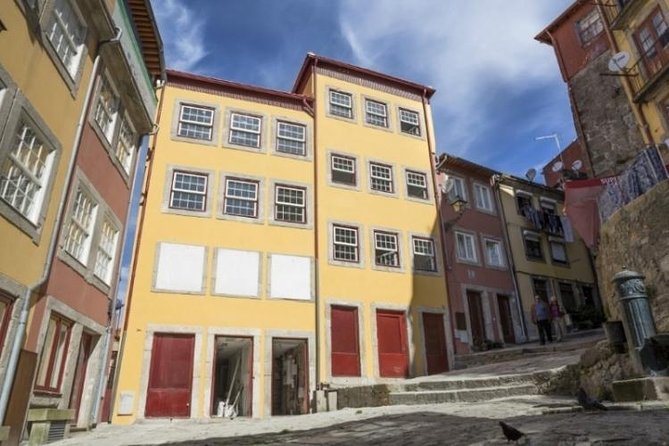
At the Mosteiro de São Bento da Vitória, you hear more about the memorial aspect of the route and the effort to recover Jewish memory in a city where much was suppressed. The stop lasts roughly 10 minutes.
The nearby Igreja Paroquial de Nossa Senhora da Vitória adds another layer. The tour does not present these places as intact Jewish monuments. Instead, they help explain how later religious and civic structures occupied spaces connected with older communities.
This is one reason a strong guide makes such a difference. Ricardo is frequently praised for preparing photographs and historical documents, then using them to point out details that are no longer obvious. The material helps you picture a community that cannot always be seen in the stonework.
The subject can be difficult. The Portuguese Inquisition tormented Jewish people and pressured many into conversion. The walk also addresses attempts to erase Jewish contributions from the official story. The tone is serious, but guides are described as friendly, patient, and able to keep the group engaged without turning the tour into a lecture.
More three-hour outings in Porto:
- Porto: City Highlights 3-Hour Guided Electric Bike Tour
★ 4.8 · 3,092 reviews - Porto: 3-Hour Food Tour
★ 4.9 · 807 reviews - Porto: 3-Hour Old Town & Riverside Bike Tour – Guided Experience
★ 5.0 · 481 reviews - Porto: Guided 3-Hour Best of Tour by Segway
★ 4.9 · 479 reviews
Views from Passeio das Virtudes
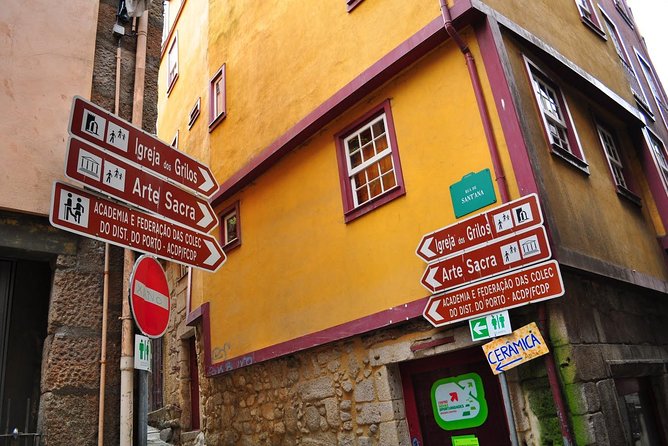
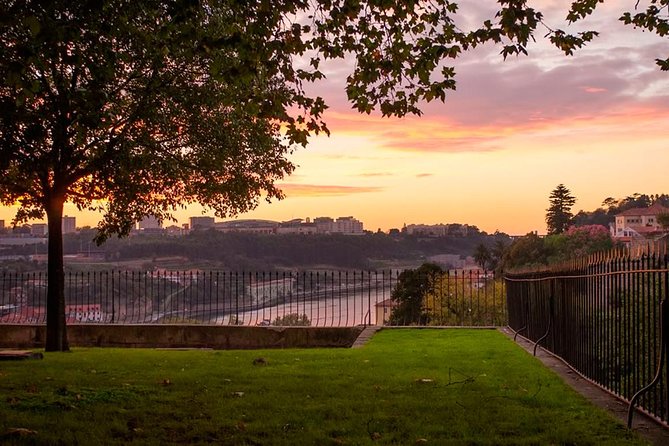
Passeio das Virtudes provides one of the best pauses on the route. From this hillside viewpoint, you can look across Porto’s lower city and the Douro while connecting the city’s steep layout with its medieval past.
The view is not just a scenic break. It helps you understand why Porto developed in layers, with the cathedral and upper streets above the commercial waterfront. After walking through former Jewish areas, the panorama gives you a broader sense of how neighborhoods, walls, river access, and trade fit together.
The tour information gives Passeio das Virtudes as the end point, while the general description places the finish at Ribeira Square, about a 10-minute walk from the cathedral. These locations are close enough to fit the same central Porto walking area, but check the exact end point on your booking confirmation so you can plan your next stop.
The route also includes Miradouro da Vitória, another high viewpoint described as a quieter place to discover the city. I like the inclusion of these overlooks because they prevent the tour from becoming a string of historical addresses. You get a better sense of Porto itself as you move between the sites.
Chafariz da Porta do Olival and the city walls
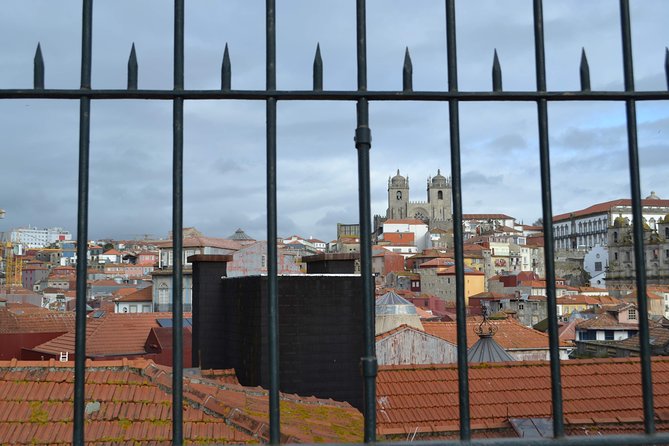
At Chafariz da Porta do Olival, the guide continues the story of the old city’s boundaries and Jewish life around the walls. The stop is short, about 10 minutes, but it adds useful context to the earlier discussion of confined quarters and controlled entry points.
This is the kind of stop that rewards attention rather than dramatic architecture. You may see a fountain, a street, or a surviving reference point. The guide’s job is to explain what used to occupy the area and why the location mattered.
The route’s eight main stops are paced at roughly 10 minutes each, with walking time between them. That makes the three-hour duration feel well used. You are not rushed from one landmark to another, but you also are not spending most of the afternoon standing in one place.
What makes the guides effective
The strongest feature of this experience is the guide. Ricardo is singled out for his depth of study, enthusiasm, humor, and ability to answer questions. Pablo is described as passionate and lively, while Pedro is praised for detailed explanations and a friendly manner. Other guides, including Mr. Sousa, are also described as well prepared and attentive.
You should not assume that Ricardo will lead every departure. The guide is assigned by the operator, and the experience is offered in English. Still, the repeated emphasis on research and clear storytelling suggests that the tour is built around interpretation, not simply showing points on a map.
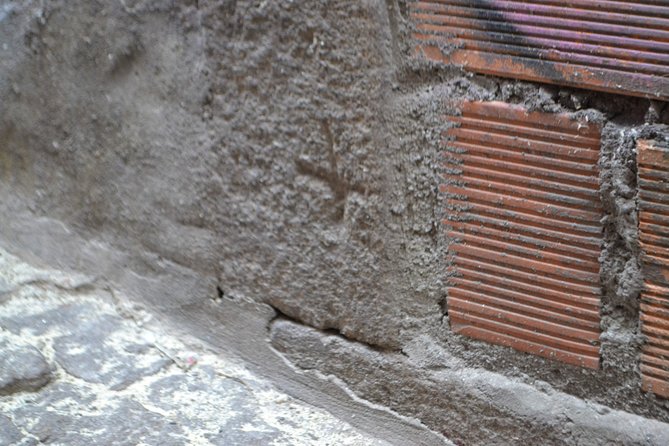
Some guides bring photographs and documents connected with Jewish history in Porto and Portugal. This is especially useful because so little remains in an obvious form. You will not only hear that a place once mattered. You may also see visual material that helps you imagine earlier streets, buildings, and community life.
The best guides also connect Jewish history with the history of Portugal itself. That includes Porto’s merchant trade, medieval urban life, conversion, the Inquisition, and the later removal of Jewish references. You get a stronger understanding of the subject when these topics are treated as part of one story.
How much walking and climbing should you expect?
The route requires good physical fitness. You will walk uphill and downhill through old streets, climb stairs, and cross uneven cobblestones. Comfortable shoes are essential, and you should dress for changing weather.
The walk operates in all weather conditions, although poor weather can lead to cancellation with a choice of another date or a full refund. Rain also makes Porto’s stone streets more slippery, so take the weather note seriously.
This is not a suitable choice if you need a flat route or frequent seated breaks. The tour can be manageable for many active walkers, but the hills may feel tiring after a full day of sightseeing. A morning departure is a smart choice if you want your legs fresh and your attention focused.
The group size also matters. A private booking includes only your group and the guide. A regular booking has a maximum of 10 people according to the main tour details, though the general activity information gives a maximum of 20. Because those figures differ, confirm the group limit when booking if a small group is important to you.
Price, timing, and what you do not get
At $36.30 per person, the tour offers reasonable value for three hours with a local professional guide. There are no major admission fees included because the route is mainly outdoors, so you are paying for research, explanation, and navigation rather than entry tickets.
That value depends on your interests. If you want a visual checklist of intact Jewish buildings, the price may feel high because much of the heritage survives only in traces. If you want to understand how Jewish life shaped Porto and how that memory was suppressed, the guide adds value you would have difficulty gaining alone.
Morning and afternoon departure times make the experience easy to fit into a short Porto stay. It also works well early in a visit because the guide introduces central streets, viewpoints, the waterfront, and several places you may want to revisit.
Hotel pickup and drop-off are not included. Neither is entry to the Porto Synagogue or Porto Jewish Museum. Those are important omissions to understand, especially if your main goal is an interior visit or a formal collection of artifacts.
Who should book this walk?
I would recommend it most strongly to you if you enjoy urban history, religious history, genealogy, or the way political decisions shape a city. It is also a useful choice for Jewish visitors who want to learn about Jewish life in Porto, even though the visible remains are limited.
You should book with realistic expectations. This is a story-led walk, not a preserved-quarter tour. The guide helps you notice traces, but you will not spend the afternoon entering a series of surviving synagogues, homes, or museums.
It also suits anyone who wants a different side of Porto beyond churches, wine lodges, and river views. The tour includes all three kinds of scenery, but asks you to look at them through questions of trade, belonging, persecution, and memory.
Free cancellation is available up to 24 hours before the start time for a full refund. Changes or cancellations made later are not accepted for a refund. That policy is useful if you are planning several Porto activities, but keep the weather and walking conditions in mind before booking.
Should you book the Porto Jewish Heritage Walking Tour?
Book it if you want a thoughtful introduction to Jewish history in Porto and are comfortable walking steep streets for three hours. The guides are the main reason to choose it, with Ricardo and several others praised for careful research, clear English, warmth, and energy.
Skip it if you need a flat route, expect a large collection of surviving Jewish buildings, or specifically want to visit the synagogue and museum. For everyone else, the tour offers a worthwhile way to understand a part of Porto that is easy to overlook. Bring good shoes, arrive at the cathedral early, and let the guide show you how to read the city’s missing pieces.
FAQ
Where does the Porto Jewish Heritage Walking Tour begin?
The tour begins at Porto Cathedral, at Terreiro da Sé, 4050-573 Porto, Portugal.
Where does the tour finish?
The listed end point is Passeio das Virtudes in central Porto. The general tour description also places the finish at Ribeira Square, about a 10-minute walk from the cathedral, so check your booking details for the exact meeting point.
How long does the tour last?
The walking tour lasts approximately three hours.
Is the tour offered in English?
Yes. The tour is offered in English with a local professional guide.
Are morning and afternoon departures available?
Yes. You can choose a morning or afternoon tour time.
Is the Porto Synagogue included?
No. A visit to the Porto Synagogue is not included.
Is the Porto Jewish Museum included?
No. A visit to the Porto Jewish Museum is not included.
How difficult is the walking route?
You should have a strong level of physical fitness. The route includes stairs, steep streets, hills, and uneven cobblestones, so comfortable shoes are recommended.
More historic Porto tours
- Douro Valley: Historical Sites, Wine Experience, Lunch & Cruise
★ 5.0 · 5,133 reviews - Porto: Historic City Center Walking Tour
★ 4.7 · 1,172 reviews - Porto: An Intimate Fado Show in a Historical Tavern
★ 4.8 · 1,093 reviews - Porto: Historical Center Walking Tour
★ 4.8 · 898 reviews
Newest Porto reviews on the site
- Douro Valley Premium Tours – Private Driver & Guide★ 5.0 · 93 reviews
- Douro Valley Delights Wine Tasting and Scenic Vistas★ 5.0 · 3 reviews
- Douro valley Majestic★ 5.0 · 12 reviews
- Private off the beaten Douro Valley Wine Tour★ 5.0 · 100 reviews
- Tour the Douro wine region, and discover the fantastic landscape★ 4.5 · 4 reviews
- Douro Valley Private Full–Day Tour from Porto★ 5.0 · 23 reviews
- Porto Douro Private Cruise with Port Wine★ 5.0 · 16 reviews
- Private Tour to stunning Douro Valley and most renowned wineries★ 5.0 · 39 reviews
Porto Walking Tours, compared.
Porto Walking Tour, Lello Bookshop, River Cruise and Cable Car
Read our review →
Experience Porto’s Charm: 3-Hour Guided Walking Tour
Read our review →
Walking Tour, Lello Bookshop, Boat and Cable Car
Read our review →Browse the lists this tour appears in