
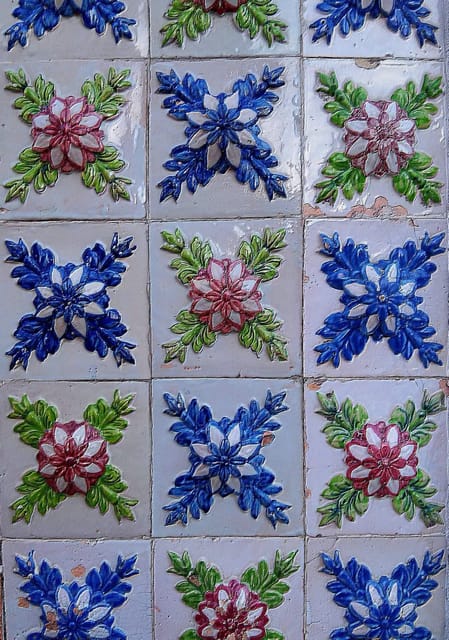
Reviewed · PORTO PAINTING AND TILE WORKSHOPS
Porto: Azulejos Tiles Walking Tour
Porto’s azulejos are more than pretty blue-and-white decoration. They tell stories, mark buildings, advertise shops, and reveal how the city changed over time. This walking tour helps you notice the details you would likely pass by, from church façades to tile panels inside and around the historic center.
I like the route’s variety of settings, which includes churches, stores, depots, and the train station. I also like the practical focus on tile techniques, makers, colors, and dates, especially since guides such as Susana and Nuno explain how to keep identifying tiles after the tour ends. The main consideration is that the guide may have a lot to say, so the walk can feel talk-heavy if you prefer a quick sightseeing route.
Key points
- Carmo Church is the meeting point: Find your guide by the church’s tiled façade.
- The tour connects art with city history: You learn why tiles were used and how factories shaped Porto’s appearance.
- São Bento station is part of the route: The walk finishes near the station, a useful central location for continuing your sightseeing.
- Susana and Nuno have led highly praised tours: Their approach focuses on tile designs, colors, makers, periods, and cultural meaning.
- You walk for about 2.5 hours: Comfortable shoes, water, and a camera are sensible.
- The tour costs $53 per person: That is a fair price if you want interpretation rather than simply photographing façades.
Why Porto’s tiles deserve a walking tour
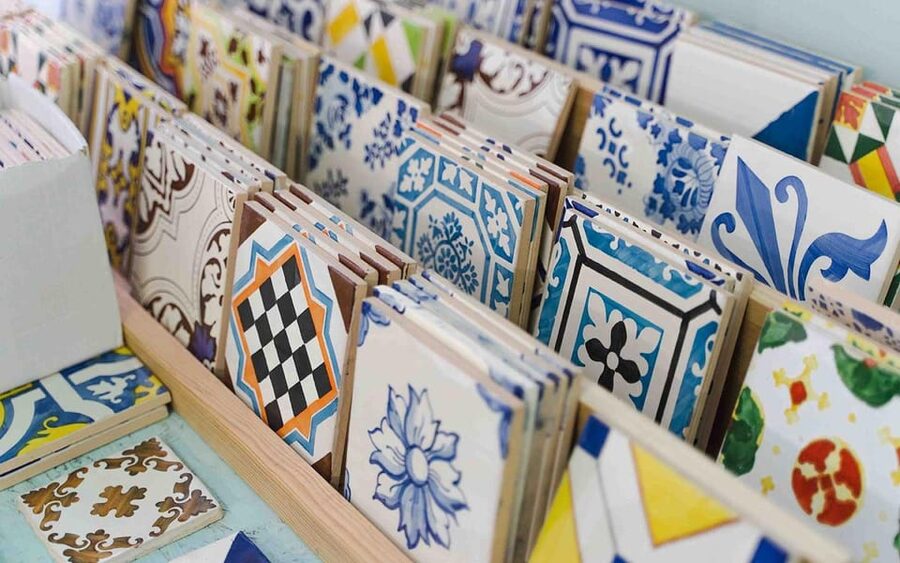
Porto is easy to admire at street level, but its tilework rewards a slower look. A blue-and-white panel may seem decorative at first glance, yet the design can reveal a religious story, a production method, a period, or the identity of a manufacturer.
That is the real purpose of this tour. You are not simply taken to famous buildings and told to take pictures. You learn to look for repeated patterns, painted scenes, changes in color, and different ways tiles were placed on a wall.
Some tiles form large panels. Others cover an entire façade in a repeating design. Some work as signs or advertisements, while others protect and decorate the outside of a building. The tour also considers street art and tile replicas, giving you a way to think about what you see during the rest of your time in Porto.
I especially like this kind of introduction early in a visit. Once you know what to look for, ordinary streets become more interesting. You may begin asking who made a tile, when it was installed, and whether it is original or a later copy.
More painting and tile workshops in Porto:
- Porto: Tile-Painting Workshop with Porto Wine – Bainharia
★ 4.9 · 526 reviews - Porto: Tile Painting and Cocktails in Downtown Porto
★ 4.9 · 484 reviews - Tile Painting and Cocktails in Downtown Porto
★ 5.0 · 187 reviews
Starting at Carmo Church’s tiled façade
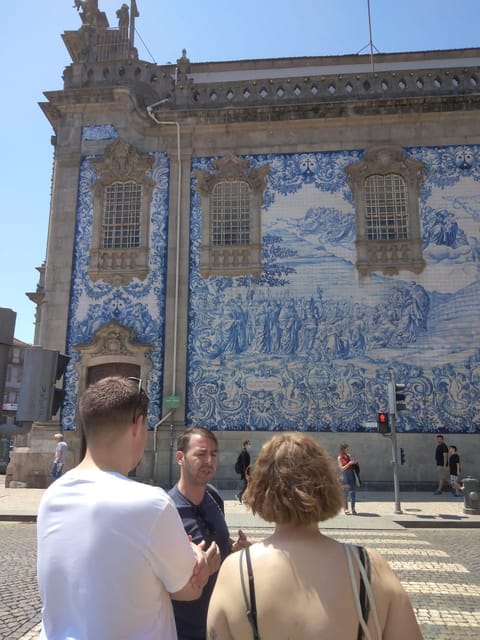
The walk begins at Igreja do Carmo, usually called Carmo Church, where you meet by the tiled façade. This is a practical starting point because the building itself immediately puts the subject in front of you.
You spend about 10 minutes visiting Igreja do Carmen, as the stop is listed in the route. The church gives your guide a chance to introduce the role of tilework on religious buildings and to explain how a decorated façade changes the way a church is seen from the street.
Do not treat this first stop as only a photo opportunity. Pay attention to how the tile surface relates to the rest of the architecture. The point is to begin separating broad visual impressions from the smaller details that identify a particular technique or period.
The meeting point is by the tiled façade, so arriving with a little time to spare is wise. You should also wear shoes you can use comfortably for a long urban walk. The route takes place in Porto’s historic center, where walking is the main way to move between stops.
From church walls to the Bank of Materials
The next listed stop is the Bank of Materials, with about 20 minutes set aside for a visit. Its inclusion makes this more than a standard exterior architecture walk.
The Bank of Materials connects Porto’s tilework with preservation and production. Here, you can expect the guide to explain how tiles are made, where they came from, and why identifying a manufacturer or design matters. The tour also covers the factories that produced Porto’s tiles, giving you useful background before you continue through the city.
This stop is valuable because it shifts the discussion from finished façades to the life of the tiles themselves. You begin to consider materials, repeated designs, replacement pieces, and the difference between an original panel and a replica.
The available details do not specify every display or room you will see at the Bank of Materials, so I would not book this expecting a long museum visit. Think of it as one part of a moving walking lesson, with the city streets providing much of the material.
Churches, shops, depots, and everyday tilework
The route then continues through Porto’s historic center, a UNESCO World Heritage Site. One of the tour’s strengths is that it does not limit tile art to major churches.
You visit or examine tilework connected with churches, depots, stores, and other city buildings. That range matters. Religious panels often draw the eye with figurative scenes, but commercial and ordinary urban buildings show how widely tiles were used in daily life.
Some tiles act like billboards. Others cover façades with geometric patterns. This lets you compare tiles that communicate a specific message with tiles that mainly create texture and color across a building.
A guide can also point out differences that are hard to spot on your own. You may learn to distinguish painted panels from repeating factory-made designs, or notice how colors and arrangements reflect different production periods. The tour is especially useful if you enjoy visual clues and want more than a list of famous addresses.
One small drawback is pace. The walk covers several kinds of sites, and each stop invites explanation. A guide who is as enthusiastic as Susana or Nuno may spend a good deal of time on context. That is helpful for anyone who wants a serious introduction, but less ideal if you want a fast route through the center.
More walking tours in Porto:
- Porto Walking Tour, Lello Bookshop, River Cruise and Cable Car
★ 5.0 · 3,354 reviews - Experience Porto’s Charm: 3-Hour Guided Walking Tour
★ 5.0 · 2,432 reviews - Porto: 3-Hour Guided City Highlights Walking Tour
★ 4.8 · 2,050 reviews - Porto: Wine Tasting with Tapas Walking Tour
★ 4.4 · 1,541 reviews
The unnamed middle stop and the value of a flexible route
The supplied route includes another visit of about 15 minutes, but does not identify the stop by name. That means you should not plan around a specific attraction at this point.
What is clear is the overall pattern: the walk uses several kinds of tile applications to show how Porto’s ceramic decoration works across the city. The unnamed stop is likely part of that comparison, allowing the guide to add another example rather than repeating the same kind of façade.
I see this as a benefit when you book the tour for its subject rather than for a fixed checklist. The guide can focus on the examples that best explain technique, design, or city history. Still, if you need every stop confirmed in advance, ask the operator for the current route before booking.
Finishing near São Bento station
The walk ends near Avenida dos Aliados and next to São Bento train station, according to the practical tour information. São Bento is one of Porto’s most useful landmarks for orientation, even if the tour’s main purpose is not transportation.
The station is an important final point because it brings the tile lesson to a memorable public building. You can examine how tile art functions in a major transport setting, not just on a church or shop. The guide can also connect the station to the broader story of Porto’s tile tradition and public architecture.
This is a good place to continue your day because you finish in the central area rather than at an isolated attraction. The exact description of the ending varies slightly between Avenida dos Aliados and the area next to São Bento, so use the station as your practical reference point.
The finish also gives the tour a satisfying progression. You start with a church façade, consider production and preservation, look at commercial and everyday applications, then end at one of the city’s best-known public spaces for tilework.
What Susana and Nuno add to the experience
The guides are a major part of the value. Susana is described as friendly, funny, passionate, and able to answer questions with ease. Nuno’s explanations include tile manufacturers, street art, design, and the question of whether a piece is a replica or from an earlier period.
That kind of teaching changes how you use the rest of your visit. Instead of seeing every tiled façade as simply blue and white, you can start comparing makers, colors, patterns, and construction dates.
The tour is offered in English and Portuguese. If you have questions, ask them as you go. This subject can become technical, and a good guide can make the difference between a useful visual lesson and a procession of building names.
The strongest praise for the experience centers on the guides’ command of tile art, architecture, and Porto’s past. That matters more here than a polished route alone. Much of the value comes from explanation, not from entering a long list of attractions.
Is $53 a fair price?
At $53 per person, this is not the cheapest way to walk around Porto. You can see many tiled façades without paying anything. The question is what you want from the experience.
If you only want photographs, the price may feel high. If you want to understand production, design, manufacturers, historical periods, and the role of tiles in city life, the cost is more reasonable. You are paying for about 2.5 hours of guided interpretation, access to a planned route, and a more informed way to see the historic center.
The included description also calls it a 3-hour guided walking tour, while the activity details give a duration of 2.5 hours. I would plan for roughly 2.5 hours, with a little flexibility in case the discussion runs longer.
Food and transport are not included. That is not a serious issue for this route because the experience is built around walking, and it finishes in the central area near São Bento and Avenida dos Aliados. Bring water and plan any meal or onward transport separately.
The tour includes free cancellation up to 24 hours in advance and a reserve-now, pay-later option. Those policies are useful if your Porto schedule is still shifting.
Who should book this Porto tile walk?
I would recommend it most strongly to anyone interested in architecture, decorative arts, local history, or photography. It is also a good choice for a first or second day in Porto because the guide gives you a visual system for reading the city.
You do not need to be a tile specialist. The appeal comes from learning how to notice things you may otherwise overlook. If you already know a great deal about Portuguese ceramics, you may want to ask how technical the discussion will be before booking.
The tour is not suitable for children under 8. The information also presents a practical accessibility conflict: the activity is marked wheelchair accessible, but it is also listed as unsuitable for people with mobility impairments. Because this is a lengthy walking tour through the historic center, contact the provider to confirm whether the current route fits your needs.
Bring comfortable shoes, water, and a camera. The camera is optional, but you will probably want it once you begin spotting tile panels and patterns across the city.
Final call: book it if you want to see Porto differently
Book this tour if you want more than a collection of pretty façades. The combination of Carmo Church, the Bank of Materials, shops, depots, churches, and São Bento gives you a broad look at how tile art works across Porto.
I especially value the guide-led explanation of manufacturers, techniques, colors, street art, and replicas. Susana and Nuno bring the kind of detail that can shape the rest of your visit. Skip it if you prefer to explore alone, dislike a talk-heavy walk, or have difficulty with extended walking.
For most art and history-minded visitors, $53 is a fair price for a focused introduction to one of Porto’s defining visual traditions.
FAQ
Where does the Porto azulejos walking tour start?
The tour starts at Igreja do Carmo. Meet your guide by the church’s tiled façade.
Where does the tour end?
It ends near Avenida dos Aliados, next to the São Bento train station.
How long does the tour last?
The listed duration is 2.5 hours. The included activity description also refers to a 3-hour guided walking tour, so allow some flexibility.
What languages are available?
The live guide is available in English or Portuguese.
How much does the tour cost?
The price is $53 per person.
Is transport included?
No. Transport and food are not included.
What should I bring?
Bring comfortable shoes, water, and a camera.
Is the tour suitable for children and people with mobility impairments?
Children under 8 are not permitted. The activity is marked wheelchair accessible but is also listed as unsuitable for people with mobility impairments, so confirm the current route with the provider before booking.
Newest Porto reviews on the site
- Douro Valley Premium Tours – Private Driver & Guide★ 5.0 · 93 reviews
- Douro Valley Delights Wine Tasting and Scenic Vistas★ 5.0 · 3 reviews
- Douro valley Majestic★ 5.0 · 12 reviews
- Private off the beaten Douro Valley Wine Tour★ 5.0 · 100 reviews
- Tour the Douro wine region, and discover the fantastic landscape★ 4.5 · 4 reviews
- Douro Valley Private Full–Day Tour from Porto★ 5.0 · 23 reviews
- Private Tour to stunning Douro Valley and most renowned wineries★ 5.0 · 39 reviews
- Douro Tour on a Private Yacht in Porto★ 4.5 · 10 reviews
Porto Painting and Tile Workshops, compared.

Tile-Painting Workshop with Porto Wine – Bainharia
Read our review →
Downtown Porto Acrylic Painting Workshop for Groups or Individual
Read our review →
Acrylic Painting Workshop for Groups – Antero Quental
Read our review →Browse the lists this tour appears in