
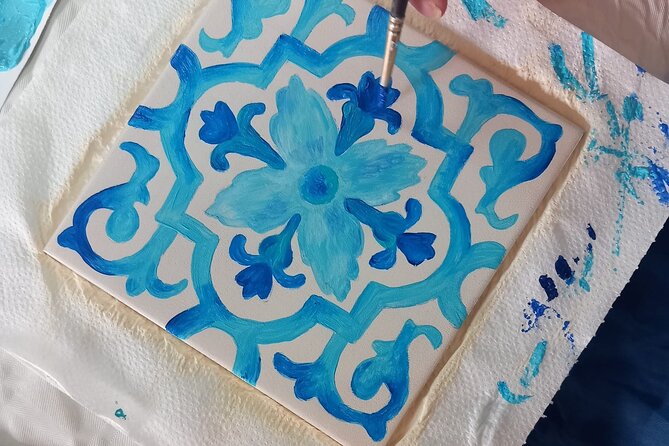
Reviewed · PORTO PAINTING AND TILE WORKSHOPS
Tile Painting and Cocktails in Downtown Porto
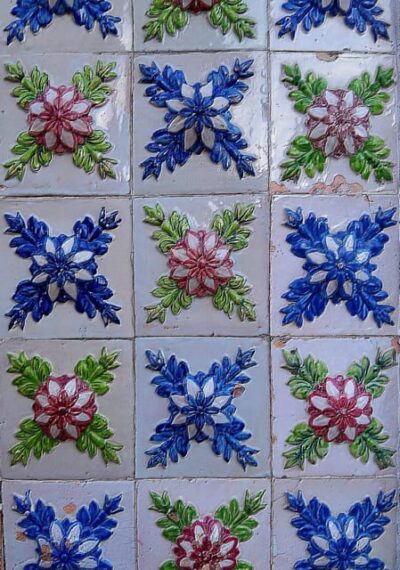
Porto’s blue-and-white azulejos are more than pretty walls. They mark churches, train stations, homes, and city landmarks, and this two-hour workshop lets you learn why they matter while making one of your own. Daniela leads the class with a clear, friendly hand, so you do not need drawing skills to take part.
I love the way the workshop joins a short cultural lesson with a hands-on project, and I like that your souvenir is personal rather than a mass-produced tile from a shop. The cocktail, or juice, adds a relaxed social touch. The main drawback is timing: you may need to return to the studio about an hour later to collect the finished tile, depending on the curing process used for your class.
Key points to know before booking
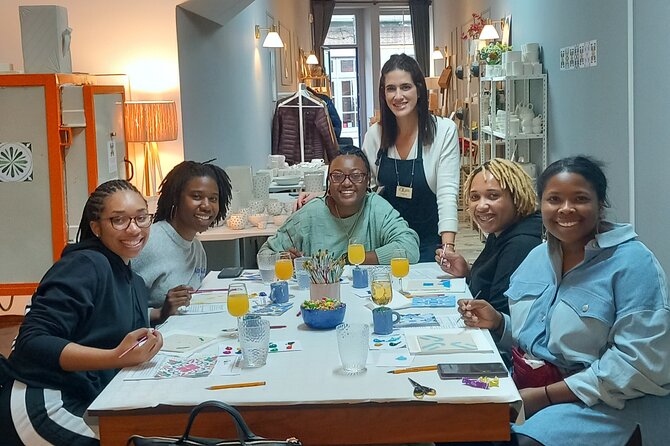
- A real handmade souvenir: You paint one tile yourself and take it home instead of buying a generic keepsake.
- Daniela guides every level: You can use a supplied outline or create your own design, with help available throughout.
- Portuguese tile history comes first: The class explains outside influences, common colors, and the role of tiles in Porto.
- Your drink is part of the class: Choose a gin-port cocktail or juice while you work.
- Good for mixed groups: Families, solo visitors, couples, and groups ranging from six people to a hen party can all take part.
- Plan for collection: The tile is usually ready around one hour after the class, though you should confirm the exact collection plan when booking.
Why painting a tile belongs in a Porto itinerary
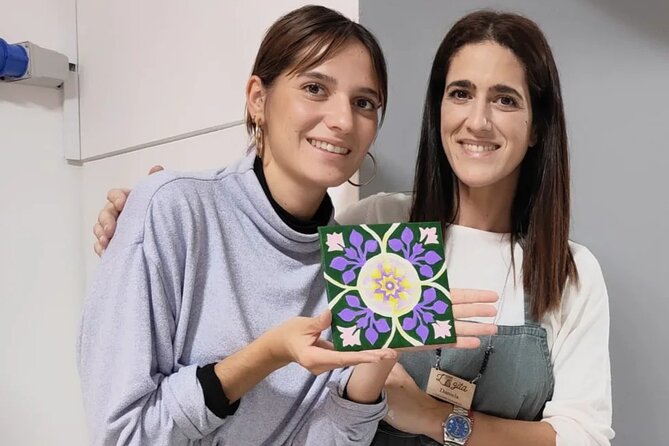
You can see thousands of azulejos in Porto without learning much about them. A church façade may look striking, but it is easy to miss how tile decoration developed, which cultures influenced Portuguese design, and why certain colors appear again and again.
This workshop gives you a useful introduction before putting a brush in your hand. You hear about the history of Portuguese tiles, their importance in Porto and Portugal, common tile colors, and some of the city’s most visited sights. The lesson is not meant to replace a full tile tour, but it gives the streets more meaning when you return outside.
I especially like the link between the talk and the practical work. You are not simply listening to a short presentation and then making an unrelated craft. The tile you paint becomes a small reminder of the patterns, colors, and ideas you have just discussed.
The class also offers a welcome break from Porto’s steep streets. After walking up and down the city’s hills, two hours at a table can feel like a useful change of pace. You get to sit, work at your own speed, and chat with the people around you without giving up the local focus.
More painting and tile workshops in Porto:
- Porto: Tile-Painting Workshop with Porto Wine – Bainharia
★ 4.9 · 526 reviews - Porto: Tile Painting and Cocktails in Downtown Porto
★ 4.9 · 484 reviews - Create Watercolour With Hugo do Lago in Porto
★ 5.0 · 164 reviews
Finding the studio at R. Chã 77
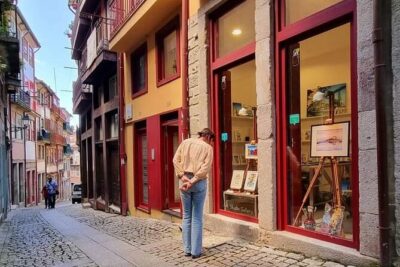
The class begins and ends at R. Chã 77, 4000-165 Porto, in the downtown area. The studio is described as easy to find, clean, spacious, and close to several popular sights, so it can fit neatly into a day of sightseeing.
Because the workshop runs for about two hours, check your walking route before setting off. Porto’s center is compact, but the hills can make short distances take longer than expected. Arrive with enough time to locate the studio rather than rushing in after a climb.
The activity uses a mobile ticket and is offered in English. Public transportation is nearby, and service animals are allowed. The maximum group size is 20 people, though your actual session may be smaller.
That group limit matters. A class of 20 has a different feel from a private lesson, but the format is social and practical. Daniela and the other instructors provide individual help, including advice on designs and painting steps. For a very quiet, one-to-one art lesson, this is not the right format. For a shared activity with room to meet others, it works well.
The opening lesson on Portuguese azulejos
The first part of the experience focuses on the story behind the tiles. Daniela explains how tiles became important in Portugal, who influenced Portuguese styles, and which colors are commonly used in Porto and elsewhere in the country.
The lesson also connects tile decoration with familiar Porto sights. That context is valuable because it gives you something to look for later. You may begin noticing how tile panels frame entrances, cover religious buildings, or turn ordinary walls into works of public art.
The class is an introduction rather than an academic lecture. That is a strength for most visitors. You get enough background to understand what you are seeing without spending your whole afternoon in a classroom.
Families can follow the talk as well. Children have been included in the activity, and the age range can stretch from young kids to adults. The instructors keep the focus practical, so younger participants can move toward the painting stage instead of sitting through a long history lesson.
Choosing a design, from classic patterns to bridge scenes
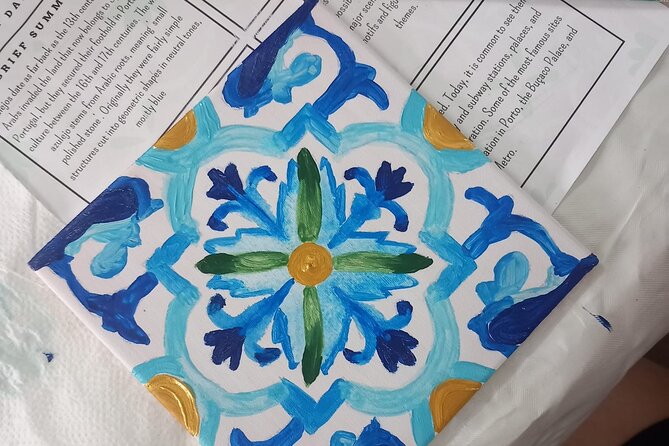
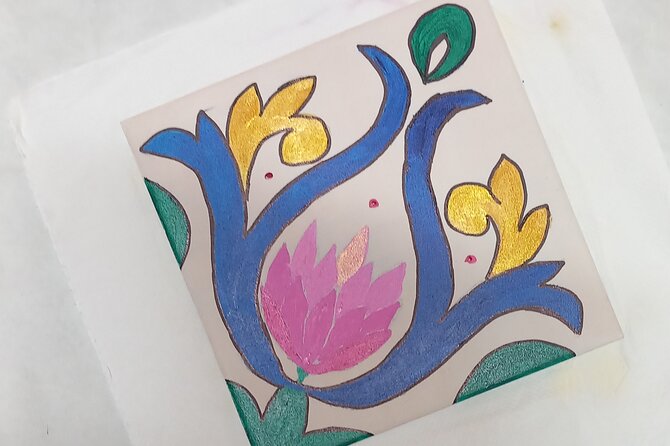
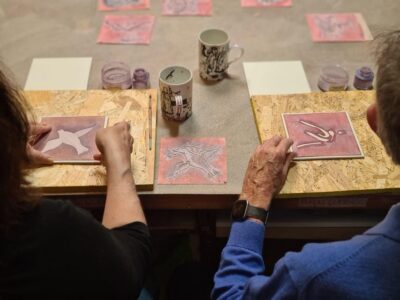
Once the introduction is over, you choose what to paint. You can work from one of the provided outlines or make your own design. That choice lets you decide how much freedom, and how much help, you want.
If you are an indecisive person, think about your design before arriving. You might choose a traditional Portuguese pattern, a simple geometric motif, or a personal image connected with Porto. One family painted a Dom Luís I Bridge, while other designs included egg tarts and colorful variations on classic patterns.
The supplied outlines are useful if you want a traditional result or do not feel confident drawing freehand. You can still personalize the piece with your choice of colors. If you prefer to work without a guide, you have that option too.
I would choose a simpler design if you tend to fuss over small details. The class is relaxed, but a complicated image can take longer than expected. One participant needed extra time to finish, and the host was willing to accommodate that. Still, you will enjoy the experience more if you treat the tile as a handmade memory rather than a test of artistic perfection.
Same city, a completely different kind of day out:
- The Unvanquished Tour in Porto City Center
★ 5.0 · 26,497 reviews - From Porto: Douro Valley w/ Boat Tour, Wine Tasting & Lunch
★ 4.7 · 19,061 reviews - Complete Douro Valley Wine Tour with Lunch, Wine Tastings and River Cruise
★ 5.0 · 12,920 reviews - Porto: Six Bridges Cruise
★ 4.2 · 11,680 reviews
Painting with help from Daniela and the studio team
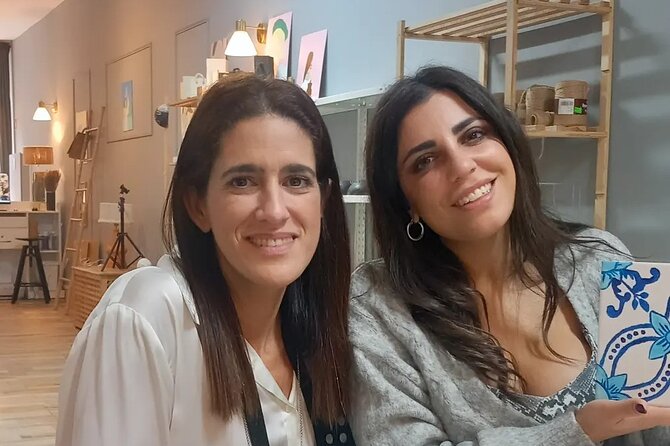
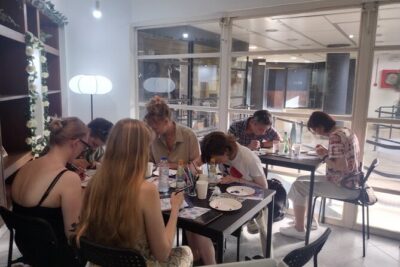
The painting section is broken into clear steps. You receive instructions on how to approach the design, and the instructors help as you work. You can ask for advice about colors, outlines, and the best way to make your image personal.
The teaching style suits beginners. You do not need previous art experience, and the activity is designed so that a basic outline can become a finished-looking tile with patient guidance. The instructors are described as friendly, attentive, and encouraging, which matters when you are holding a brush and deciding how much color to use.
This is also where the social side of the class comes through. You may be painting beside a family, a couple, a solo visitor, or a larger celebration group. Conversation naturally turns to Porto plans and other places people are visiting. If you are traveling alone, the class gives you an easy way to share an activity without committing to a full-day group tour.
The studio itself is part of the appeal. It is prepared for the activity, with enough space to work and a clean, pleasant setting. You are not trying to paint on a cramped café table or balance supplies on your lap.
A cocktail or juice while you work
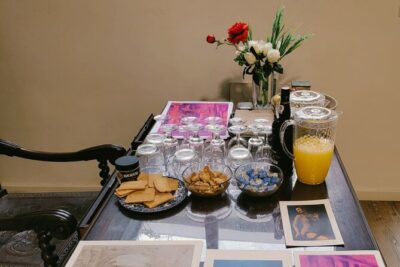
The drink adds a small but enjoyable extra. You can have a local cocktail while painting, and the available choice described in the experience is a gin-port cocktail or juice.
The drink is not the reason to book the workshop, but it helps set the pace. You can pause, look at your design, and enjoy the class as a social afternoon or morning activity. It also makes the workshop feel less like a formal lesson.
Keep in mind that the cocktail contains alcohol. If you are bringing children, avoiding alcohol, or simply prefer something lighter, choose the juice. The activity remains the same either way.
The drink is also one reason this works well for couples, friends, and small celebrations. A group of eight used the class for a hen party, while families found that children could join in rather than sit on the sidelines.
How the finished tile is prepared
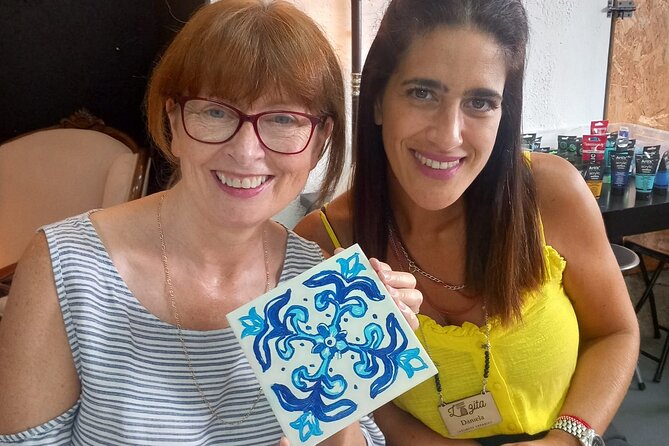
The biggest practical advantage is the short turnaround. The workshop uses a technique developed by the studio that allows the tile to be removed about one hour after the class ends.
This is helpful if your time in Porto is limited. Some tile workshops require a longer curing or firing period, and you may need to arrange shipping or return on another day. Here, you can often collect the piece during the same visit to the city.
The exact finishing process can vary by class, so confirm the collection details with the studio. One description explains that the tile is painted with acrylics and sealed after a short curing period, while the activity information says it can be removed one hour after the workshop. The practical point is clear: plan a return visit rather than assuming you will always walk out with the finished tile immediately.
This is the one detail that needs careful planning. If your Porto stay is very short, schedule the workshop early enough to leave time for collection. If you book it on the final day, make sure the pickup timing fits your departure plans.
The result may not use the same process as a traditional kiln-fired azulejo, and that matters to serious ceramic artists. For a visitor who wants a finished keepsake without waiting for shipping, the fast method is a sensible trade-off.
Is $42.34 a fair price?
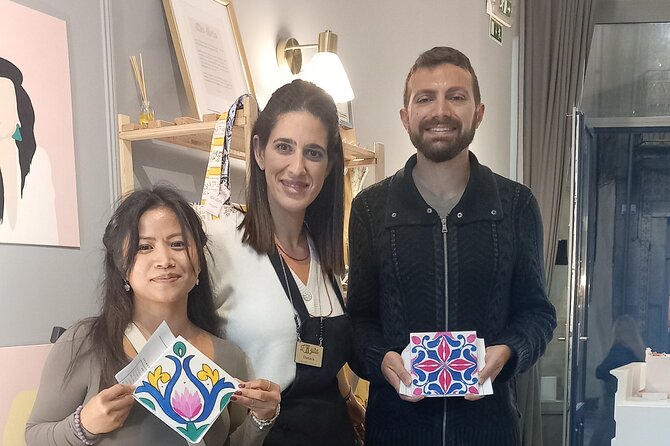
At about $42.34 per person, this is not the cheapest way to spend two hours in Porto. You could visit tile-covered buildings for free or buy a small souvenir for much less.
The value comes from the combination of instruction, materials, a drink, studio time, and a handmade item you create yourself. You are paying for an activity, not just an object. The history lesson gives the class cultural purpose, while the painting turns that information into something you can keep.
I think the price makes the most sense for visitors who were already planning to buy an azulejo souvenir. A shop-bought tile may be cheaper, but it will not carry the memory of choosing the design, painting it, and finishing it during your stay.
For families and groups, the price can also make sense because the activity works across ages. Everyone can make a different tile, and the finished pieces become a shared record of the trip. Solo visitors may value the friendly setting and the chance to spend a quiet, creative afternoon.
If you are mainly interested in a serious ceramics course, this short workshop may feel basic for the cost. It is best understood as a cultural craft activity for visitors, not advanced studio training.
Who will enjoy this two-hour Porto workshop?
This activity fits you well if you want a break from sightseeing but still want to learn something connected with Portugal. It is especially suitable for:
- Families looking for an activity that includes children
- Couples who want a personal souvenir
- Solo visitors who enjoy meeting people in a relaxed setting
- Friends and celebration groups
- Anyone who likes art but has little or no formal training
- Visitors with limited time who want a tile ready on the same day
You may want to skip it if you dislike hands-on crafts, want a long and detailed ceramics course, or cannot return to the studio for collection. The class is friendly and guided, but you still spend much of the two hours painting.
It also suits different travel schedules. The class can be booked as a morning or afternoon activity, and its location near major sights makes it easy to pair with other plans. Just leave enough space around the session so you are not racing to the next attraction.
Booking, group size, and cancellation details
The experience is often booked about 35 days ahead, so reserve early if your Porto dates are fixed. The maximum group size is 20 people, and larger groups should contact customer support at least 24 hours ahead to check availability.
Different dates and times may be possible by contacting the team. Confirmation is normally issued at booking, but reservations made within one hour of the start time are confirmed as soon as possible, subject to availability.
You can cancel for a full refund up to 24 hours before the local start time. Changes or cancellations made less than 24 hours before the activity are not accepted for a refund. The class also requires a minimum number of participants, and if the operator cancels because that minimum is not met, you will be offered another date or experience, or a full refund.
Should you book Tile Painting and Cocktails in Downtown Porto?
Book it if you want a personal Porto souvenir, a gentle break from hill walking, and a simple introduction to Portuguese tile culture. Daniela’s patient instruction makes the class approachable, even if you have no art background, and the cocktail or juice keeps the mood easy.
The strongest reason to choose this workshop is the balance: a little history, a little creativity, and a finished tile you can take home. Just choose your design ahead of time, allow for the one-hour collection window, and remember that the fast finishing method favors convenience over a traditional kiln-fired process.
FAQ
Where does the tile painting workshop begin and end?
It begins at R. Chã 77, 4000-165 Porto, Portugal, and ends back at the same meeting point.
How long does the activity last?
The workshop lasts about two hours.
Is the experience offered in English?
Yes. The activity is offered in English.
Do I need previous painting experience?
No. The instructors guide you through the process, and you can use a provided outline or create your own design.
Can I take my finished tile home the same day?
The studio’s technique allows the tile to be removed about one hour after the workshop ends. Plan to return for collection and confirm the exact timing with the team.
What is included with the drink?
You can choose a gin-port cocktail or juice while you paint.
Newest Porto reviews on the site
- Douro Valley Premium Tours – Private Driver & Guide★ 5.0 · 93 reviews
- Douro Valley Delights Wine Tasting and Scenic Vistas★ 5.0 · 3 reviews
- Douro valley Majestic★ 5.0 · 12 reviews
- Private off the beaten Douro Valley Wine Tour★ 5.0 · 100 reviews
- Tour the Douro wine region, and discover the fantastic landscape★ 4.5 · 4 reviews
- Douro Valley Private Full–Day Tour from Porto★ 5.0 · 23 reviews
- Private Tour to stunning Douro Valley and most renowned wineries★ 5.0 · 39 reviews
- Douro Tour on a Private Yacht in Porto★ 4.5 · 10 reviews
Porto Painting and Tile Workshops, compared.

Tile-Painting Workshop with Porto Wine – Bainharia
Read our review →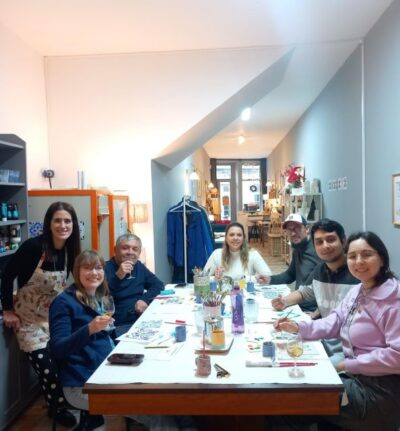
Downtown Porto Acrylic Painting Workshop for Groups or Individual
Read our review →
Acrylic Painting Workshop for Groups – Antero Quental
Read our review →Browse the lists this tour appears in