
Reviewed · PORTO PAINTING AND TILE WORKSHOPS
Porto: Tile Painting and Cocktails in Downtown Porto
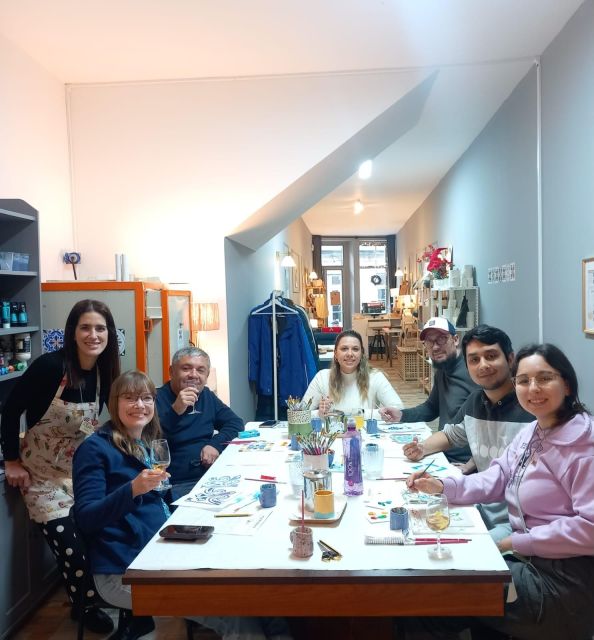
Porto’s famous azulejos are more than pretty blue walls. At Boiler Studio, you learn where Portugal’s tiles came from, then paint one of your own while enjoying a cocktail and calm music. It is a useful break from Porto’s steep streets and a souvenir you actually make yourself.
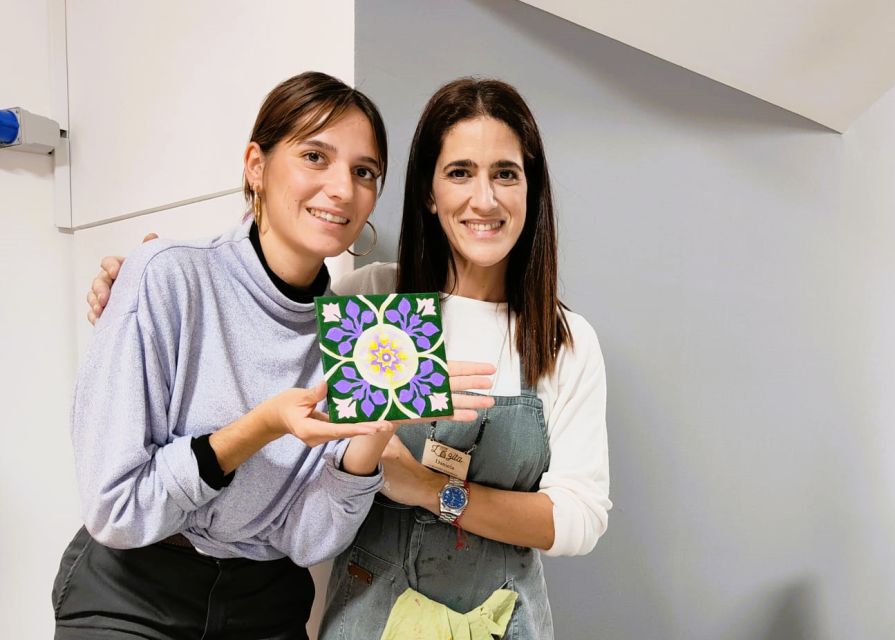
I like the clear cultural link, since the short history talk explains why tiles matter before you pick up a brush. I also like the friendly, patient instruction from hosts including Daniella, Emmanuel, and Diogo. You do not need art skills, and premade designs make the process manageable.
The main consideration is timing: the workshop lasts about two hours, but your tile may need extra drying time. Some people take it home the same day, while afternoon participants may need to return later or the next day.
Key points at a glance
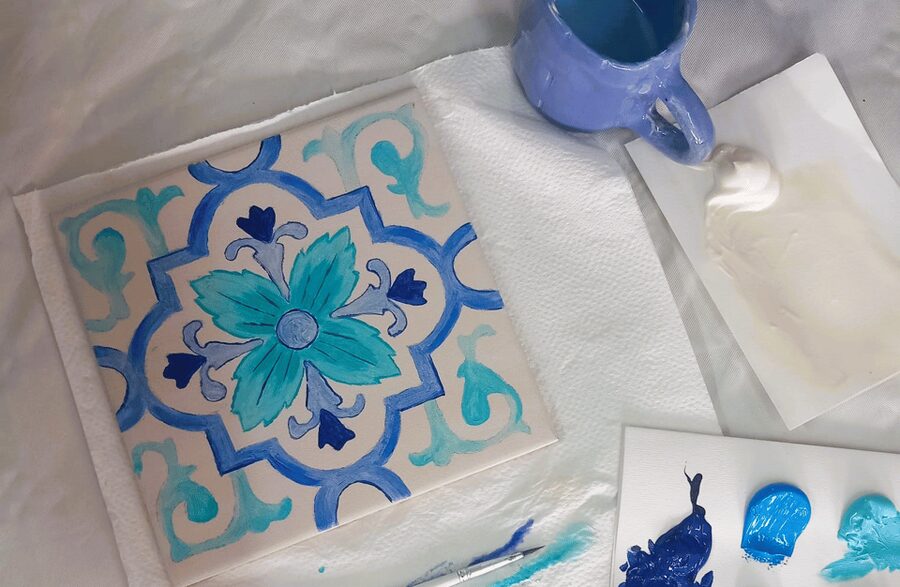
- Paint a real ceramic tile: Choose a prepared design or ask the team to print a personal image for you.
- Learn before you paint: The introduction covers azulejo origins, colors, city styles, and modern use.
- Enjoy a Portuguese drink: Your booking includes a cocktail, with Porto Tonic and white port wine spritzer-style drinks mentioned as popular choices.
- Located by Porto Cathedral: Boiler Studio is on Rua Chã 77, close to São Bento Station and the Luís I Bridge.
- Suitable for beginners: The instructors guide you through each step and help with technique, color, and detail.
- A practical Porto souvenir: Paper packaging is included, and pickup may be later if the tile has not dried.
Why this tile workshop works so well in Porto
Porto gives you plenty of grand sights to see, but much of sightseeing here involves walking, climbing, and looking upward at buildings. This workshop changes the pace. You sit down, listen to music, have a drink, and make something connected to the city.
That change of rhythm is a big part of the appeal. I would not treat this as a formal art class for serious ceramic students. It is a relaxed cultural activity for people who want to understand Portuguese tilework and leave with a personal memento.
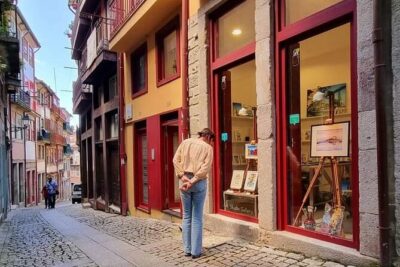
The session takes place at Boiler Studio, a shop and workshop selling handmade goods by local artists. That setting gives the activity a more personal feel than a large craft venue. You can look at the shop before or after the class, though the handmade products are separate from the workshop price.
The central location also helps. Rua Chã 77 is on a typical street in front of Porto Cathedral. São Bento Train Station, the Luís I Bridge, Time Out Market, and the cathedral are all nearby, so you can fit this into a walking day without arranging a separate trip outside the center.
More painting and tile workshops in Porto:
- Porto: Tile-Painting Workshop with Porto Wine – Bainharia
★ 4.9 · 526 reviews - Tile Painting and Cocktails in Downtown Porto
★ 5.0 · 187 reviews - Create Watercolour With Hugo do Lago in Porto
★ 5.0 · 164 reviews
Starting with the story of the azulejo
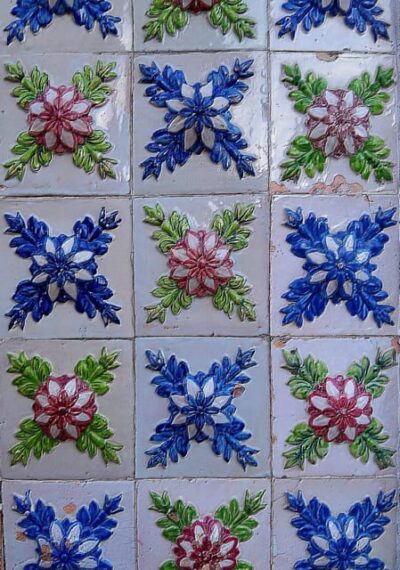
The first part of the session explains the tile’s place in Portuguese culture. Azulejos can be traced as far back as the 13th century, when Arab influence reached the lands that are now Spain and Portugal. Tiles became firmly established in Portuguese culture during the 16th and 17th centuries.
You also learn about the word azulejo, which comes from Arabic roots connected with the idea of a small polished stone. Early examples were often simple geometric pieces in restrained colors, especially blue. Over time, tiles became a major part of Portuguese architecture and interior decoration.
The talk is useful because it gives you something to look for after class. Once you know a little about color, pattern, and historical influence, the tiled churches, railway stations, houses, and decorative facades around Porto become easier to read.
The workshop also covers how tiles vary across different periods and cities, how colors developed, and how azulejos are used today. The historical section is not meant to replace a museum visit. It is a compact introduction that connects directly to the tile in front of you.
Choosing a design and getting started
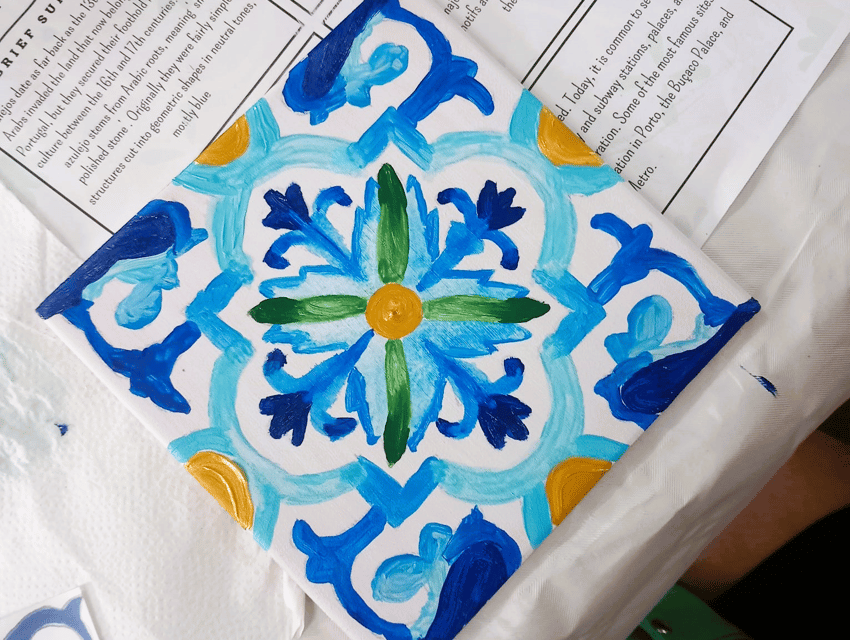
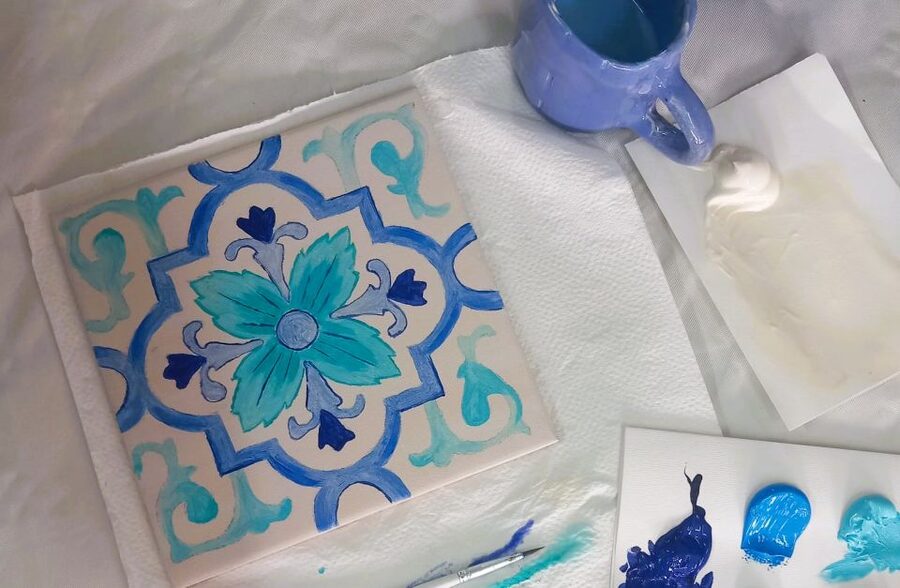
After the introduction, you receive a ceramic tile, acrylic paints, brushes, and the other materials needed for the project. You can choose from prepared patterns, and the team can help you select something that fits your confidence and available time.
Several people have used a stencil or premade design, which is a sensible choice if you are not used to drawing. You may also create your own pattern. One especially helpful option is the ability to bring or choose an image that the staff can print for transfer to the tile.
This choice makes the session work for different types of people. You can keep things simple with a geometric motif, follow a detailed pattern, or make something personal for your home. The point is not to produce a museum-quality tile. It is to understand the process and enjoy making one.
The instruction is hands-on without taking over. Daniella is often praised for giving calm, detailed help, and Emmanuel and Diogo are also named as friendly instructors. If you are uncertain about brush control or color placement, you can ask for help as you go.
That matters because painting on a tile is slightly different from painting on paper. A small mistake can feel more visible on a hard, glossy surface. The staff’s willingness to guide beginners keeps the activity relaxed rather than competitive.
Painting with a cocktail in hand
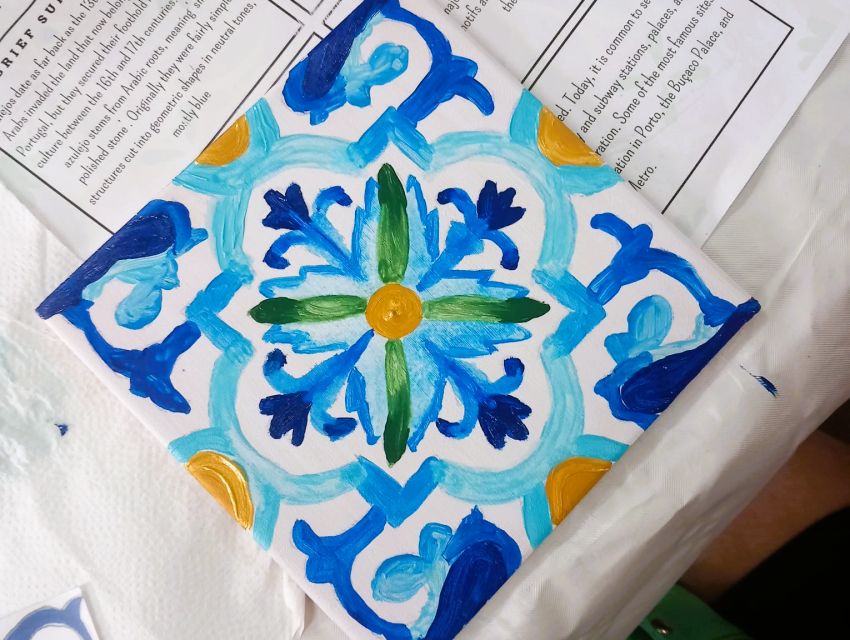
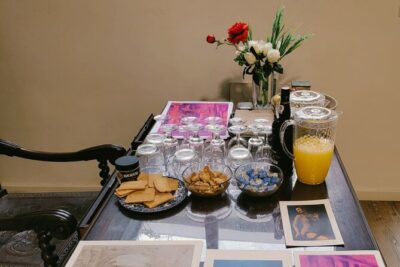
The cocktail is included in the $41 price, and it changes the mood of the class. This is a painting and sip activity, not a rushed production line. The drink may be a Porto Tonic or a white port wine spritzer-style cocktail, both of which connect neatly with local drinking culture.
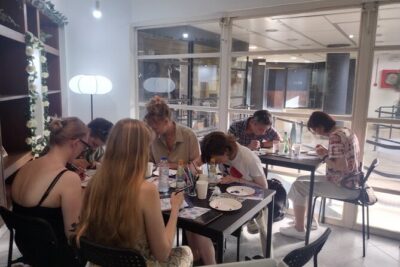
You can expect a social setting, with calm music and other people working on their own designs. Some participants arrive as couples or families, while others join independently and meet people during the session. The atmosphere is friendly and low-key rather than formal.
I like this combination because the drink gives you a natural pause while paint dries or while you decide on your next color. It also makes the workshop a good rainy-afternoon plan. Porto can be wet, and this gives you two sheltered hours without giving up a sense of place.
Still, the cocktail should not be the only reason you book. The drink is a pleasant extra, but the strongest value comes from the instruction, the cultural context, and the tile you take away. If you do not drink alcohol, the activity description confirms a cocktail is included, but it does not specify nonalcoholic alternatives, so you should ask the provider before booking.
Same city, a completely different kind of day out:
- The Unvanquished Tour in Porto City Center
★ 5.0 · 26,497 reviews - From Porto: Douro Valley w/ Boat Tour, Wine Tasting & Lunch
★ 4.7 · 19,061 reviews - Complete Douro Valley Wine Tour with Lunch, Wine Tastings and River Cruise
★ 5.0 · 12,920 reviews - Porto: Six Bridges Cruise
★ 4.2 · 11,680 reviews
What the two-hour schedule feels like
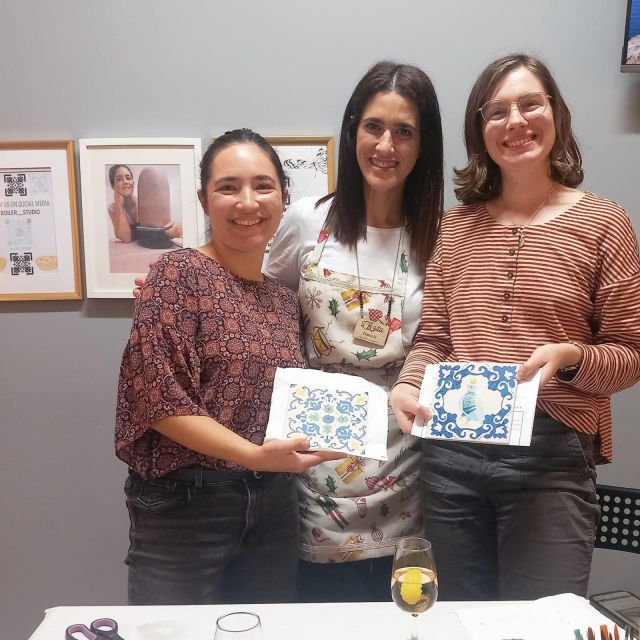
The activity is designed to last two hours. A typical flow begins with the tile introduction, followed by design selection, preparation, painting, and time to finish the piece.
Do not read the two-hour length as a strict stopwatch. Some people finish within the session, while others need longer for detailed work. The staff has allowed participants to stay extra time in some cases, but you should not assume this is guaranteed at every departure.
Drying is the practical issue. Several people were able to collect their tiles about an hour later or later the same afternoon. If you attend in the afternoon, though, your tile may not be ready until the next day. Ask before leaving if you have a train, flight, or tightly planned day.
Paper packaging is included, which helps protect the finished tile. Even so, you should carry it carefully. A hand-painted ceramic tile is a much more satisfying souvenir than a mass-produced magnet, but it is also heavier and more fragile.
What you get for $41
At $41 per person, the price is fair if you value a guided activity rather than simply buying a tile in a shop. The booking includes the educational introduction, ceramic tile, acrylic paints, brushes and materials, paper packaging, instruction, and a cocktail.
The activity also saves you from having to buy supplies or guess how to transfer a pattern. That is important for a short visit. You can arrive with no artistic preparation and still produce something personal.
The value is strongest for couples, friends, families with older children, and solo participants who want a social activity. It is also a good choice for anyone who has admired Porto’s tiled buildings but wants more context than a quick photograph provides.
It is less useful if you are looking for a serious ceramics course. The available information describes painting a prepared ceramic tile, not shaping clay, glazing, firing, or learning advanced tile production. You are making a keepsake, not completing a professional apprenticeship.
Location and planning around Porto Cathedral
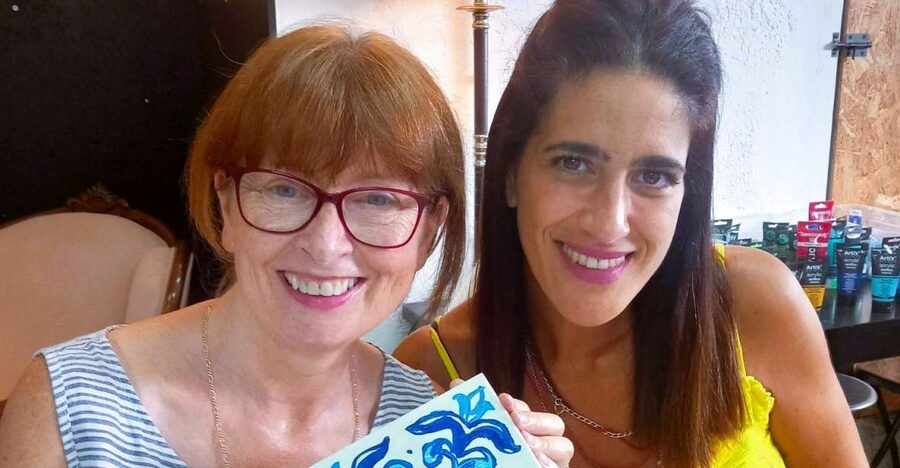
Boiler Studio is at Rua Chã 77, directly in front of Porto Cathedral. This places you in one of the most convenient parts of the historic center.
You can pair the workshop with São Bento Train Station, whose tile-covered interior is one of Porto’s best places to see azulejo decoration. The Luís I Bridge is also close, as are Time Out Market and the cathedral itself.
Because the activity is central, it makes sense to schedule it between sightseeing stops. A morning class leaves much of the day open. An afternoon session can provide shelter during poor weather, though you should allow for a possible later pickup if the tile needs more drying time.
Porto’s center includes slopes and uneven streets. The workshop itself is wheelchair accessible, which is useful, but the supplied information does not describe every route from nearby sights or transit stops. If you need step-free access throughout the journey, confirm the best approach with Boiler Studio in advance.
The studio also sells handmade products by local artists. That is a pleasant extra, but budget separately if you plan to shop. The workshop materials and your painted tile are included in the activity price, not the shop merchandise.
Who should book this experience
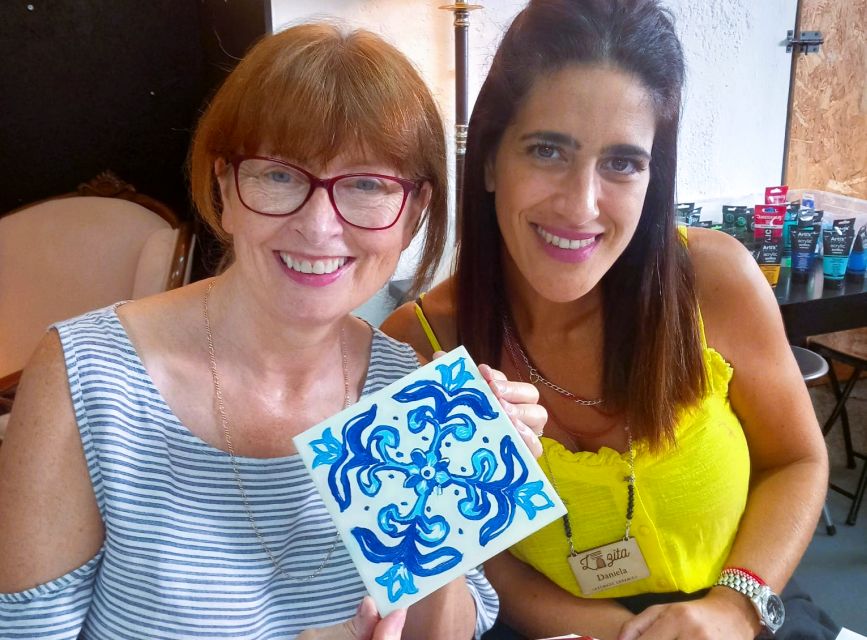
This is a strong match for you if you want a slower activity with a clear connection to Portuguese culture. It suits beginners especially well. The staff can guide you through each stage, and you can use a stencil instead of starting with a blank tile.
Families should note the age limit: children under 10 are not suitable for this activity. Older children and preteens may enjoy it, especially if they like choosing colors and making gifts for family members.
It also works for couples who want something more memorable than another bar stop. You each make a different design, and the finished tiles give you a shared souvenir without requiring a full day away from Porto.
Art lovers and pottery fans will find plenty to enjoy, but you should keep the level in mind. The workshop focuses on tile painting and cultural background, not wheel work or kiln firing.
If you dislike group activities, the social format may feel less private than painting alone. The calm setting helps, but you are still sharing the space and instruction with other participants.
Helpful booking details before you go
The workshop is offered in English and Portuguese. The published duration is two hours, and starting times vary, so check the available slot against your sightseeing plans.
Free cancellation is available up to 24 hours in advance for a full refund. You can also reserve now and pay later, which helps if you are still arranging your Porto schedule.
Smoking, fireworks, and explosive substances are not allowed. Those rules are unlikely to affect most bookings, but they are part of the stated conditions.
Wear something you can relax in. The activity provides the painting materials, but the supplied details do not promise that clothing will be protected from spills. The staff helps with the process, yet careful painting remains your responsibility.
Before leaving, confirm how and when to collect your tile. If it is dry, paper packaging makes transport easier. If it is still drying, plan a return visit later that day or the next day.
Is the Porto tile painting workshop worth booking?
Yes, I would book this if you want a relaxed, central activity that combines a short cultural lesson, a drink, and a handmade souvenir. The best parts are the patient guidance, the freedom to use a stencil or personal image, and the chance to connect Porto’s famous facades with your own piece of tilework.
Book it with realistic expectations. You are not learning every stage of ceramic production, and the finished tile may require a later pickup. But for $41, you receive the materials, instruction, historical context, cocktail, and a personal keepsake in a convenient studio by the cathedral.
Choose a morning slot if you have limited time or an onward departure. Choose the afternoon if you want a comfortable break from sightseeing and can return for the tile if needed.
FAQ
How long does the Porto tile painting activity last?
The activity lasts two hours. Some people may need additional time to finish, and the tile may need extra drying time before collection.
What is included in the price?
The price includes the workshop introduction, a ceramic tile, acrylic paints, paper packaging, a cocktail, and all materials needed for the activity.
Where does the workshop take place?
It takes place at Boiler Studio, Rua Chã 77, on a typical street in front of Porto Cathedral.
Is the studio close to major Porto sights?
Yes. The studio is near Porto Cathedral, São Bento Train Station, the Luís I Bridge, and Time Out Market.
Can I choose my own tile design?
Yes. You can choose from prepared designs, and the staff can print a personal image for you.
Do I need artistic experience?
No. The instructors guide you through the painting process and offer help with techniques and design choices.
What drink is included?
A cocktail is included. Drinks mentioned for the activity include Porto Tonic and a white port wine spritzer-style cocktail.
Can children join the workshop?
Children under 10 are not suitable for the activity.
Is the workshop wheelchair accessible?
Yes. The activity information states that the workshop is wheelchair accessible.
Newest Porto reviews on the site
- Douro Valley Premium Tours – Private Driver & Guide★ 5.0 · 93 reviews
- Douro Valley Delights Wine Tasting and Scenic Vistas★ 5.0 · 3 reviews
- Douro valley Majestic★ 5.0 · 12 reviews
- Private off the beaten Douro Valley Wine Tour★ 5.0 · 100 reviews
- Tour the Douro wine region, and discover the fantastic landscape★ 4.5 · 4 reviews
- Douro Valley Private Full–Day Tour from Porto★ 5.0 · 23 reviews
- Private Tour to stunning Douro Valley and most renowned wineries★ 5.0 · 39 reviews
- Douro Tour on a Private Yacht in Porto★ 4.5 · 10 reviews
Porto Painting and Tile Workshops, compared.

Tile-Painting Workshop with Porto Wine – Bainharia
Read our review →
Downtown Porto Acrylic Painting Workshop for Groups or Individual
Read our review →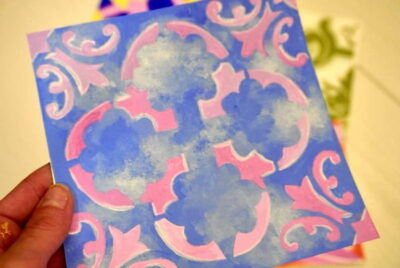
Acrylic Painting Workshop for Groups – Antero Quental
Read our review →Browse the lists this tour appears in