
Reviewed · PORTO PASTEL DE NATA WORKSHOPS
Porto: Pastel de Nata Pastry-Making Workshop
Porto’s famous custard tart becomes far more interesting when you make it yourself. At Boiler Studio on Rua Chã, you roll prepared dough, help make the egg custard, and watch the tarts bake while sipping Port, wine, or a mimosa.
I like the small-group feel, with a maximum of nine people, and the friendly hosts who keep the class moving with jokes and local food tips. I also like that you leave with a recipe and at least two pastries in a box. The main consideration is that the dough is prepared ahead of time, so you will not make every part from start to finish.
Key points to know before booking
- A central Porto setting: Boiler Studio sits at Rua Chã 77, directly in front of the Cathedral and close to São Bento Station, the Luís I Bridge, and Time Out Market.
- A practical 90-minute lesson: You roll pastry, help prepare the custard, bake the tarts, and eat the finished result within a short session.
- One drink is included: Choose from Port wine, regular wine, or a mimosa. Some sessions have offered two drinks, but you should plan on the advertised one.
- A social class: The group size is capped at nine, making it easy to chat with people from different countries.
- A recipe you can use at home: You receive the method and extra tips for recreating the tarts after your Portugal trip.
- You take pastries away: Each person receives at least two handmade pastéis de nata in a small cardboard box.
Making pastéis de nata beside Porto Cathedral
The class begins in a convenient part of old Porto. Boiler Studio is on Rua Chã 77, a typical street facing the Cathedral, so you can pair this activity with São Bento Station, the Luís I Bridge, or a walk toward Time Out Market.
That location matters. You do not need to set aside half a day for transport, and the 90-minute workshop fits neatly between sightseeing stops. If you have just arrived in Porto, it also gives you a useful starting point for food advice. Hosts share suggestions for places to eat around town, along with general tips for enjoying Porto.
Inside, the mood is informal rather than solemn. You are not sitting silently at a classroom desk while a chef performs in front of you. The host brings people into the process in stages, explains what is happening, and keeps the conversation going as the pastry bakes.
Hosts have included Maria, Sara, Patricia, Ana, Alice, Sarah, and others. The names change depending on the session, but the strongest pattern is clear: the host is expected to be both an instructor and a social guide. Maria is often praised for making the class lively and interactive, while Patricia is noted for answering questions and including everyone. Sara is also known for clear explanations and a warm sense of humor.
More pastel de nata workshops in Porto:
- Porto: Pastel de Nata Cooking Class with Port Wine – Sé
★ 4.8 · 888 reviews - Workshops Pasteis de Nata in Porto, Portugal
★ 4.9 · 520 reviews - Porto: Pastel de Nata Cooking Class from Scratch
★ 4.9 · 468 reviews
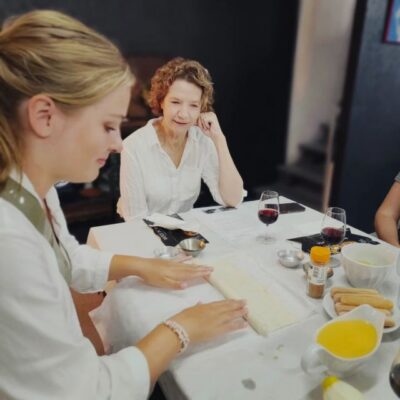
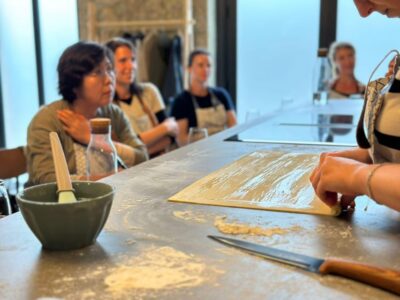
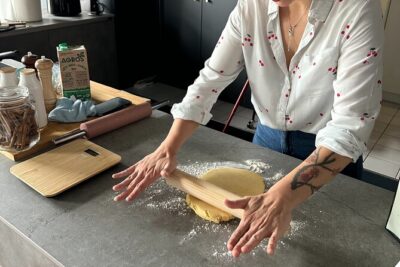
Rolling the prepared pastry
Pastel de nata looks simple in a bakery case: a flaky shell, pale custard, and a browned top. The pastry dough is the tricky part. It needs about three hours to rest and develop properly, so the workshop uses dough that has already been prepared.
This is the one point you should understand before booking. You will not knead and finish the dough from raw ingredients during the class. Instead, you roll the prepared dough yourself and shape it for the tart molds. You still handle an important part of the process, but the workshop is designed as a practical introduction, not a full professional pastry apprenticeship.
That arrangement makes sense for a 90-minute activity. If the class included the full dough process, you would spend much of your time waiting. The prepared dough lets you focus on shaping, custard, baking, and tasting.
The instructor explains the method step by step and gives you a printed recipe. Bring a pen if you like taking notes, since the extra advice may be as useful as the basic measurements. Home bakers have received tips that helped them make the tarts successfully after returning home.
Preparing the egg custard
Next comes the filling. The custard is the heart of a pastel de nata, and the host explains how the ingredients come together before the mixture goes into the pastry shells.
The class shares the work across the group. At certain stages, people come to the front or work through specific parts of the recipe. You may not personally perform every single step, particularly if the group is full, but the host explains the process and gives everyone a chance to participate.
This is important for families and couples deciding what kind of class they want. It is hands-on, but it is not an individual workstation where every participant makes a separate batch alone. The group prepares the mixture together, then each person receives finished tarts from the shared process.
Children over 10 are welcome. Younger children cannot join this activity. For a family with older children, the class offers an easy way to mix food, conversation, and a little local culture without committing to a long cooking course.
Port wine, conversation, and the baking wait
While the tarts bake, you get a complimentary drink. The advertised choices are Port wine, regular wine, or a mimosa. The Port is a natural match for Porto, and one past session even featured a Port tonic.
The drink is not just an extra. It gives the class a pleasant pause while the pastries cook and helps people talk. Groups often include solo visitors, couples, friends, and people from several countries. The small size makes it easier to ask questions and meet the other participants without feeling lost in a crowd.
The hosts use humor well. Ana, Maria, Patricia, and Sara have all been praised for making people comfortable, drawing quieter participants into the activity, and keeping the pace relaxed. That social side may be the biggest reason to choose this workshop instead of simply buying a tart at a bakery.
The listed inclusion is one drink. Some sessions have provided two drinks, so you may receive more, but it is best to judge the value on one included beverage rather than expecting an open bar.
More hands-on workshops in Porto:
- Matosinhos: Surfing Lesson with Equipment
★ 4.8 · 704 reviews - Porto: Small Group Surf Lesson with Transportation
★ 4.9 · 594 reviews - Porto: Tile-Painting Workshop with Porto Wine – Bainharia
★ 4.9 · 526 reviews - Pastel de Nata | Workshop from scratch | Porto’s city center
★ 5.0 · 449 reviews
Eating the warm result
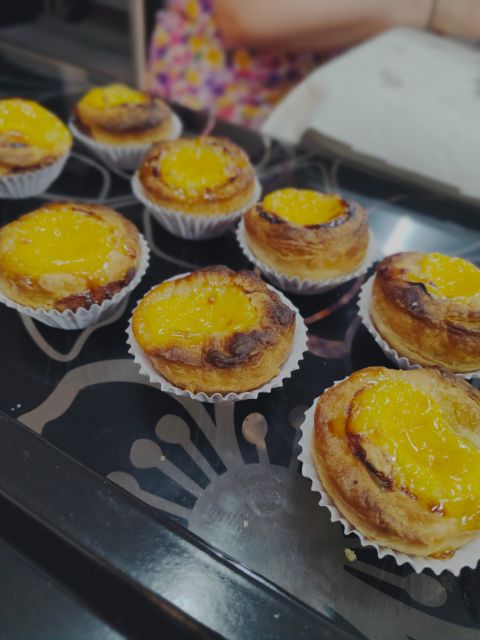
The best part comes when the tarts leave the oven. You eat at least one at the studio, usually while it is still warm, then pack at least two more to take away. Some sessions have produced three tarts per person, with one eaten immediately and two placed in the box.
A fresh pastel de nata has a different appeal from one that has been sitting in a bakery display. The shell should have a light, crisp texture, and the custard gives you the familiar eggy sweetness associated with Portugal’s favorite pastry.
Do not expect a formal tasting menu. This is a simple reward for the work you have just done. You make the pastry, wait for it to bake, then eat it with your drink and the rest of the group. The small cardboard box is useful if you want to save the extra tarts for later in the day.
The take-home portion also adds value. You are not paying only for a snack consumed at the studio. You receive a recipe, practical advice, and a chance to try the technique in your own kitchen.
What the recipe can and cannot teach you
The recipe gives you a useful foundation, especially if you want to recreate the tarts at home. Hosts also share small tips beyond the printed instructions, answer questions, and explain why the pastry and custard need to be handled in particular ways.
Still, you should view the class as an introduction. Because the dough is prepared before you arrive, the lesson does not cover the full three-hour dough preparation. You learn how to roll and use it, but not the complete process of making it from raw ingredients.
That limitation is easy to accept if you want a fun Porto activity with a real cooking element. It matters more if you are an experienced baker hoping for a professional-level pastry course. In that case, ask about a private workshop and request more information about taking part in all stages.
For most people, the printed recipe plus the host’s tips should be enough to attempt the dish at home. One useful practical note from the class experience is that a single batch of baking dishes may not be enough if you want to produce a large quantity in a reasonable time. Plan your equipment before inviting a large group for a Portuguese baking afternoon.
Group size and personal attention
The maximum group size is nine people. That is a good number for a social workshop because there are enough people for conversation, but not so many that the instructor has to shout across a large room.
The tradeoff is shared participation. Since the custard and some stages are prepared collectively, you may rotate through the tasks rather than complete every step alone. Hosts make a point of bringing people forward in stages, but the exact amount of hands-on time depends on the group.
If you want full control over every stage, ask about a private workshop. The organizers specifically request that larger groups contact them for more information, particularly groups over eight or nine people. Do not assume a standard booking will work for a big family gathering or corporate group.
Solo visitors should feel comfortable booking. The class format encourages conversation, and the small group gives you a natural way to meet people without needing to arrive with companions. Couples and groups of friends will also find it easy to participate together.
Is $41 a fair price?
At $41 per person, the price is not the cheapest way to eat a pastel de nata in Porto. You can buy the pastry itself for far less. That comparison misses the point, though.
You are paying for a 90-minute activity, an English-speaking instructor, a drink, the recipe, the baking lesson, the shared social setting, and at least two pastries to take away. The value is strongest if you want an activity rather than a quick food stop.
The price also compares well with other short, organized experiences because the class gives you something to carry home in two forms: the pastries and the skill. If you actually make the recipe later, the workshop continues to have value after your holiday.
I would be less enthusiastic about the price if you are only interested in tasting Porto’s sweets. In that case, visit a bakery. If you want to meet people, learn the basics, and spend a relaxed hour and a half indoors, the cost is easier to justify.
When this Porto workshop works best
This is a particularly useful option on a rainy day. The class takes place indoors, lasts only 90 minutes, and gives you a clear activity when wet weather makes walking Porto’s steep streets less appealing.
It also works well early in your visit. The host can suggest food places and local stops, and you can place the activity near the Cathedral, São Bento Station, the bridge, or Time Out Market. Booking it near the middle of your stay may also be smart because you will already know what kinds of food you want to ask about.
The workshop suits:
- Couples who want a shared activity beyond sightseeing
- Solo visitors who enjoy meeting people in a small group
- Families with children over 10
- Friends looking for a light, social afternoon
- Food lovers who want a recipe they can try at home
- Visitors needing an indoor activity in poor weather
It is less suitable if you need a fully private lesson, dislike group participation, or expect to make the pastry dough entirely from scratch. It is also not open to children under 10.
Booking details that matter
The workshop lasts 1.5 hours, and instruction is in English. Check the available starting times before booking because the schedule can vary.
You can cancel up to 24 hours before the activity for a full refund. The reserve-now-and-pay-later option lets you hold a place without paying immediately, which is useful when your Porto plans are still shifting.
The meeting point is Boiler Studio, Rua Chã 77, in front of Porto Cathedral. Give yourself enough time to find the studio in the old center, especially if you are coming from São Bento Station or crossing from the Gaia side.
For groups of more than eight people, contact the provider before booking. The normal setup is limited to a maximum of nine participants, and a larger party may need different arrangements.
Should you book the pastel de nata workshop?
I would book this if you want more than a pastry tasting. The class combines a central location, a manageable 90-minute schedule, a drink, friendly instruction, and a useful recipe. The small group and hosts such as Maria, Sara, Patricia, and Ana help keep it personal without making the session too serious.
Book with the right expectation: you will roll prepared dough and make the custard, but you will not complete the full dough process. If that sounds fair, $41 buys a pleasant Porto memory, a warm tart, at least two pastries to take away, and enough instruction to try the recipe at home.
FAQ
Where does the pastel de nata workshop take place?
It takes place at Boiler Studio, Rua Chã 77, on a typical street directly in front of Porto Cathedral. São Bento Station, the Luís I Bridge, Time Out Market, and the Cathedral are nearby.
How long does the workshop last?
The activity lasts 1.5 hours.
What drink is included?
You receive one glass of Port wine, regular wine, or a mimosa. Some sessions have included two drinks, but the advertised inclusion is one.
Is the workshop taught in English?
Yes. The instructor language is English.
Do I make the pastry dough from scratch?
No. The dough is prepared ahead of time because it needs about three hours to be properly ready. You roll the prepared dough, shape it, and help make the custard.
How many pastries do I take home?
You receive at least two handmade pastéis de nata in a cardboard pastry box. Some sessions have produced three pastries per person.
Can children join the workshop?
Children over 10 years old are welcome. The activity is not suitable for children under 10.
What is the maximum group size?
The standard workshop has a maximum of nine people. Ask for more information if your group has more than eight people.
Can I cancel the booking?
Yes. You can cancel up to 24 hours in advance for a full refund. You can also reserve now and pay later to keep your plans flexible.
Newest Porto reviews on the site
- Douro Valley Premium Tours – Private Driver & Guide★ 5.0 · 93 reviews
- Douro Valley Delights Wine Tasting and Scenic Vistas★ 5.0 · 3 reviews
- Douro valley Majestic★ 5.0 · 12 reviews
- Private off the beaten Douro Valley Wine Tour★ 5.0 · 100 reviews
- Tour the Douro wine region, and discover the fantastic landscape★ 4.5 · 4 reviews
- Douro Valley Private Full–Day Tour from Porto★ 5.0 · 23 reviews
- Private Tour to stunning Douro Valley and most renowned wineries★ 5.0 · 39 reviews
- Douro Tour on a Private Yacht in Porto★ 4.5 · 10 reviews
Porto Pastel de Nata Workshops, compared.
Pastel de Nata Cooking Class with Port Wine – Sé
Read our review →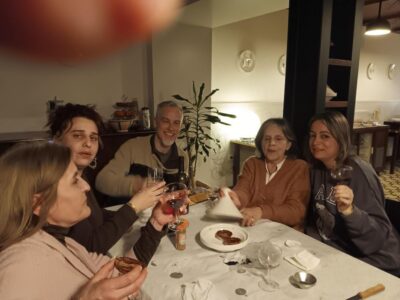
Pastel de Nata | Workshop from scratch | Porto’s city center
Read our review →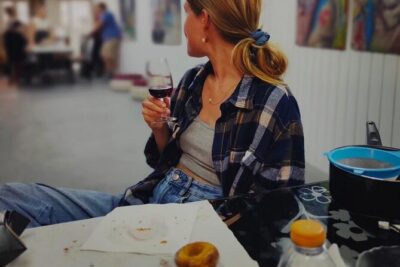
Pastel de Nata Cooking Class with Porto Wine (Sé do Porto)
Read our review →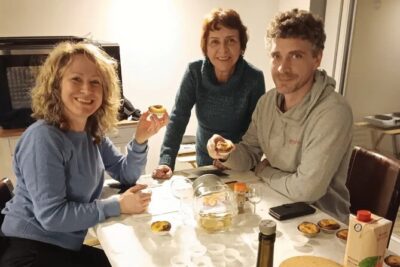

Porto center- Workshop “A nata do BJ” making pasteis de nata
Read our review →
Poças: Guided Tour & Port Wine Tasting with Pastel de Nata
Read our review →Browse the lists this tour appears in