
Reviewed · PORTO WINE TASTINGS
Porto: Tile Painting Workshop with Tea and Port Wine
Portuguese tiles are more than pretty blue decoration. They cover churches, railway stations, house fronts, and monuments across the country, carrying patterns and stories into everyday life. In this two-hour workshop, you learn how that tradition works, then paint two tiles of your own.
I like the practical souvenir and the warm studio setting. Your tiles are fired and packaged for collection the next day, and the guide offers help without taking over your design. The main consideration is time: one family felt the history and tea section ran a little long, leaving less time to paint.
Key points
- Paint two tiles per person: You get more than the single tile some people expect, giving you room to try different designs.
- Learn before you paint: The introduction covers Portuguese tile culture, production methods, and traditional motifs.
- Collect your own finished work: The tiles are kiln-fired and ready about 24 hours later, with packaging provided.
- Easy Campanhã location: The atelier is near Porto-Campanhã train station and the TIC intermodal bus station.
- Good for families and small groups: An eight-year-old, a teenager, and adults all took part successfully in one family booking.
- Tea and biscuits are included: The workshop begins with a relaxed introduction and a herbal infusion or tea.
Why Portuguese tiles matter in Porto
If you have walked through Porto, you have already seen how strongly tiles shape the city. They appear on churches, older homes, public buildings, and transport sites. Their familiar blue and white patterns are not just decoration. They help tell religious stories, mark local identity, and protect building facades from weather.
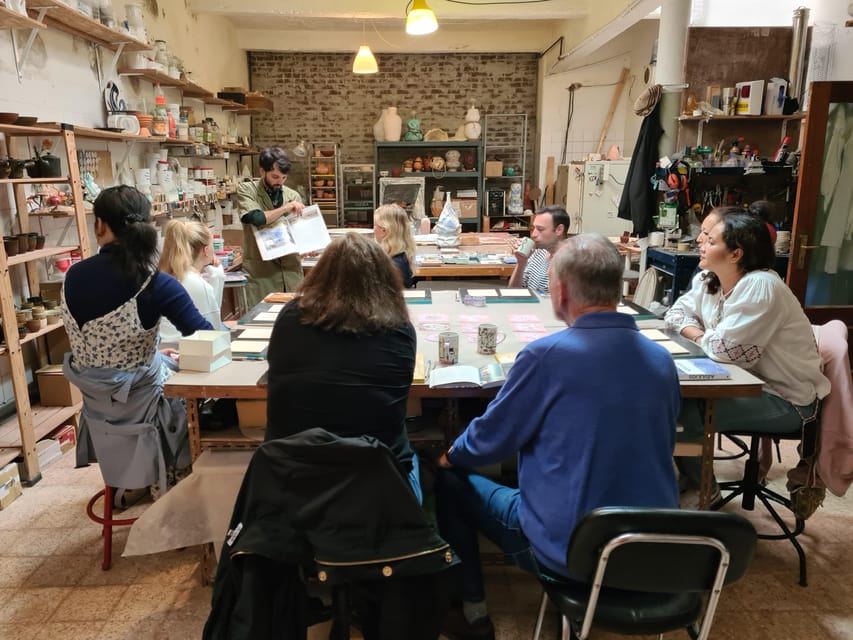
This workshop gives that visual tradition some context before asking you to copy or adapt it. You learn why tiles became so important in Portuguese art and how they spread across the country. That short lesson helps you notice details later, especially repeated borders, geometric forms, and painted scenes.
I like this approach because the activity is not simply a craft class. You first understand what you are looking at in Porto, then make something connected to it. If you are planning to visit São Bento Station or other tiled buildings, the workshop can sharpen your eye for the patterns and methods you will see.
The balance may not suit everyone. The opening talk, browsing, tea, and history are part of the experience, but one family would have preferred a shorter introduction and more painting time. If you want a fast hands-on class with almost no background talk, keep that in mind.
More painting and tile workshops in Porto:
- Porto: Tile-Painting Workshop with Porto Wine – Bainharia
★ 4.9 · 526 reviews - Porto: Tile Painting and Cocktails in Downtown Porto
★ 4.9 · 484 reviews - Tile Painting and Cocktails in Downtown Porto
★ 5.0 · 187 reviews
Arriving near Campanhã Station
The atelier is near Porto-Campanhã train station and the new TIC, or Terminal Intermodal de Campanhã. A school and a taxi rank sit beside the station, which gives you useful landmarks when finding the meeting point.
There is no transportation included, so you make your own way there. The location works well if you arrive in Porto by train or long-distance bus, or if you are staying in the Campanhã area. It is less convenient if your plans are centered only on the historic core and you are trying to fit the class between several city sights.
One practical warning came from a participant who found the area poor for parking. I would avoid relying on a car if possible. Public transport or a taxi is the simpler choice, especially since you need to return the following day to collect the finished tiles.
The exact starting time varies, so check availability when booking. The class lasts two hours, but the complete experience takes more than one day because the tiles need time in the kiln.
Tea, biscuits, and the first look at the studio
The session begins with an introduction to the atelier and the place of tiles in Portuguese culture. Tea and biscuits are included, and the studio may serve a herbal infusion. One participant specifically enjoyed the self-planted herbal tea, which gives the opening a personal, homey touch.
You also get a chance to look at different tiles and sculptures used in Portuguese decoration and heritage buildings. This is useful preparation because it gives you a menu of shapes, borders, colors, and motifs before you put brush to tile.
The pace is relaxed rather than rushed. That will suit you if you like hearing the story behind a craft and asking questions. It also makes the class a good choice for families, since children can look around and get ideas before beginning.
Still, I would manage your expectations. The tea and history are not the main event, and some people will want to move quickly to the painting table. If you are bringing children, explain that the activity starts with a short presentation rather than immediate painting.
Learning how traditional tiles are made
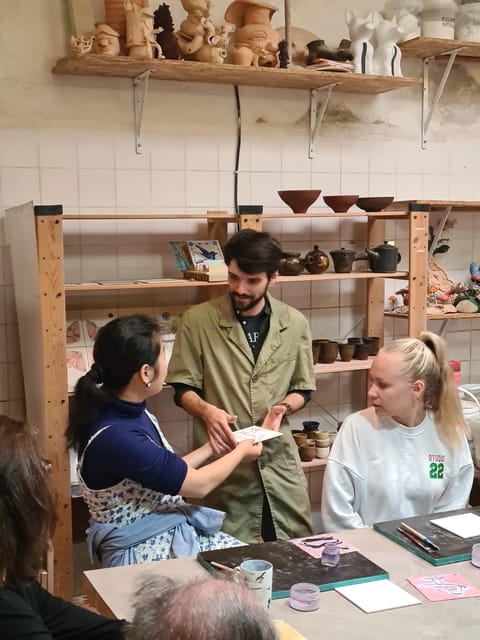
After the introduction, the local artist explains the techniques used to produce traditional Portuguese tiles. You learn what happens before and after the paint reaches the ceramic surface, including the importance of firing.
This stage matters because firing changes the final result. The color and finish you see while painting are part of a process, not necessarily the final appearance. Understanding that can make you more patient and less worried about making every brushstroke perfect.
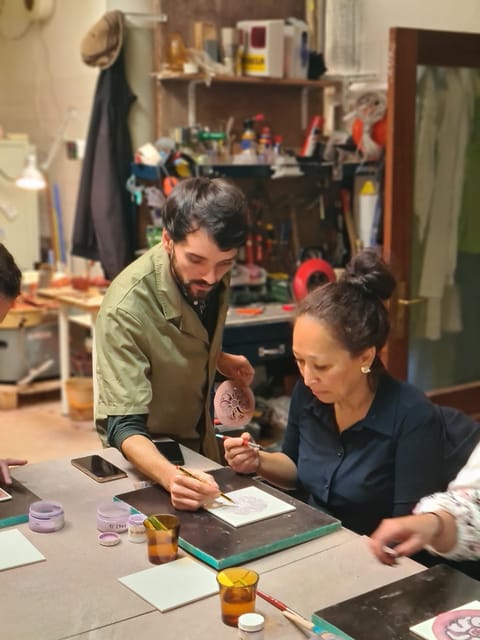
The guidance is hands-on but not controlling. Stencils are available if you want help with a pattern, and the artist and assistant can answer questions or offer creative advice. You are not simply handed a blank tile and left alone, but you also are not expected to reproduce a fixed design.
That middle ground is one of the strongest parts of the workshop. You can follow a traditional motif, use a stencil, or create a more personal Porto-inspired design. People with little art experience can get structure, while confident painters still have space to make their own choices.
The guide named in the experience information is Francisco Pessegueiro, and David was singled out for being friendly, well informed, and especially helpful during one session. Since different language options and staff may be involved, ask at booking if having a particular instructor matters to you.
More Porto wine and port tastings:
- From Porto: Douro Valley w/ Boat Tour, Wine Tasting & Lunch
★ 4.7 · 19,061 reviews - Complete Douro Valley Wine Tour with Lunch, Wine Tastings and River Cruise
★ 5.0 · 12,920 reviews - Porto: Live Fado Show with Glass of Port Wine
★ 4.8 · 6,498 reviews - Douro Valley: Historical Sites, Wine Experience, Lunch & Cruise
★ 5.0 · 5,133 reviews
Painting two tiles with traditional motifs
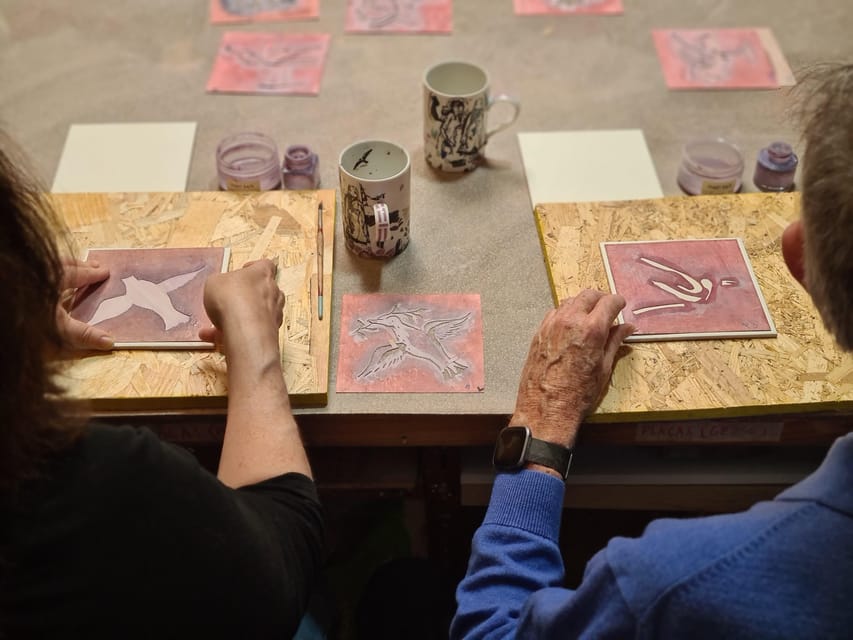
The main creative period is when you paint two tiles. All materials are supplied, so you do not need to bring paints, brushes, or ceramic pieces. You only need comfortable clothes and shoes, a sensible choice when working with art materials.
You can use traditional motifs as a starting point. Stencils help with structure, but they are not there to do the work for you. The artist and assistant can suggest colors or shapes, answer questions, and give feedback while you paint.
I like the fact that you receive two tiles per person. One gives you a souvenir. Two let you try a pair of related designs, make a small set, or use the first tile to get comfortable with the technique. A family of four received eight tiles in total, which made the activity feel more generous than expected.
The class also works for mixed-age groups. An eight-year-old and a teenager took part with their family, while adults can enjoy the design challenge on its own terms. You do not need to arrive as an artist. The purpose is to learn a craft and make a personal keepsake, not produce museum-quality ceramics.
Still, allow yourself time. Painting two tiles can require more concentration than the cheerful workshop description suggests, especially if you want detailed patterns. If the group spends a long time on the opening talk, your painting window may feel short. You can protect your time by arriving ready to choose a design and by asking questions early.
Leaving the tiles for the kiln
You do not take the wet or freshly painted tiles away immediately. The studio fires them in a kiln, which is essential for setting the finish and making them suitable as souvenirs.
The waiting period is about 24 hours. You then return the next morning, generally around 11:00 or 12:30, to collect the finished tiles. The supplied information gives both times, so confirm the exact pickup time with the provider when you book.
Packaging is included. That small detail matters if you are flying or continuing by train. A loose ceramic tile in a daypack is an invitation to chips and cracks, while proper wrapping gives your handmade souvenir a much better chance of reaching home intact.
The pickup requirement is also the main logistical limitation. This is not ideal for a one-night stop in Porto unless your schedule includes the next morning. Plan the class early enough in your stay, or make sure you have a clear return visit before leaving the city.
The finished pieces are more meaningful than a tile bought in a shop because you made them yourself. They will not be identical to professional work, and that is part of the point. A slightly uneven line or unexpected color becomes a reminder of your afternoon in Porto.
How the $53 price compares
At $53 per person, the workshop is not the cheapest two hours you can add to a city break. I think the price is reasonable if you value instruction, materials, kiln firing, two tiles, packaging, tea, and the local setting.
You are paying for more than table space. The experience includes the background lesson, technique demonstration, assistance during painting, firing after the class, and a second visit to collect the work. Buying a finished decorative tile may cost less or more depending on the shop, but it will not carry the same personal connection.
The value is strongest for people who want an activity rather than another passive sightseeing stop. Families also get good use from the format because each person makes two pieces. The class can become a shared project without requiring anyone to be highly artistic.
Food and drinks beyond the included tea and biscuits are not covered. Transportation is also separate, and the return trip for pickup creates an extra cost in time or fares. Add those factors before deciding if the price fits your plans.
The high overall rating, 4.9 from 66 reviews, matches the parts that make the workshop work: clear instruction, a welcoming studio, two tiles per person, and a finished object to take home. I would book it for the personal souvenir and the craft lesson, not simply for the refreshments.
Languages, group size, and the feel of the class
Instruction is available in English, Japanese, and French. If you need French or Japanese, state that when booking. Do not assume the provider will know your preference unless you include it in advance.
A small group is available, which should make it easier to ask for help and receive feedback while painting. The exact group size is not specified, so I would confirm the arrangement if a small class is important to you.
The tone is friendly and welcoming rather than formal. The workshop takes place in an artist’s studio, and the relaxed setting helps the activity feel connected to working artists instead of a large commercial attraction.
That atmosphere is especially useful if you are nervous about making a mistake. You can browse examples, ask for ideas, and use stencils as a guide. The artist provides direction, but your tiles remain your own work.
Who should book this workshop
I would recommend it to you if you want a creative break from churches, viewpoints, and tiled facades. It works particularly well for:
- Families with children and teenagers
- Couples looking for a shared keepsake
- Anyone interested in Portuguese art and decorative traditions
- People who prefer making a souvenir instead of buying one
- Visitors staying long enough to return the next day
- Small groups who enjoy guided activities with room for personal choices
You may want to skip it if your Porto visit is extremely short, your schedule allows no second visit, or you dislike craft activities with a teaching segment. It is also not the best fit if you expect to take the tiles home immediately after painting.
Comfortable clothes and shoes are sensible. You do not need to bring materials, but you should keep your schedule open for pickup and avoid parking if possible.
Should you book the Porto tile workshop?
I would book this class if you can return the next day and want a souvenir with a story attached. The two tiles per person, kiln firing, packaging, and personal guidance make the $53 cost fair for a hands-on activity.
Book it early in your Porto stay, especially if you are traveling by train or bus through Campanhã. Go in expecting a short lesson before the creative work, not two uninterrupted hours of painting. If that rhythm suits you, the workshop offers a thoughtful way to understand Porto’s tile tradition and carry a small piece of your own making home.
FAQ
Where does the tile painting workshop take place?
The atelier is near Porto-Campanhã train station and the TIC, or Terminal Intermodal de Campanhã. A school and a taxi rank are beside the station.
How long does the workshop last?
The class lasts two hours. You also need to allow time to return the next day to collect the fired tiles.
How many tiles do I paint?
You paint two tiles per person.
Can I take the tiles home immediately?
No. The tiles need to be fired in a kiln and are ready about 24 hours after the class.
When do I collect the finished tiles?
Pickup is the next morning, around 11:00 or 12:30. Confirm the exact time with the provider when booking.
Is packaging provided?
Yes. Packaging for the finished tiles is included.
Are materials included?
Yes. All materials needed for tile painting are included.
Is tea included?
Yes. Tea and biscuits are included, and the studio may serve a herbal infusion.
Which languages are available?
The workshop is available in English, Japanese, and French. If you need French or Japanese, state this when booking.
Is transportation included?
No. You arrange your own transportation to and from the atelier.
Can children take part?
The workshop can suit families. One family took part with an eight-year-old and a teenager, and each person received two tiles.
What should I wear?
Bring comfortable clothes and comfortable shoes.
More hands-on workshops in Porto
- Porto: Pastel de Nata Pastry-Making Workshop
★ 4.9 · 1,542 reviews - Porto: Pastel de Nata Cooking Class with Port Wine – Sé
★ 4.8 · 888 reviews - Matosinhos: Surfing Lesson with Equipment
★ 4.8 · 704 reviews - Porto: Small Group Surf Lesson with Transportation
★ 4.9 · 594 reviews
Newest Porto reviews on the site
- Douro Valley Premium Tours – Private Driver & Guide★ 5.0 · 93 reviews
- Douro Valley Delights Wine Tasting and Scenic Vistas★ 5.0 · 3 reviews
- Douro valley Majestic★ 5.0 · 12 reviews
- Private off the beaten Douro Valley Wine Tour★ 5.0 · 100 reviews
- Tour the Douro wine region, and discover the fantastic landscape★ 4.5 · 4 reviews
- Douro Valley Private Full–Day Tour from Porto★ 5.0 · 23 reviews
- Private Tour to stunning Douro Valley and most renowned wineries★ 5.0 · 39 reviews
- Douro Tour on a Private Yacht in Porto★ 4.5 · 10 reviews
Porto Wine Tastings, compared.

Douro Valley w/ Boat Tour, Wine Tasting & Lunch
Read our review →
Complete Douro Valley Wine Tour with Lunch, Wine Tastings and River Cruise
Read our review →

Historical Sites, Wine Experience, Lunch & Cruise
Read our review →
Douro Valley Small-Group Tour with Wine Tasting, Lunch and Boat
Read our review →

Authentic Fado Show, Port Wine & Handmade Instruments
Read our review →
Douro Valley Tour with Wine Tasting, Cruise and Lunch
Read our review →Browse the lists this tour appears in