
Reviewed · WORKSHOPS
Porto: Tour to the world of silver in a century-old workshop
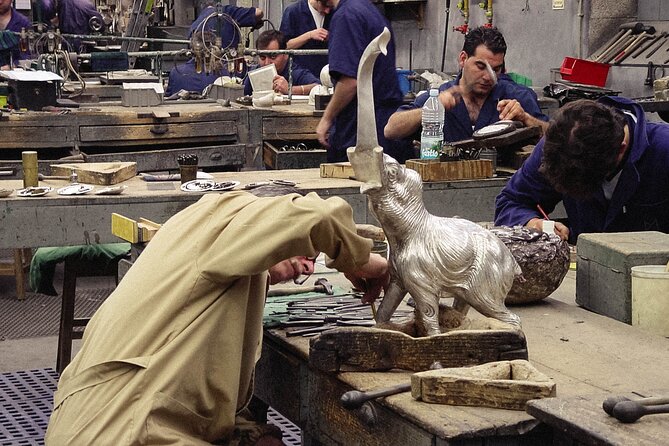
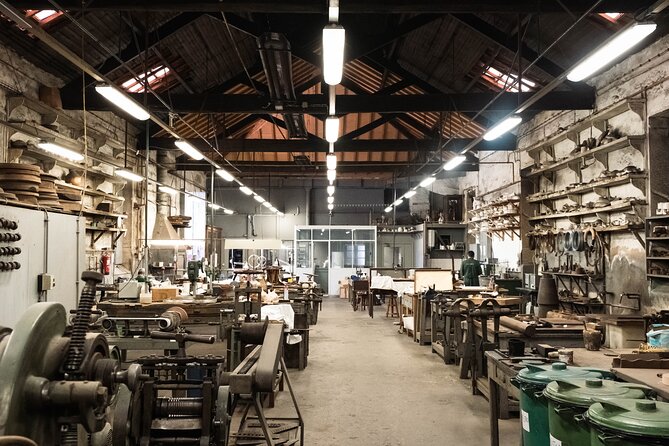
Porto’s Alcino Silversmith workshop gives you something most jewelry shops cannot: a look behind the finished piece. In a factory operating since 1902, you see silver being shaped by hand, learn how casting, molding, and chiseling work, and watch old methods sit beside newer equipment.
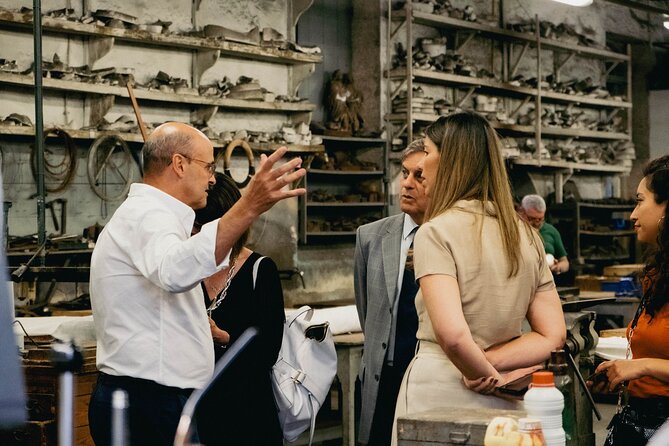
I like the small group limit of 10, which makes it easier to see the work and ask questions. I also like the three-room showroom, arranged like a house, where silver jewelry, cutlery, religious objects, and decorative pieces are shown in a setting that feels more useful than a glass counter.
The main consideration is time. One hour goes quickly, especially if you want to study the showroom and shop after the workshop visit. The tour runs in Portuguese, English, and Spanish, but the factory can be active and the experience is more about seeing and explaining than making a full silver piece yourself.
Key points to know before you book
- A real working factory: You visit Alcino Silversmith’s century-old workshop, not only a display room.
- Six generations of family craft: The company has operated since 1902 and is recognized as an Entity of Historical Interest.
- Traditional techniques explained: The tour covers casting, molding, chiseling, and other manual goldsmithing methods.
- A three-room showroom: Silver objects are displayed in rooms designed to resemble parts of a decorated home.
- Small and multilingual: Groups are limited to 10, with tours in Portuguese, English, or Spanish.
- Good value at $17: The price includes the guided tour, workshop, showroom, store, and entry.
Why this Porto workshop is worth your time
Porto is full of handsome churches, tiled facades, and old commercial streets. Alcino Silversmith adds a different kind of local character: the sound, tools, and skill behind objects that might otherwise look simply polished and complete.
The appeal is not just the age of the company. It is the chance to see a craft business that still makes jewelry, decorative pieces, religious items, and cutlery. You are shown how silver moves from raw material and shaped forms toward a finished object. That process gives you a better eye for the work you see in Portuguese shops afterward.
I especially like that this is not presented as a generic jewelry demonstration. The company has six generations behind it, and the visit connects the family story with the practical work done in the factory. You get both the human side and the technical side.
The tour is also short enough to fit into a busy Porto day. At one hour, it works well between sightseeing stops, a meal, or a visit to another central attraction. At the same time, the short format means you should arrive ready to pay attention. This is not a slow half-day craft class.
More hands-on workshops in Porto:
- Porto: Pastel de Nata Pastry-Making Workshop
★ 4.9 · 1,542 reviews - Porto: Pastel de Nata Cooking Class with Port Wine – Sé
★ 4.8 · 888 reviews - Matosinhos: Surfing Lesson with Equipment
★ 4.8 · 704 reviews
Entering a 120-year-old family business
You meet at the Alcino Silversmith jewelry store in Porto. You can enter when your scheduled time arrives or call the shop if needed.
The company was founded in 1902 and remains connected to a six-generation family tradition. That detail matters because the visit is not about an old label placed on a new retail space. The workshop itself is part of the experience, and the company continues to make its own objects.
The guide introduces the company’s story before taking you through the working areas. You learn how the business developed and how its work covers several different branches of Portuguese goldsmithing. Jewelry is only one part of the picture.
You might find this opening especially useful if you are interested in family businesses, traditional trades, or the way old European workshops survive in a modern city. The focus is practical rather than academic. You are there to understand how the company works and what makes its pieces different.
The business is recognized as an Entity of Historical Interest. That designation gives the visit a little more weight, but the tools and techniques are what make it memorable. A plaque alone would not be enough. Here, the historical label is tied to an operating workshop.
Watching silver take shape
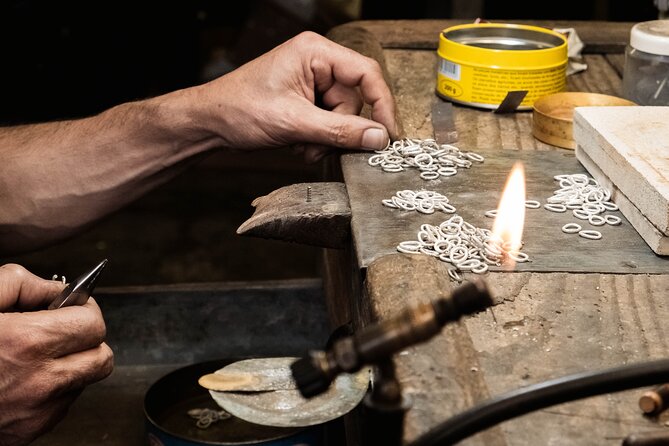
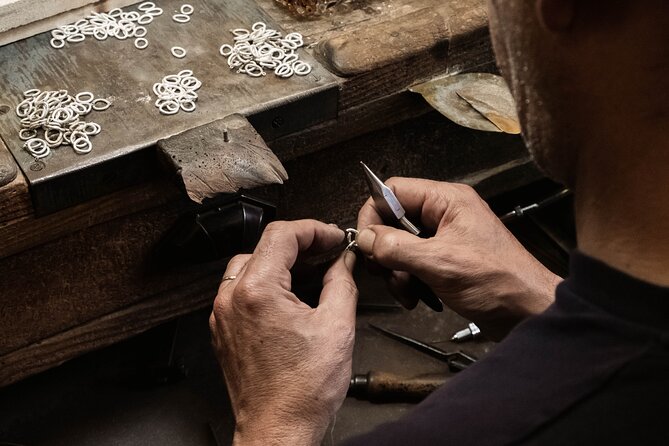
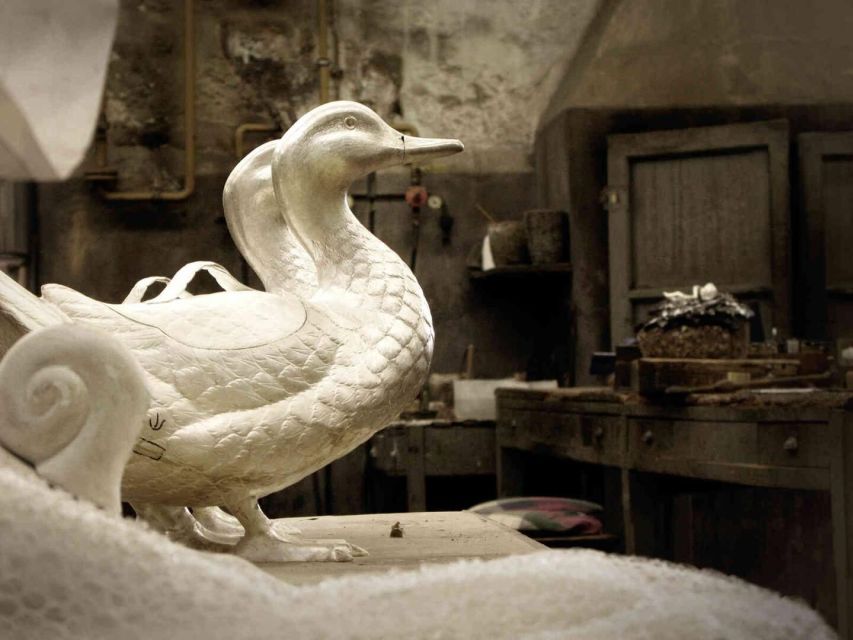
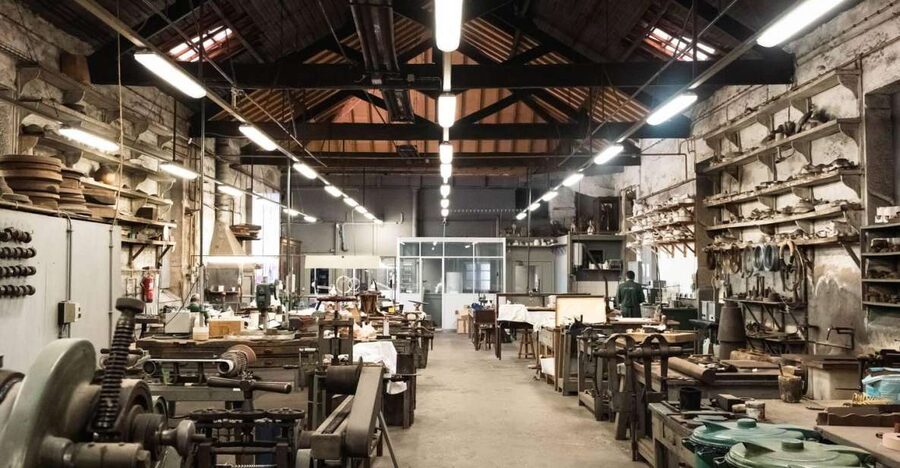
The central part of the visit takes place in the workshop. You see artisans working with silver and learn about manual goldsmithing techniques used to form and finish pieces.
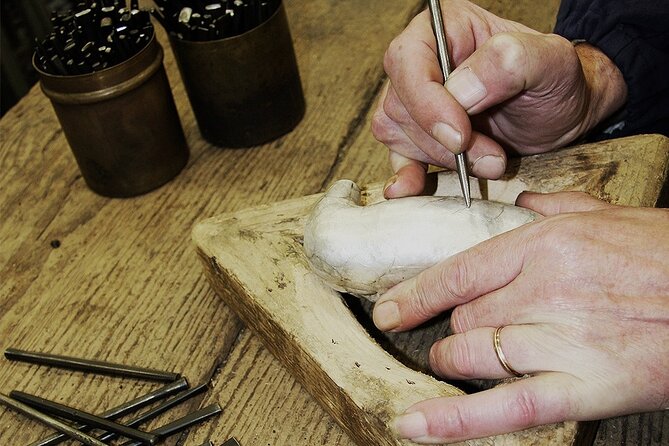
The tour covers casting, molding, and chiseling. Each method helps explain a different stage of the process. Casting gives you a sense of how a piece begins in a mold. Molding shows how form and structure are controlled. Chiseling reveals the patient handwork used to add or refine surface detail.
The experience information also says you can interact with and assist the artisans in the workshop. The exact level of participation can vary with the day’s work, but you should expect a close look at the process rather than a full lesson in making your own finished item.
That distinction is important. If you want a hands-on class where you leave with a completed piece, this is not described as that kind of activity. If you want to see real production and understand the techniques, the format is a better match.
The workshop combines traditional methods with some newer equipment. This contrast adds interest. You are not being shown a frozen museum display. You see how a long-running craft business can keep manual skills while adding modern tools where they help.
The best way to enjoy this section is to watch the small actions. Notice how a craftsman handles a tool, how a surface changes under repeated work, and how much control is needed to shape a material that looks simple when finished. Silver objects often appear effortless in a showroom. The workshop makes the effort visible.
The showroom arranged like a home
After the workshop, you visit the showroom. Its space is divided into three rooms with different settings, designed to resemble divisions of a house decorated with silver objects.
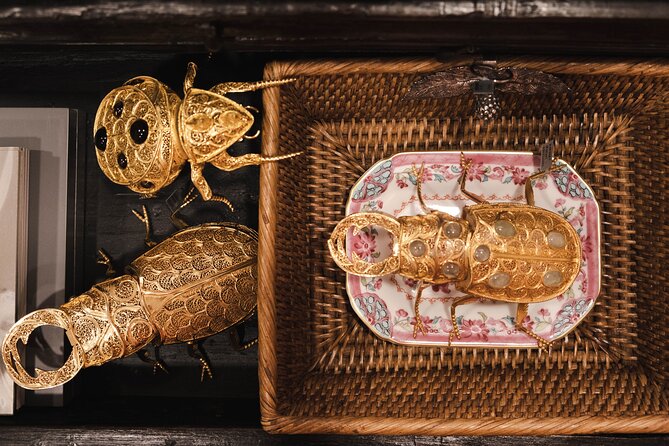
This arrangement is more useful than a long row of identical display cases. It helps you picture how decorative silver, cutlery, religious objects, and other pieces might function in daily or ceremonial settings. You can compare the objects by purpose, scale, and style instead of looking at each item in isolation.
The showroom also gives the tour a visual finish. The factory explains how the pieces are made. The rooms show what that work becomes when presented as a finished object.
You will find jewelry collections alongside decorative pieces and sacred art. The range is worth noting if you think of silver only as rings, earrings, or pendants. Alcino’s work includes objects with domestic, religious, and ceremonial uses.
One review described the showroom and its finest pieces as especially beautiful, while another person bought a pendant as a reminder of Porto. That makes sense as a practical souvenir choice. A small silver item can carry a stronger connection to the visit than a mass-produced keepsake, though prices for individual pieces are not provided here, so you should check in the store before deciding.
The showroom is also where the visit may feel less industrial and more polished. If you prefer tools, dust, and active making, give the workshop your full attention before moving on. If you enjoy design and finished objects, the final rooms may be your favorite part.
Same city, a completely different kind of day out:
- The Unvanquished Tour in Porto City Center
★ 5.0 · 26,497 reviews - From Porto: Douro Valley w/ Boat Tour, Wine Tasting & Lunch
★ 4.7 · 19,061 reviews - Complete Douro Valley Wine Tour with Lunch, Wine Tastings and River Cruise
★ 5.0 · 12,920 reviews - Porto: Six Bridges Cruise
★ 4.2 · 11,680 reviews
What the store adds to the visit
Store access is included, but the experience is not described as a sales presentation. One person specifically noted that there was no pressure to buy, which is useful to know if you want to browse without feeling obligated.
You can use the shop to connect the techniques you have just seen with actual pieces. After learning about casting, molding, or chiseling, you may notice those qualities more clearly in the jewelry and decorative objects on sale.
The store also lets you choose a souvenir based on the maker rather than simply on the city. That does not mean you need to buy anything. At $17, the value of the activity comes from the workshop access, guide, and showroom, not from a purchase.
If you are considering a larger silver item, allow yourself enough time to look carefully after the guided portion. The formal tour lasts one hour, and the available information does not promise extra time for extended shopping. Your scheduled visit should therefore be treated as a compact cultural activity, not as a long buying appointment.
How the one-hour format works for your day
A one-hour tour is easy to fit into a Porto itinerary. You do not need to give up a full morning or afternoon, and the meeting point is the Alcino Silversmith jewelry store.
Starting times depend on availability. From Monday through Friday, the last entry is at 5:00 pm, so do not leave this activity until late evening. Children must be accompanied by an adult.
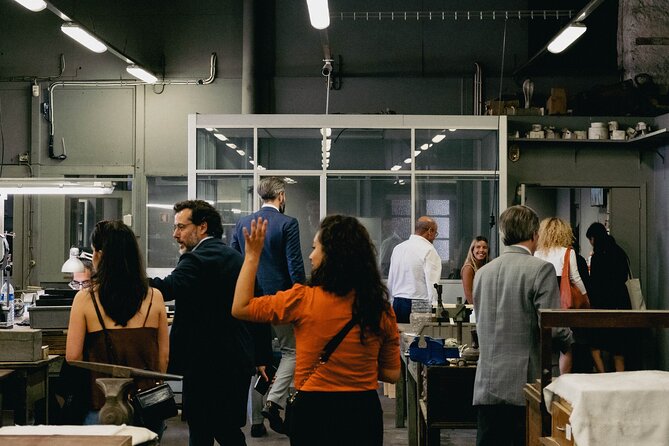
The group limit is 10 people. That is a useful size for a workshop because a large crowd would make it harder to see the artisans or hear explanations. A small group also gives you a better chance to ask about the tools and methods.
Guided tours are offered in Portuguese, English, and Spanish. If English is not your strongest language, the experience may still work well because the process is visual. One visitor noted that the guide adjusted the explanation to their level of English. Still, the amount of detail you get will depend partly on communication and on how actively you ask questions.
The tour is wheelchair accessible. The experience details do not provide a full description of every surface or workshop passage, so you may want to contact the shop directly if you need specific access information beyond general wheelchair accessibility.
Is $17 a fair price?
At $17 per person, this is a good-value short activity for anyone curious about Portuguese craft. The price includes entry, a guided tour, workshop access, showroom access, and store access.
You are paying for access that a normal shop visit would not provide. Walking into a jewelry store lets you see finished objects. This tour explains how those objects are made and connects them to a family business with more than a century of operation.
The price looks strongest if you care about process and design. If you only want to buy a souvenir, you may not need the tour. If you like seeing working craftspeople, traditional tools, and the difference between handmade and finished work, the cost is modest.
The 4.7 rating from 36 reviews also points to a consistently positive experience, with the strongest praise focused on the guide’s explanations, the traditional workshop methods, the unusual objects, and the beauty of the showroom. The less enthusiastic response described the visit simply as a look into the factory and shop. That is a fair description, and it also clarifies the limits: the experience is compact and focused rather than a large museum visit.
Who will enjoy Alcino Silversmith most?
I would recommend this tour to you if you enjoy:
- Jewelry, silverware, or decorative arts
- Family businesses with a long working tradition
- Seeing craftspeople use manual techniques
- Small-group tours with a guide
- Cultural activities that fit into one hour
- Finding a Porto souvenir with a clear connection to its maker
It is also a good choice for a rainy-day plan. The activity is indoors, and the factory and showroom give you something more substantial than simply browsing shops.
Families can attend, provided children stay with an adult. Younger children may find the technical explanations less engaging unless they enjoy tools and making things. The one-hour length helps, but this is still a quiet, observation-focused visit.
You should think twice if you want to produce your own silver item, spend several hours in a workshop, or visit a large museum with many historical displays. The available details describe a guided factory visit with some interaction, not a full craft course or broad museum tour.
Practical tips for a better visit
Arrive with a few questions in mind. You might ask how a piece moves from casting to finishing, which objects require the most handwork, or how traditional tools are used alongside newer equipment.
Keep your group small and close to the guide. The workshop is the main reason to book, and you will get more from it if you can hear the explanation and see what the artisan is doing.
Plan the showroom for the end rather than rushing through it. The three-room layout rewards a slower look, particularly if you are interested in decorative objects, religious pieces, or cutlery as well as jewelry.
If you want to shop, consider the tour a chance to learn first and buy second. You will have a better basis for judging a piece after seeing the methods behind it. The store is included, but there is no need to treat buying as part of the admission.
Book with the 5:00 pm weekday cutoff in mind. Free cancellation is available up to 24 hours in advance for a full refund, and you can reserve now and pay later, which helps if your Porto plans are still shifting.
Should you book this Porto silver workshop?
Book it if you want a close look at a real family workshop, prefer small groups, and enjoy seeing how beautiful objects are made. The strongest parts are the century-old setting, the manual techniques, the mix of old and newer equipment, and the three-room showroom.
Skip it if you are looking for a long hands-on class or a major museum. At one hour, Alcino Silversmith is a focused introduction rather than a full day devoted to metalwork.
For $17, I think it earns its place in a Porto itinerary, especially for anyone who likes jewelry, craft, or local businesses that still make their own goods. Go for the workshop, stay attentive during the technique demonstrations, and treat the showroom as the pleasant final chapter.
FAQ
Where does the Alcino Silversmith tour meet?
The meeting point is the Alcino Silversmith jewelry store in Porto. You can enter when your scheduled time arrives or call the store.
How long does the tour last?
The tour lasts one hour.
How much does the experience cost?
The listed price is $17 per person.
What languages are available?
The live guide can conduct the tour in Portuguese, English, or Spanish.
How many people are in each group?
The activity is limited to 10 participants.
What silver techniques will I learn about?
The tour explains manual goldsmithing techniques including casting, molding, and chiseling.
Can I visit the workshop and showroom?
Yes. Workshop access and showroom access are included, along with entry, the guided tour, and store access.
Is the experience wheelchair accessible?
Yes, the activity is listed as wheelchair accessible.
Can I cancel the booking?
You can cancel up to 24 hours in advance for a full refund. You can also reserve now and pay later.
Newest Porto reviews on the site
- Douro Valley Premium Tours – Private Driver & Guide★ 5.0 · 93 reviews
- Douro Valley Delights Wine Tasting and Scenic Vistas★ 5.0 · 3 reviews
- Douro valley Majestic★ 5.0 · 12 reviews
- Private off the beaten Douro Valley Wine Tour★ 5.0 · 100 reviews
- Tour the Douro wine region, and discover the fantastic landscape★ 4.5 · 4 reviews
- Douro Valley Private Full–Day Tour from Porto★ 5.0 · 23 reviews
- Private Tour to stunning Douro Valley and most renowned wineries★ 5.0 · 39 reviews
- Douro Tour on a Private Yacht in Porto★ 4.5 · 10 reviews
Workshops, compared.

Pastel de Nata Cooking Class with Port Wine – Sé
Read our review →


Tile-Painting Workshop with Porto Wine – Bainharia
Read our review →
Pastel de Nata | Workshop from scratch | Porto’s city center
Read our review →Browse the lists this tour appears in