
Reviewed · PORTO PAINTING AND TILE WORKSHOPS
Porto: Acrylic Painting Workshop for Groups – Antero Quental
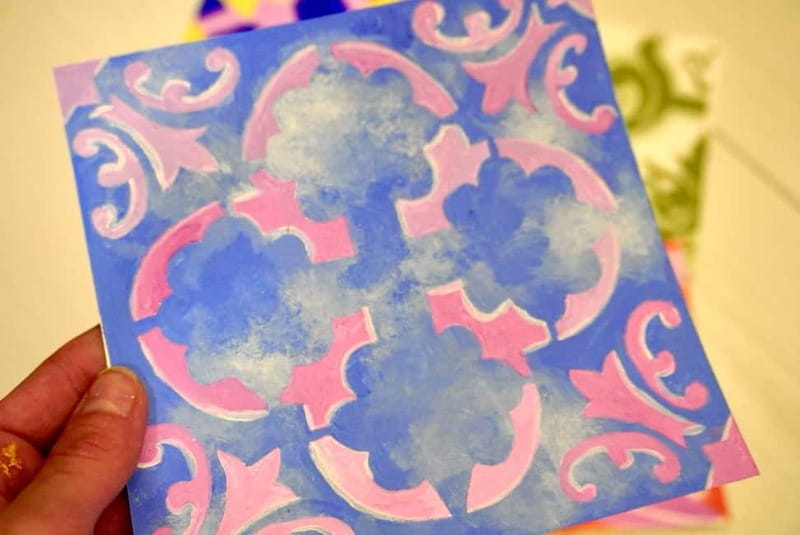
Porto gives you plenty to paint: tiled walls, river light, bold facades, and the shifting colors of the Douro. At this two-hour workshop in Antero Quental, you use those local cues to make your own acrylic artwork rather than simply admire someone else’s.
I like the hands-on color practice, where you turn one primary shade into a range of tones using white, black, related colors, and complementary colors. I also like that the price includes all materials, drinks, and your finished 21×30 cm painting, so you leave with more than a pleasant afternoon.
The main consideration is time. Two hours is enough for a focused introduction and one finished piece, but not enough for a slow, highly detailed painting. The workshop is best for a social creative session, not a full art course.
Key points to know before booking
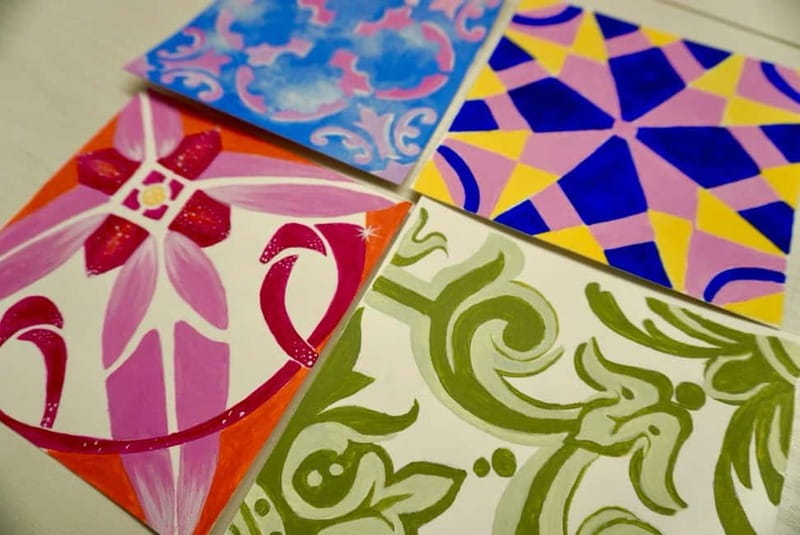
- Porto becomes your subject: Use the city’s river colors and azulejo patterns as inspiration for your composition.
- Color theory comes first: You’ll test how light, shade, white, black, and complementary colors change a basic hue.
- Acrylic technique is practical: Learn brush angle, pressure, water dilution, drying time, background work, and layered color.
- Your final artwork is included: You paint on a 21×30 cm acrylic sheet and take the finished piece with you.
- Good for celebrations: The relaxed group format suits birthdays, bachelor and bachelorette parties, and outings with friends.
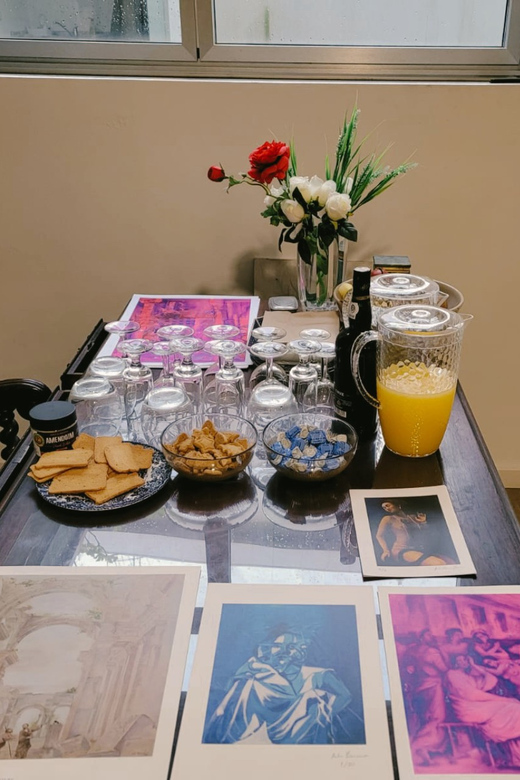
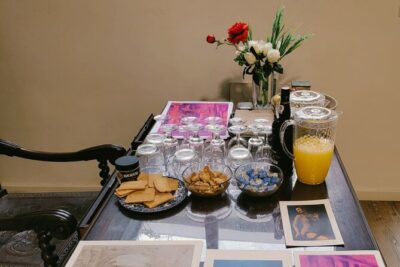
- Wine and soft drinks are provided: Porto wine, coffee, water, or juice are included during the session.
Turning Porto’s colors into a painting
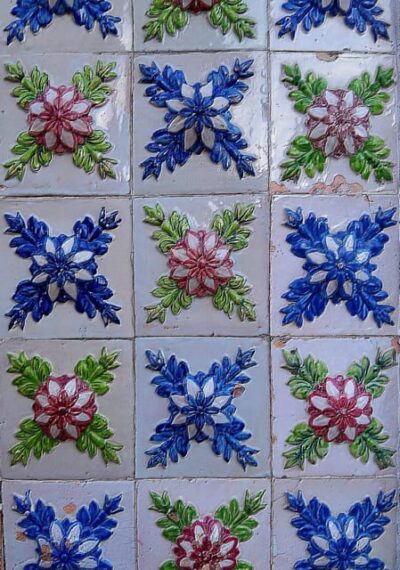
This workshop takes a simple idea and makes it useful: look at Porto as an artist might. The city supplies strong visual material, from the blue-and-white patterns of its azulejos to the warm light that falls across the Douro.
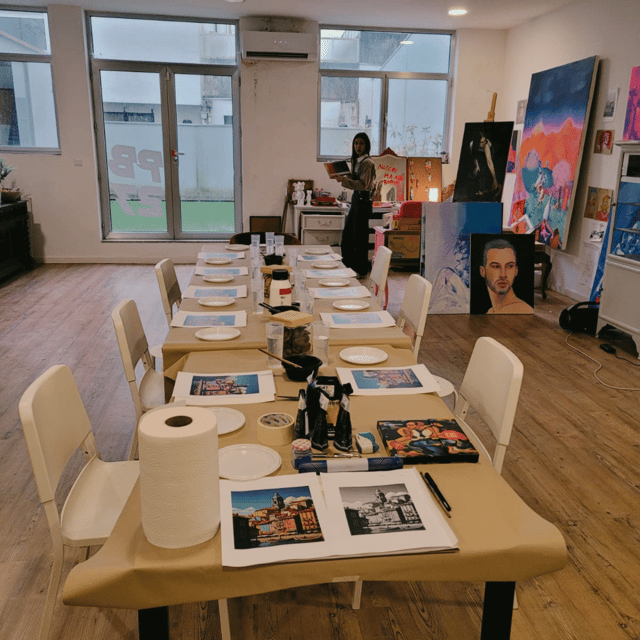
You are not expected to arrive with a polished concept. The session gives you a starting point, then shows you how to make choices with color and brushwork. That matters for beginners, who can otherwise spend half a class wondering where to begin.
The city theme also keeps the activity tied to Porto. You are not just attending a generic craft class in Portugal. You are working with colors and images linked to the place around you, even if your final painting becomes an abstract or personal interpretation.
The workshop is taught in English. No guide name is provided, so you should book this for the hands-on instruction and group setting rather than for a formal art-history talk.
More painting and tile workshops in Porto:
- Porto: Tile-Painting Workshop with Porto Wine – Bainharia
★ 4.9 · 526 reviews - Porto: Tile Painting and Cocktails in Downtown Porto
★ 4.9 · 484 reviews - Tile Painting and Cocktails in Downtown Porto
★ 5.0 · 187 reviews
The first 30 minutes: color theory with a brush in hand
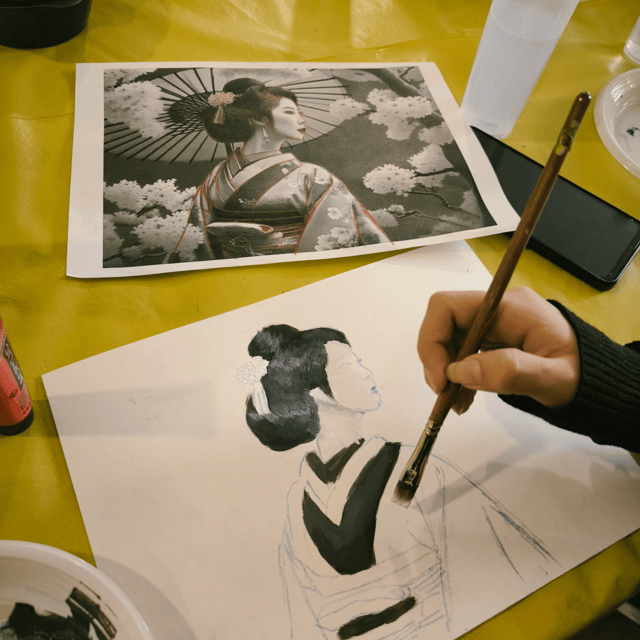
The opening section focuses on color theory, but it is not presented as a lecture alone. You work directly on a 21×30 cm acrylic sheet, testing how colors change when you alter them.
You may begin with a primary shade such as blue. From there, the instructor shows how to create different tones by adding white or black, placing similar colors over one another, or bringing in a complementary color for contrast.
This is one of the more useful parts for a first-time painter. Acrylic paint can look simple because it dries quickly and is easy to handle, but small changes in mixing can produce very different results. A pale blue can suggest reflected light. A darkened tone can add weight or shadow. A complementary color can make a section feel sharper and more alive.
You also learn about the effect of light and shade on color. That sounds basic, but it helps you avoid a flat result. Even a simple Porto-inspired scene needs some sense of depth, and color temperature can do part of that work.
I would treat this section as practice rather than a test. Your first color mixes may not look perfect, and that is the point. The workshop gives you room to see what happens when you adjust a tone instead of relying on instructions alone.
Brush pressure, water, and drying layers
The next stage moves from color choices to the physical handling of acrylic paint. You learn how the angle and pressure of the brush affect the mark on the surface.
A lighter touch can leave a thinner, softer stroke, while more pressure can spread paint across a wider area. Brush angle also changes the shape and feel of the mark. These small details are useful because they give you more control over lines, edges, and broad areas of color.
Water dilution is another important lesson. Acrylics can be used in a thicker form or thinned with water for a lighter effect. You are shown how to work with that change rather than treating every stroke the same way.
Drying time matters as well. Acrylic layers need time to set before you paint over them, especially when you want to preserve an edge or build a clean area of color. The workshop introduces the value of letting one layer dry before adding the next.
You also cover background painting and color temperature veiling. These ideas help the painting develop in stages. Instead of placing every detail at once, you can establish a background, add broad forms, then adjust the warmth or coolness of the colors above it.
For a beginner, this is where the class becomes more than a social painting event. You are learning a process you can repeat later, even with different subjects and materials.
The second hour: building your own composition
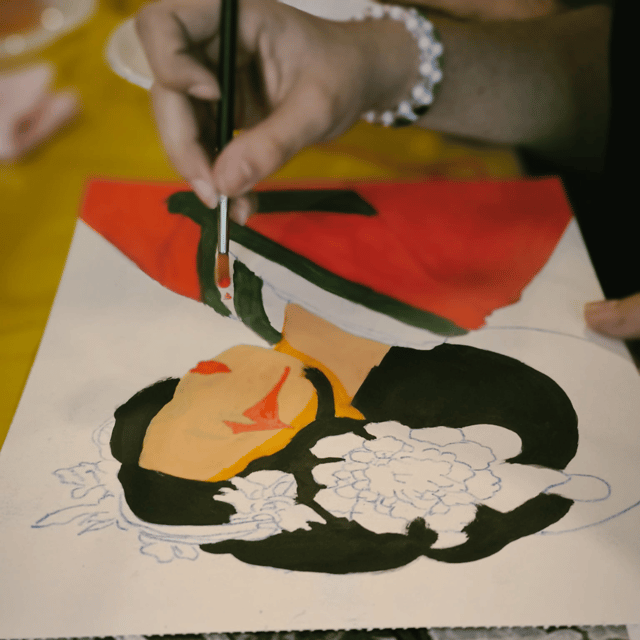
In the second half, you begin your own composition. The work proceeds from background to foreground, which gives you a clear order to follow.
Starting with the background helps you set the overall color mood before adding smaller forms. You can establish a sky, wall, river, or abstract field of color first, then build toward the main subject. Foreground elements come later, when the base layers are already in place.
This approach is especially helpful if you tend to focus on tiny details too soon. Acrylic paint rewards planning. If you begin with the smallest feature, you may find yourself painting around it awkwardly. A background-first method keeps the work more controlled.
Your painting does not have to copy a fixed model. The workshop encourages different approaches among participants, so each person’s composition can develop in a separate direction. One person may focus on Porto’s tiles. Another may work with river colors or a looser city impression.
That freedom is a real strength for a group activity. You can learn the same techniques without producing identical paintings. It also makes the finished pieces more personal, which is useful if you want a keepsake connected to your time in Porto.
Personal guidance is available as you work. The instructor can help refine brushwork, adjust color choices, and support the direction you have chosen. Since the workshop is designed for groups, the guidance is personalized rather than purely one-way instruction.
More hands-on workshops in Porto:
- Porto: Pastel de Nata Pastry-Making Workshop
★ 4.9 · 1,542 reviews - Porto: Pastel de Nata Cooking Class with Port Wine – Sé
★ 4.8 · 888 reviews - Matosinhos: Surfing Lesson with Equipment
★ 4.8 · 704 reviews - Porto: Small Group Surf Lesson with Transportation
★ 4.9 · 594 reviews
Why the group format works well
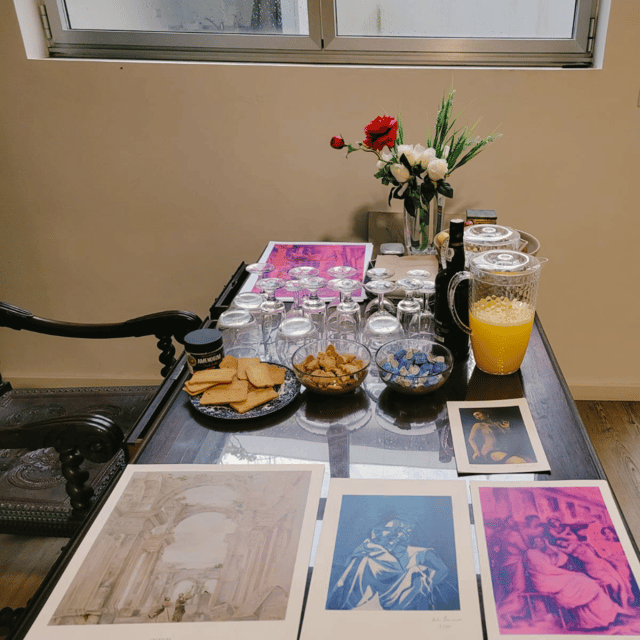
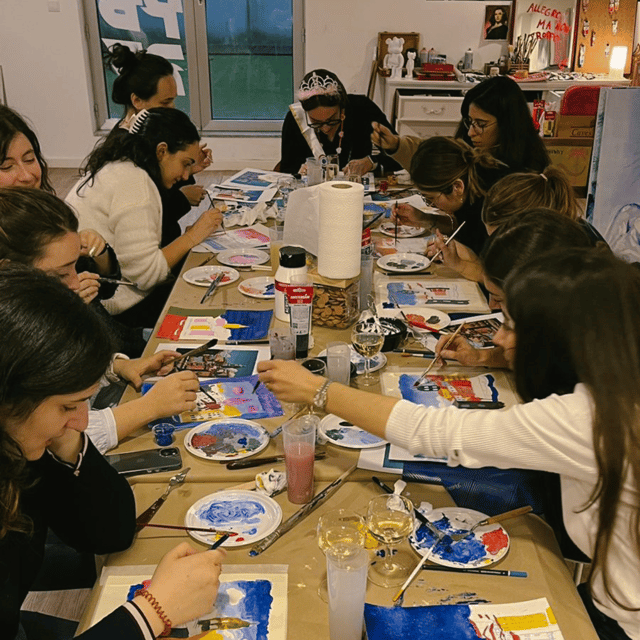
Painting with friends changes the mood of the class. You can compare color mixes, see how different people interpret the same city, and share a drink while working.
The workshop is specifically suited to parties and group outings. It could fit a bachelor or bachelorette party that wants something calmer and more creative than a standard night out. It also works for friends who want an activity with a clear result, rather than simply sitting together at a cafe.
A social group can be a benefit, but it is worth being realistic. A group class is not the same as private one-to-one tuition. You receive personal help, but the instructor’s attention must be shared among participants.
The format also makes this a good choice for people with mixed art experience. Beginners can follow the color and brush exercises, while more confident painters can make their own decisions about composition and finish. You do not need to arrive with a specific skill level.
The setting includes bathrooms, and service animals are allowed. Those details are practical rather than glamorous, but they make the session easier to plan for a mixed group.
Porto wine and the value of the $44 price
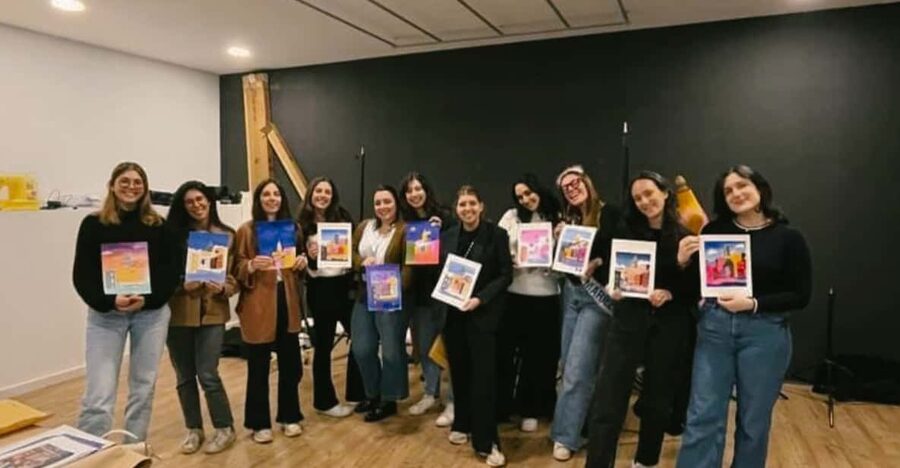
The cost is $44 per person. That is not the lowest possible price for a short creative activity, but the package includes the parts that often add expense: paint, brushes, the acrylic surface, instruction, a finished artwork, and refreshments.
You also receive Porto wine, coffee, water, or juice. The drinks help the class feel like a shared occasion rather than a strictly technical lesson. If you are organizing a celebration, having refreshments already included simplifies the plan.
The finished artwork is the strongest value point. You are not paying only for two hours of entertainment. You leave with a 21×30 cm piece that records the activity and your own choices. It may not be museum-ready, but it is more meaningful than a mass-produced souvenir because you made it yourself.
The price makes the most sense for a group that values participation and a keepsake. If you only want a quick introduction to acrylic paint, you may find the cost less compelling. If you want a hosted activity with supplies and drinks already arranged, the package is easier to justify.
A published 5 out of 5 rating from three responses also gives the workshop a positive early track record. The strongest praise centers on meeting a talented young artist and gaining a different angle on a Porto visit. That matches the main appeal here: the class offers a personal connection to the city through making, not just sightseeing.
Who will enjoy this workshop most
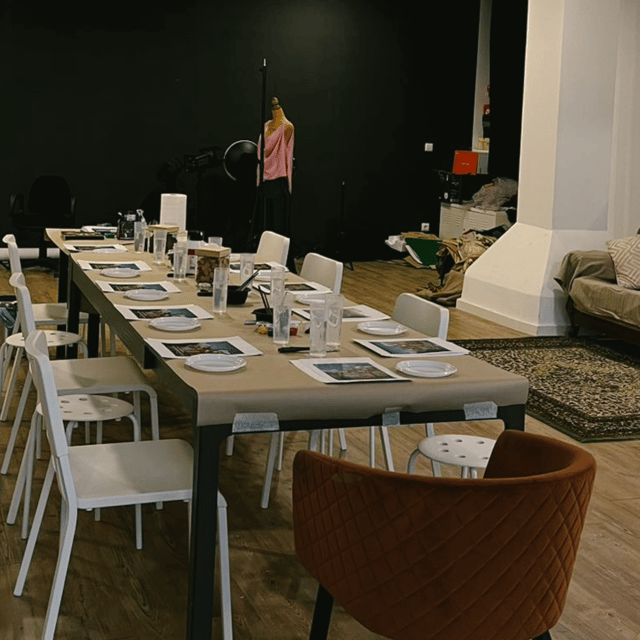
I would recommend this activity to:
- First-time painters who want clear guidance
- Friends planning a creative group outing
- Bachelor and bachelorette groups seeking a quieter celebration
- Couples or small parties who want a handmade Porto souvenir
- Art lovers who enjoy working with color more than listening to a lecture
- Anyone looking for a two-hour indoor activity with drinks included
It is less suited to someone who wants a long studio course, advanced technical training, or a carefully planned tour of Porto’s sights. The city serves as inspiration, but you are not walking through landmarks or receiving a sightseeing commentary.
It is also not ideal if you need a very precise finished result. Acrylic painting involves choices and surprises, especially when you are learning. The instructor can guide you, but the final work will reflect your own decisions.
Timing, language, and booking flexibility
The activity lasts two hours, with starting times available according to the chosen date. Since exact start times can change, check availability before building the workshop into a busy day.
English is the stated language of instruction. That makes the session practical for English-speaking visitors, though the available information does not confirm other teaching languages.
You can cancel up to 24 hours in advance for a full refund. You can also reserve now and pay later, which helps if your Porto schedule is still taking shape. Those policies are useful for a group, where one person’s change of plans can affect the whole booking.
I would avoid placing the workshop immediately before an important timed reservation. A painting class has a set two-hour duration, but groups may want a little breathing room around the start and finish.
What you take home
Your final acrylic artwork is included. The stated working size is 21×30 cm, a manageable format that should be easier to carry than a large canvas.
That size also suits the length of the class. You have enough surface for a real composition, but not so much that you spend the whole session covering blank space. The result should feel like a finished study or small artwork rather than a full studio canvas.
Bring a practical attitude toward the final piece. The value is in learning how colors, layers, and brush pressure work while making something personal. Your painting may have rough edges, but those marks are part of the memory.
The final art can also give your group a shared record of the day. Everyone may work from similar ideas, yet the results will differ. That contrast is one of the most enjoyable parts of a group painting session.
Should you book the Antero Quental painting workshop?
Book it if you want a social, hands-on Porto activity with supplies, guidance, drinks, and a finished piece included. It is especially appealing for a group celebration or for anyone who wants to connect with Porto through its colors and tiles.
Skip it if your priority is traditional sightseeing, advanced art instruction, or a long unhurried studio session. Two hours moves at a useful pace, but it leaves limited time for major revisions.
For most casual painters, the combination of personal instruction, local inspiration, refreshments, and a take-home artwork makes the $44 price reasonable. I would book this as a creative break between sightseeing days, particularly for a group that wants something more memorable than another meal or bar stop.
FAQ
How long does the acrylic painting workshop last?
The workshop lasts two hours.
Where does the activity take place?
It takes place in Antero Quental in Portugal’s Norte Region.
What language is the workshop taught in?
The instructor teaches in English.
Are painting materials included?
Yes. All materials are included, including the 21×30 cm acrylic sheet used during the workshop.
Can I take my painting home?
Yes. Your final artwork is included in the experience.
Are drinks included?
Yes. Porto wine, coffee, water, or juice are included.
Is the workshop suitable for groups and celebrations?
Yes. It is designed for groups and is presented as a suitable activity for parties, bachelor parties, and bachelorette parties.
What is the cancellation policy?
You can cancel up to 24 hours in advance for a full refund. You can also reserve now and pay later.
Newest Porto reviews on the site
- Douro Valley Premium Tours – Private Driver & Guide★ 5.0 · 93 reviews
- Douro Valley Delights Wine Tasting and Scenic Vistas★ 5.0 · 3 reviews
- Douro valley Majestic★ 5.0 · 12 reviews
- Private off the beaten Douro Valley Wine Tour★ 5.0 · 100 reviews
- Tour the Douro wine region, and discover the fantastic landscape★ 4.5 · 4 reviews
- Douro Valley Private Full–Day Tour from Porto★ 5.0 · 23 reviews
- Private Tour to stunning Douro Valley and most renowned wineries★ 5.0 · 39 reviews
- Douro Tour on a Private Yacht in Porto★ 4.5 · 10 reviews
Porto Painting and Tile Workshops, compared.

Tile-Painting Workshop with Porto Wine – Bainharia
Read our review →
Downtown Porto Acrylic Painting Workshop for Groups or Individual
Read our review →Browse the lists this tour appears in